

Did you know that the Peruvian Amazon tribes still live in the same region as their ancestors, keeping their customs and traditions alive since time immemorial? These unique communities, which inhabit the Peruvian jungle, are the soul of the Amazon and their way of life has been preserved for generations.
Despite the challenges they face due to the advance of modernity, they continue to resist the passage of time, fighting to maintain their identity, their languages and their customs. Today we’ll tell you all about Peru’s most important native tribes so you can take some of the knowledge with you when you travel to the amazing life in the Peruvian Amazon.
You may also like: National Holidays in Peru
What are the Peruvian Amazon Tribes?
The Peruvian Amazon tribes are indigenous communities that have inhabited the vast Amazon rainforest for centuries. Thanks to these tribes, Amazonian culture is kept alive and they have learned to live in harmony with the unique environment of the rainforest, creating deep spiritual and cultural connections with the land they inhabit. Among the best known tribes are the Asháninka, the Shipibo-Conibo, the Yanesha and the Matsés, each with their own language, traditions and practices.
In recent decades, the Peruvian government has recognized the importance of protecting these communities and their cultures. The state began to officially recognize the rights of these tribes with the Native Communities Law of the 1980s, which gave recognition to their right to land and cultural preservation. In addition, the creation of several national reserves and protected areas has helped to safeguard their territories from deforestation and exploitation.
You may also like: Discovering ancient Peru: Treks, temples, and timeless routes

Where are the Peruvian Amazon Tribes located?
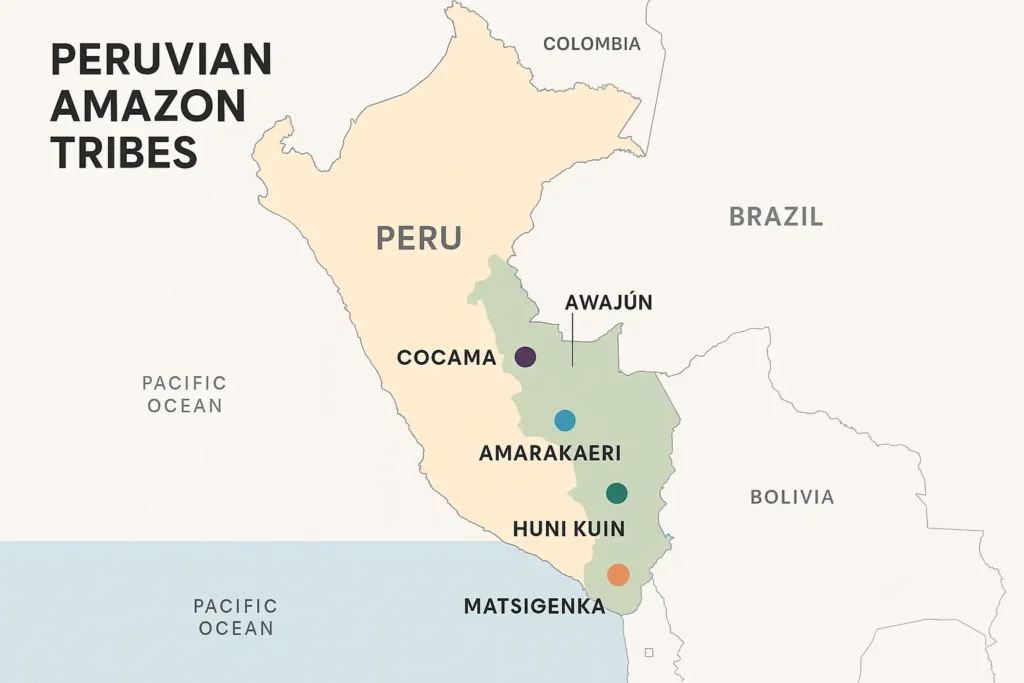
Peruvian Amazonian tribes are distributed throughout the vast Amazon rainforest region that covers more than half of the Peruvian territory. These communities live mainly in the eastern part of the country, in the departments of Ucayali, Loreto, Madre de Dios, San Martin and Amazonas, among others. Tambopata tours offer a unique opportunity to explore some of the most biodiverse areas in the Amazon, where you can witness firsthand the way of life of these indigenous tribes.
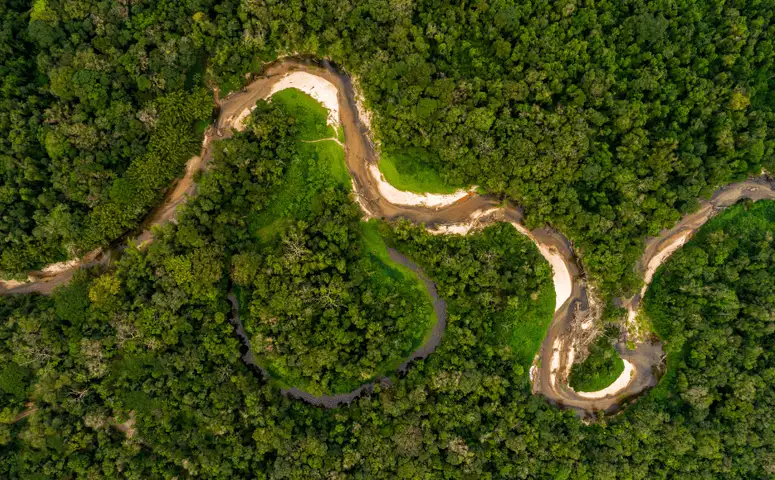
The Amazon River and its tributaries, such as the Ucayali, Madre de Dios and Napo rivers, are the main access routes to these communities. Many of the tribes live in remote areas, far from urban centers, and access is often difficult due to the geography of the region, which is characterized by dense tropical vegetation and meandering rivers. But all tribes have a defined ancestral territory which they protect as a millennial heritage.
You may also like: Between Paso horses and the sacred mountains of Peru
Amazon Tribes in Peru: Cultural Practices and Traditions
The Peruvian Amazon Tribes including the Asháninka, Shipibo-Conibo, and Matsés, maintain a close connection with nature and a rich spiritual heritage. Their traditions, passed down through generations, offer a glimpse into an ancient and profound way of life.
- Spirituality and Shamanism
Shamans play a crucial role in Amazonian tribes, facilitating spiritual and healing practices using plants like ayahuasca. These ceremonies foster a deep connection with the spiritual realm and nature. - Art and Craftsmanship
Amazonian tribes, such as the Shipibo-Conibo, express their spiritual beliefs through intricate artwork. Their colorful textiles, ceramics, and body art carry deep cultural significance. - Connection to Nature and Sustainable Practices
They use sustainable agricultural techniques, practicing crop rotation and harvesting in harmony with the forest to ensure long-term ecological balance. If you visit their communities during manu tours you can experience the ways in which Amazonian tribes subsist thanks to nature. - Rituals and Festivals
Rituals celebrate the natural cycles, like the harvest season or spiritual events. Festivals include dances, music, and offerings to honor spirits and strengthen community bonds. - The Role of Elders and Storytelling
Elders pass down valuable knowledge, telling stories that preserve the tribe’s history, beliefs, and connection to the environment through oral traditions.
Popular Peruvian Amazon Tribes
Peru is home to approximately 51 Amazonian tribes throughout its territory, which represents 1.2% of its population, although it may not seem a large number, they are responsible for protecting the traditions and ancestral knowledge since the Andean conquest, so it’s time for you to know the most representative tribes of our country.
1. Asháninka
The Asháninka are one of the largest indigenous peoples in the Peruvian Amazon and live primarily in the Junín and Ucayali regions. Their language is part of the Arawak linguistic family, and they are known for their deep agricultural traditions, especially the cultivation of cassava, plantain, and corn. Furthermore, their culture is based on ancestral knowledge of the forest, and they are renowned for their skills in producing textiles, baskets, and wooden utensils. Asháninka spirituality is closely connected to nature, and their rituals include dances and ceremonies that honor forest spirits. In terms of protection, the Peruvian government has implemented various strategies for the conservation of their lands and cultural identity.
2. Shipibo-Conibo
This tribe is located in the Ucayali River basin, in the Loreto region. The Shipibo-Conibo are known for their artistic ability, especially in textile painting and ceramics. Their artwork includes intricate geometric designs that reflect their worldview, linked to nature and spirits. Music and dance are also integral parts of their daily lives. They are experts in traditional medicine and the use of Amazonian plants, and their spiritual rituals, particularly the use of ayahuasca, are known for their connection to the search for ancestral wisdom. Currently, the Shipibo-Conibo communities are involved in defending their territories against the threats of forestry development and illegal mining.
3. Matsés
The Matsés, also known as the “jaguar men” due to their warrior and spiritual customs, live in the Loreto region, near the Brazilian border. Their language belongs to the Matsés linguistic family, and their culture is deeply rooted in hunting, fishing, and gathering in the rainforest. They are highly respected for their knowledge of medicinal and poisonous plants, and are also known for their skill in hunting with bows and arrows.
The Matsés have a very close relationship with their environment, and many of their spiritual and healing practices are centered on the spirits of animals and nature. Despite external threats such as logging and invasion of their territory, they continue to fight for the preservation of their culture and way of life.
4. Yanesha
The Yanesha live in the Pasco and Junín regions, on the eastern slopes of the Andes. Their language belongs to the Arawak linguistic family. They are known for their agricultural skills, especially the cultivation of coffee, cacao, and traditional Amazonian products. Furthermore, the Yanesha have a strong artisanal tradition, producing baskets, hats, and weaving. Spiritually, the community has a deep connection with nature, and their ceremonies include dances and songs in honor of their gods and protective spirits. In recent years, they have worked to preserve their culture and strengthen their traditions, while achieving greater autonomy through the creation of community organizations for the sustainable management of their resources.
5. Tikuna
The Tikuna live primarily in the Loreto region, near the border with Brazil and Colombia. This community is famous for its rich culture and its connection to the Amazon River. They speak the Tikuna language, and their history is marked by their ceremonies, rituals, and dances, such as the “Sun Ritual” and the “Deer Dance.” Hunting, fishing, and fruit gathering in the rainforest are key activities in their way of life. The Tikuna are also known for their skill in crafting canoes and other wooden implements. Recently, they have shown an interest in preserving their traditions in the face of the challenges of economic development and external pressure, while also advocating for their territorial rights.
6. Kichwa
The Kichwa are one of the largest indigenous tribes in Peru, with a population scattered across different areas of the Amazon, particularly in Loreto, Ucayali, and Cusco. Their language is part of the Quechua linguistic family, and their life centers on agriculture, hunting, and fishing. Traditionally, the Kichwa cultivate crops such as cassava, corn, and cacao.
Rituals and spiritual practices play an important role in their culture, and festivities such as Inti Raymi and the Festival of the Sun are occasions to pay homage to nature and their gods. Over the years, the Kichwa have been very active in preserving their language and traditions, while also fighting for recognition and rights to their lands in a context of increasing development and exploitation of natural resources in the Amazon.
You may also like: From past to present: the paths of Chaski still beat in Peru

How to visit the Peruvian Amazon Tribes
Visiting the Peruvian Amazon tribes offers a unique and immersive experience into one of the world’s most biodiverse and culturally rich regions. Here’s how to ensure a respectful and meaningful journey:
- Choose a Responsible Tour Operator
The key to visiting the Amazon tribes is finding a reliable and respectful tour operator. Look for agencies like amazon garden lodge that prioritize responsible tourism, with a focus on cultural exchange and environmental preservation. Companies like Quechuas Expeditions offer tours that include visits to indigenous communities and ensure that the tribes benefit from tourism directly. - Plan Your Visit with a Local Guide
Local guides, often from the tribes themselves, offer invaluable insights into the cultural and natural heritage of the region. They can provide a deeper understanding of the tribe’s customs, traditions, and the ecosystem they rely on, as well as ensure that your visit respects the community’s privacy and customs. - Obtain Permission
Before visiting any indigenous community, it is essential to obtain permission from the local leaders. Many tribes are very selective about who can enter their land, and it’s important to respect their rules and guidelines. This helps preserve the integrity of their culture and prevents exploitation. - Respect the Community’s Way of Life
When visiting the Amazon tribes, it’s important to approach with an open mind and deep respect for their way of life. This includes following the tribe’s customs, participating in rituals if invited, and not disturbing their daily routines. Be aware of the cultural differences and avoid actions that may be perceived as disrespectful. - Best time to visit
The best time to visit the Peruvian Amazon is during the dry season, which typically runs from April to October. During this period, the weather is more manageable, and the rivers are at lower levels, making travel easier. However, the rainy season (November to March) also offers unique experiences, though travel may be more challenging.
Visit the Peruvian Amazon Tribes!
The Amazonian tribes must be protected at all costs, not only by the Peruvian government but also by the travelers themselves, who must always travel with an ecological conscience and collaborate with the communities.

