
history of inca
Discover the history of the Incas, one of the most fascinating civilizations. We will show you their legacy, culture, and the architectural wonders that still endure over time. Let’s travel through Inca history and awaken your explorer spirit!
History of the Incas
The Inca Empire, also known as Tahuantinsuyo, was the largest civilization in South America before the arrival of the Spanish. Its legacy remains alive in Andean culture, in the impressive stone constructions, and in the history left behind by its rulers. Join us in exploring the history of the Inca civilization, from its origins to its downfall.


The Origins of Inca
Myths and Reality
The history of the Incas begins with two fundamental legends that explain their origin:
- The Legend of Manco Cápac and Mama Ocllo: It is said that the god Inti (Sun) sent Manco Cápac and Mama Ocllo from Lake Titicaca to found an empire. They used a golden staff to find the ideal place, which turned out to be the valley of Cusco, the future capital of the Inca Empire.
- The Legend of the Ayar Brothers: This story tells of four brothers and their wives who emerged from the caves of Pacaritambo and traveled to Cusco, where Ayar Manco became the first Inca ruler.
These stories reflect the importance of the Sun and divinity in the Inca worldview.
The expansion the Inca
The small Inca kingdom of Cusco became a vast empire through a series of conquests and strategic alliances.

Early Inca Rulers
Manco Cápac and his successors expanded the territory around Cusco.

The Great Pachacútec (1438-1471)
Considered the true founder of the Inca Empire, he conquered vast territories and organized Tahuantinsuyo into four regions: Chinchaysuyo, Antisuyo, Collasuyo, and Contisuyo.
The System of Government
It was based on reciprocity and economic control through the “Ayllu,” the basic unit of social organization.
The Fall and the Spanish Conquest
Despite its greatness, the Inca Empire was weakened by internal conflicts and the arrival of the Spanish conquerors in the 16th century.
Inca Civil War (1527-1532): After the death of Huayna Cápac, his sons Atahualpa and Huáscar fought for the throne. Atahualpa won, but his victory weakened the empire.
The Arrival of Francisco Pizarro: In 1532, the Spanish captured Atahualpa in Cajamarca and, after receiving a massive ransom of gold and silver, executed him.
The End of the Empire: In 1572, the last Inca leader, Túpac Amaru I, was captured and executed by the Spanish, marking the end of Tahuantinsuyo.

The Legacy of the Incas Today
Although the empire fell, its culture remains alive in many ways:
- Festivals like Inti Raymi, which reenacts the celebration dedicated to the Sun god.
- Quechua, the Inca language, is still spoken in many regions of Peru, Bolivia, and Ecuador.
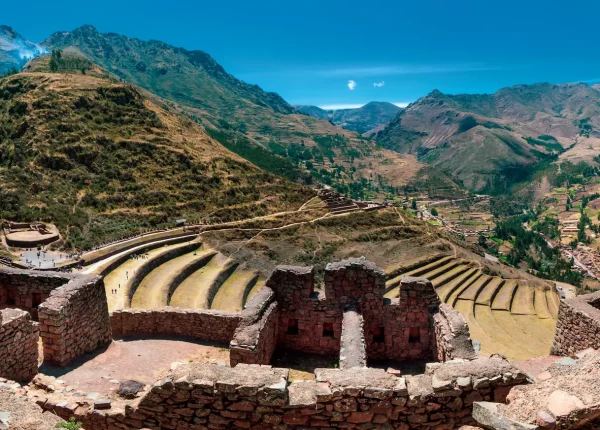
- Inca engineering and architecture, which continue to amaze scientists and historians.
Frequently Asked Questions about Inca History
Who were the Incas?
The Incas were an Andean civilization that created the Inca Empire, the largest pre-Columbian society in South America.
When was the Inca Empire founded?
The Inca kingdom is estimated to have emerged around the 13th century in Cusco and expanded in the 15th century.
How did the Incas dominate the Andes?
Through their political organization, road system, and efficient economic administration.
Why did the Inca Empire fall?
A combination of civil war, diseases brought by the Spanish, and the conquest led by Francisco Pizarro caused their downfall.