
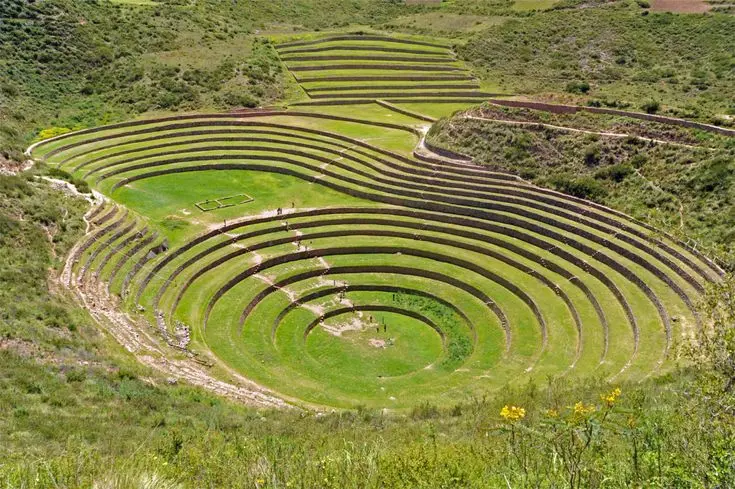
Standing in front of Moray is one of those moments where silence speaks louder than words. You may arrive expecting ruins, but what you encounter is knowledge carved into the earth itself. Moray is not only an archaeological site; it is a living expression of how the Inca Empire understood nature, time, and human responsibility toward the land.
When we talk about moray peru history, we are talking about intelligence, patience, and deep observation. This place invites you to slow down, to look closely, and to understand that the Incas were not only builders of stone, but thinkers who experimented with life itself. As you walk along the circular terraces, you begin to realize that Moray was never meant to impress visually alone it was designed to teach, to test, and to preserve wisdom for generations.
This guide is written for travelers who want more than surface-level facts. If you want to truly understand Moray, its cultural meaning, and its role within the Inca civilization, this journey through moray peru history will give you the context you need to appreciate what you are seeing with informed eyes.
You may also like: What happened to the Inca civilization after the spanish arrival

Understanding Moray Peru history within the Sacred Valley
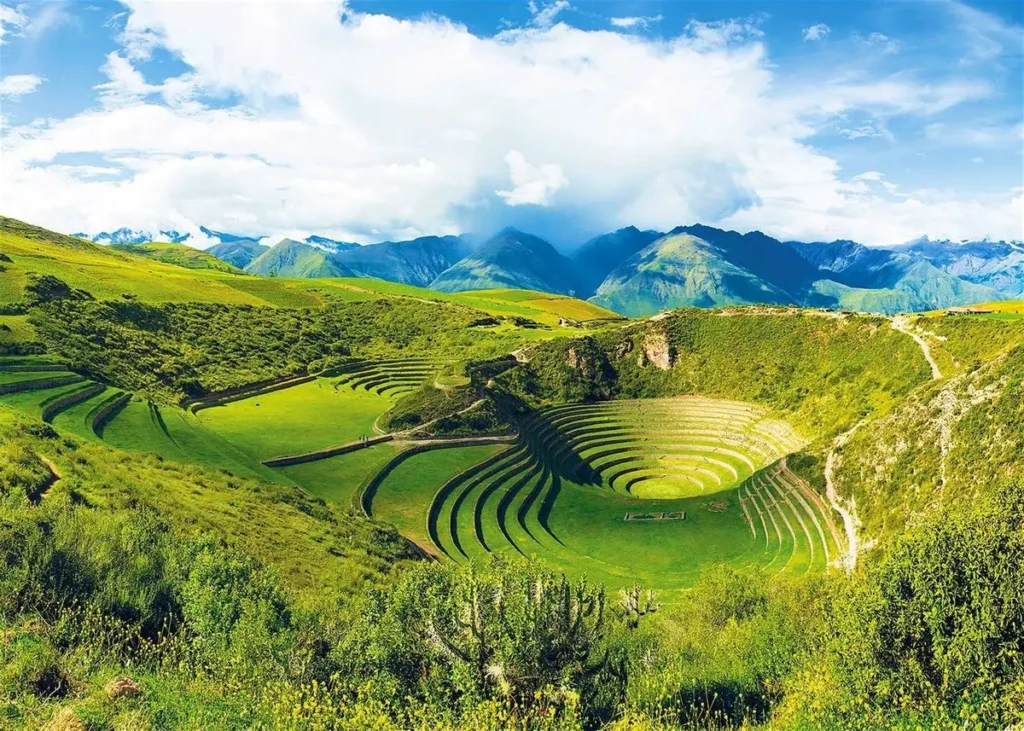
To understand moray peru history, it is essential to place Moray within the broader geography of the Sacred Valley of the Incas. Located northwest of Cusco at an altitude of approximately 3,500 meters above sea level, Moray sits in a highland zone where climate variations can be extreme, even across short distances.
The Incas carefully selected this location because of its unique environmental conditions. The natural depressions in the land, combined with temperature variations caused by altitude differences, created an ideal setting for agricultural experimentation. These environmental factors were not accidental; they were observed, studied, and intentionally used.
Moray’s proximity to other important Inca sites also reinforces its importance. It was part of a connected network of ceremonial centers, agricultural zones, and administrative routes that linked Cusco to the surrounding regions. Travelers today often encounter Moray as part of broader itineraries through the Sacred Valley, frequently integrated into curated tours in Cusco that highlight the region’s cultural depth rather than isolated landmarks.
The historical timeline of Moray Peru
Archaeological evidence suggests that Moray was constructed during the height of the Inca Empire, roughly between the 15th and early 16th centuries. This period marked a time when the Incas were expanding their territory rapidly and refining systems that supported a vast population across diverse climates.
Within moray peru history, Moray represents a mature phase of Inca knowledge. Unlike earlier settlements focused on survival, Moray reflects experimentation, refinement, and long-term planning. Its construction required advanced engineering skills, coordinated labor, and deep agricultural understanding.
Although Moray was abandoned following the Spanish conquest, its structure remained remarkably intact due to its location and limited colonial interference. This preservation allows modern researchers to study Inca agricultural science almost exactly as it was practiced centuries ago.
You may also like:Tips for Traveling to Peru as a Couple or with Friends

How Moray Peru history reveals Inca scientific knowledge
One of the most remarkable aspects of moray peru history is its role as an agricultural laboratory. The circular terraces are not simply aesthetic or ceremonial; each level creates a different microclimate, with temperature variations of up to 15°C between the top and bottom terraces.
This allowed the Incas to simulate growing conditions from different regions of their empire, ranging from coastal valleys to high-altitude Andean zones. Crops could be tested for resilience, yield, and adaptability before being distributed across the empire.
The drainage system beneath the terraces further demonstrates scientific precision. Layers of stone, sand, and soil ensured that water never accumulated excessively, preventing erosion and crop failure during heavy rains.
Example : Imagine a farmer testing maize varieties. By planting the same crop at different terrace levels, Inca agricultural specialists could observe which strains survived frost, which matured faster, and which produced the highest yields. This practical experimentation was a cornerstone of food security within the empire.
Moray Peru history and crop diversity
Within moray peru history, Moray played a crucial role in preserving crop diversity. The Incas cultivated over 3,000 varieties of potatoes alone, alongside maize, quinoa, beans, and medicinal plants.
Moray allowed the Incas to refine seeds before introducing them to wider regions. This minimized crop failure and ensured stable food supplies for both urban centers and remote communities.
Such agricultural foresight explains how the Inca Empire sustained millions of people without modern technology. Moray was not isolated brilliance; it was part of a broader system of agricultural research centers spread throughout the empire.
You may also like:Where to eat cheap in Cusco: Route and Tips

Moray Peru History within Inca infrastructure networks
Moray did not function alone. Within moray peru history, it was connected to a network of Inca roads (Qhapaq Ñan), storage facilities (qullqas), and administrative centers.
These roads allowed seeds, data, and agricultural results to be transported efficiently. Knowledge gathered at Moray could influence farming practices hundreds of kilometers away.
Travelers today often encounter Moray as part of integrated routes that also include salt mines, villages, and Inca towns, commonly featured in well-structured Peru tour packages that emphasize historical continuity rather than isolated attractions.
Moray Peru history and community labor
The construction and maintenance of Moray relied on the mit’a system, a form of communal labor. Rather than forced servitude, mit’a was a civic duty that strengthened social bonds and collective responsibility.
This system ensured that agricultural innovation benefited the entire empire, not a privileged few. Within moray peru history, Moray stands as an example of shared knowledge and communal effort.
Cultural meaning for modern travelers
Understanding moray peru history changes how you experience the site. You no longer see terraces as ruins, but as lessons in sustainability, respect for nature, and long-term thinking.
In a world facing climate challenges, Moray offers a reminder that innovation does not always require modern technology. Observation, patience, and respect can be just as powerful.
Example : Modern agronomists studying climate adaptation have drawn inspiration from Moray’s microclimate system, applying similar principles in contemporary sustainable farming projects.
Moray Peru History as Part of a Broader Cultural Journey
Many travelers combine Moray with visits to other Inca landmarks to gain a fuller understanding of the empire. While sites like Machu Picchu represent architectural mastery, Moray reveals intellectual and agricultural brilliance.
For travelers planning longer itineraries, Moray often complements journeys that include iconic routes and carefully curated Machu Picchu tours, providing a more complete narrative of Inca civilization.
You may also like:Why did the incas build Machu Picchu?
Symbolism, ritual, and living knowledge
Beyond its agricultural function, Moray represents a deeper layer of Inca thought where design, spirituality, and scientific observation were fully connected. Within moray peru history, the site reflects how the Incas understood life as a balanced system shaped by cycles, rituals, and continuous learning. From its circular terraces and ceremonial practices to modern archaeological discoveries and present-day relevance, Moray stands as a place where knowledge was lived, tested, and passed forward.
Circular Design in Moray Peru History
The circular design of Moray is intentional and deeply symbolic. In Andean culture, circles represented cycles, balance, and continuity, reflecting a worldview where life was understood as a series of interconnected processes rather than a straight line of progress. Time, nature, and human activity were seen as constantly interacting forces.
Within moray peru history, this symbolism reinforces the idea that agriculture was a sacred responsibility. Planting and harvesting were not routine tasks, but acts aligned with natural and cosmic rhythms. The terraces themselves mirror the landscape, showing harmony between human intention and natural form, a concept that continues to feel relevant in a world seeking balance.
Moray Peru History and Ritual Practice
Although Moray functioned mainly as an agricultural center, ritual elements were part of its daily use. Seasonal ceremonies and offerings to the earth likely accompanied planting cycles, reinforcing gratitude and respect for the land that sustained life.
These practices reminded participants that productivity came with responsibility. In moray peru history, spirituality and agriculture were inseparable, ensuring that human activity remained connected to nature rather than dominating it.
Archaeological Discoveries and Moray Peru History
Modern archaeological research has helped clarify Moray’s purpose and significance. Soil analysis, climate studies, and structural surveys confirm that the site was designed for controlled agricultural experimentation rather than ceremonial display alone.
Findings show that crop remains match varieties cultivated across distant regions of the former empire. This supports the idea that Moray influenced farming practices far beyond its immediate surroundings. Within moray peru history, Moray stands as one of the clearest examples of applied science in the ancient world.
Moray Peru History and Contemporary Relevance
Today, Moray continues to inspire beyond academic study. Sustainable agriculture movements look to Moray as evidence that complex, efficient systems can exist without industrial technology.
Its principles of biodiversity, climate adaptation, and respect for ecosystems align closely with modern environmental goals. In moray peru history, Moray remains not only a historical achievement, but a source of insight for present and future challenges.
Experiencing the site today
Visiting Moray is an immersive experience that engages both the body and the mind. As you slowly descend the terraces, subtle temperature shifts become noticeable, almost as if the landscape itself is responding to your presence. The silence, interrupted only by the wind and distant sounds of nature, creates a space for calm observation rather than hurried sightseeing.
Understanding moray peru history transforms this visit into something deeper and more meaningful. You are not simply walking through ancient ruins; you are stepping into an intentional experiment where knowledge, observation, and respect for the land worked together to sustain an entire civilization. Each level invites you to pause, look around, and consider how patience and cooperation made something lasting possible.
Moray Peru history as a personal reflection
Many visitors leave Moray with a renewed appreciation for simplicity and thoughtful design. The site naturally encourages reflection on how modern life often disconnects us from the environment we depend on. Without signs or explanations, Moray communicates its message through experience.
Within moray peru history, Moray offers more than historical answers; it offers perspective. It gently challenges you to think about balance, responsibility, and the long-term impact of human decisions on the world around us.
You may also like: How to visit the Q’enco Archaeological Complex from Cusco

A legacy that still speaks to us
Standing before the terraces of Moray, it becomes clear that this place was never meant to be forgotten. Moray Peru history is not only about agricultural innovation or impressive engineering; it is about a way of understanding life itself. The Incas observed the land with patience, worked collectively, and planned with future generations in mind.
Moray teaches us that knowledge grows when it is shared, tested, and respected. Its circular terraces remind us that progress does not always move forward in straight lines, but in cycles of learning, adaptation, and care. Even today, Moray invites travelers to reflect on their relationship with nature and community.
More than a historical site, Moray stands as a quiet reminder that balance, responsibility, and respect for the earth can create legacies that endure far beyond stone and time.

