
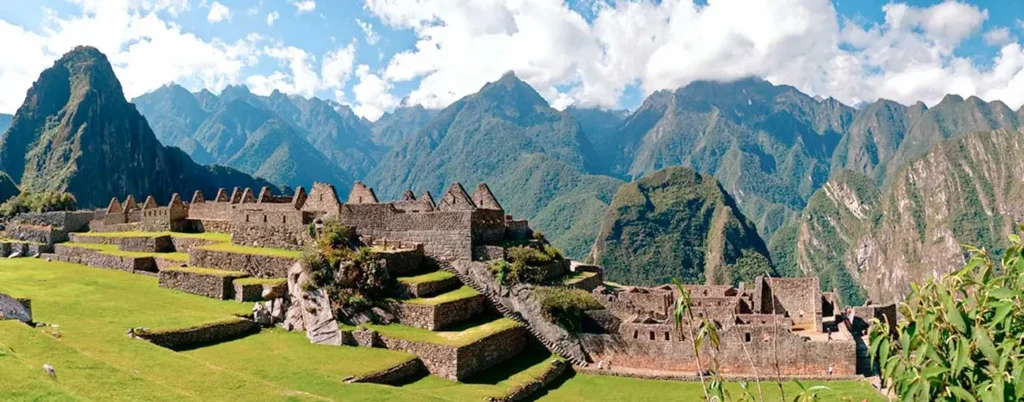
Many people wonder why did the Incas build Machu Picchu, a city nestled high in the Andes Mountains. This magnificent site was not created by accident; it had a deep purpose that blended religion, power, and a profound connection to nature. Built in the fifteenth century during the reign of Pachacútec, Machu Picchu was more than a royal retreat — it was a sacred place that reflected the Incas’ respect for the sun, the mountains, and the cosmos. Understanding why the Incas built Machu Picchu helps us appreciate how advanced, spiritual, and visionary their civilization truly was. It shows how they combined engineering and faith to create one of the most extraordinary places on Earth. Understanding its origins allows us to see how the Incas merged technology and spirituality to create one of the most extraordinary places on Earth.
Introduction to Machu Picchu and the Inca civilization
To understand why Machu Picchu was built, we must first look at the civilization behind it. The Inca Empire, known as Tawantinsuyu, emerged in the Andean region around the 13th century and became the most powerful empire in South America before the Spanish conquest.
The Incas developed a unique system of organization that combined politics, religion, and agriculture. Their ability to adapt to the harsh Andean environment made them expert builders, farmers, and astronomers. Machu Picchu was a product of this knowledge — an expression of balance between human design and the natural world.
A brief overview of the Inca Empire
The Inca Empire reached its height under Emperor Pachacútec in the mid-1400s. From its capital in Cusco, the empire extended across 4,000 kilometers, uniting diverse peoples and ecosystems. Despite lacking written language or iron tools, the Incas created a highly efficient civilization sustained by precise planning and collective labor (minka and ayni).
Their infrastructure especially the road network, terraces, and irrigation systems was designed for durability and harmony with nature. This worldview, where humans were part of a cosmic order, explains why many of their constructions, including Machu Picchu, were built in alignment with natural and celestial elements.
The discovery and importance of Machu Picchu today
Although abandoned in the 16th century, Machu Picchu remained hidden from the Western world until 1911, when Hiram Bingham was guided to the site by local Quechua farmers. What he found was a city of granite buildings, temples, and terraces preserved by the jungle’s protection.
Today, Machu Picchu is a UNESCO World Heritage Site and attracts more than a million visitors each year. Many travelers choose to reach it through the Inca Trail trek, following the same ancient paths once used by the Incas themselves. Beyond tourism, it has become a symbol of Andean identity and resilience. Its preservation allows us to keep studying the reasons why did the incas build Machu Picchu and to appreciate the technological and spiritual sophistication of their culture.
You may also like: Discover the best cultural events in Peru
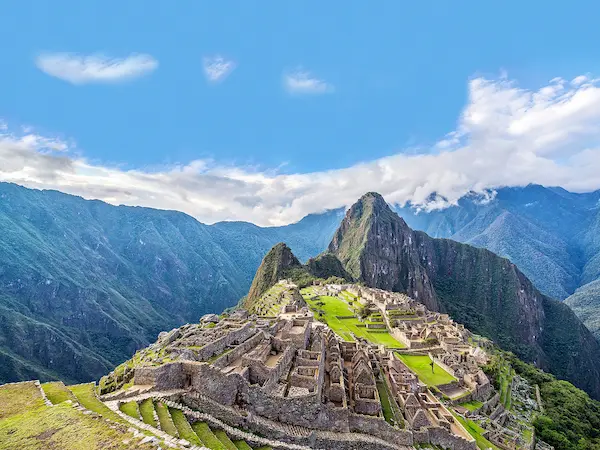
The main reasons why did the incas build Machu Picchu
There is no single explanation for Machu Picchu’s purpose, but multiple theories converge on a few central ideas: it was likely a royal estate, a ceremonial center, a symbol of imperial power, and a site with strategic and agricultural importance.
A royal estate for the Inca emperor Pachacútec
Most historians agree that Pachacútec, the ninth Sapa Inca, ordered the construction of Machu Picchu around 1450. He is often compared to great visionaries like Caesar or Alexander the Great due to his military expansion and urban planning achievements.
Machu Picchu would have served as his private retreat — a place for rest, ceremonies, and governance away from Cusco. Archaeological evidence supports this theory: the fine stonework, fountains, and residential areas were designed for the elite, not for large populations. The site was both luxurious and sacred, symbolizing the emperor’s divine connection with nature and the gods.
A religious and ceremonial center in the Andes
Religion was at the heart of Inca life. The Incas worshiped natural elements — the sun (Inti), the moon (Killa), the earth (Pachamama), and the mountains (Apus). Machu Picchu’s layout aligns with astronomical events and surrounding sacred peaks, suggesting that it was a ceremonial hub.
Structures like the Temple of the Sun, the Room of the Three Windows, and the Intihuatana stone reveal a deep understanding of cosmic cycles. Priests could observe solstices and equinoxes to determine planting times and conduct rituals. This fusion of architecture and astronomy shows that Machu Picchu was not only political but deeply spiritual — a bridge between heaven and earth.
A symbol of political and spiritual power
The construction of Machu Picchu also demonstrated imperial power. Building a city in such a challenging location required immense resources and labor. By erecting it among the clouds, Pachacútec proved his control over nature and his divine right to rule.
Every perfectly cut stone, every terrace and staircase reflected order and hierarchy — values that the Inca state sought to project across its vast territories. Access was restricted to nobility, priests, and attendants, which enhanced its aura of exclusivity and reverence. The site’s hidden position made it both sacred and secure, an architectural statement of strength and sanctity.
A strategic site for controlling surrounding regions
Geographically, Machu Picchu lies between the Andes and the Amazon Basin — a crossroads of ecosystems and trade routes. This made it an ideal observation and control point for resources such as coca leaves, tropical fruits, and metals from the lower valleys.
Its terraces also contributed to agricultural production, allowing crops like corn, potatoes, and coca to grow in different microclimates. In this way, Machu Picchu was not only symbolic but also functional, serving as a node in the vast network of Inca logistics and resource management.
You may also like: Travel inspiration: How to plan a trip to Machu Picchu
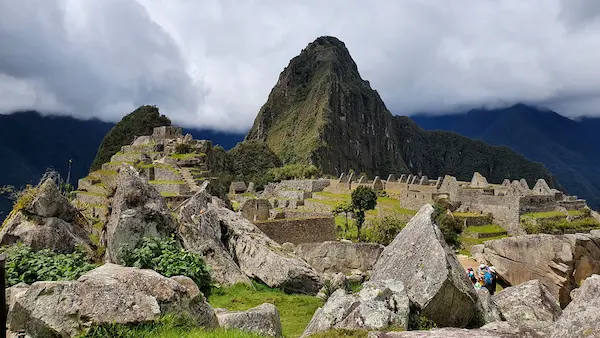
The architecture and location: clues to its purpose
Machu Picchu’s architecture is a masterpiece of adaptation. Built at 2,430 meters above sea level, it integrates perfectly with its surroundings. The Incas used no iron tools or wheels, yet they achieved millimetric precision in stone fitting that modern engineers still admire.
The sacred geography and astronomical alignment
The site’s orientation aligns with the cardinal directions and celestial events. During the June solstice, sunlight enters directly through the Temple of the Sun’s window, illuminating its inner altar. The Intihuatana stone — “the hitching post of the sun” — marks key solar dates.
These features demonstrate that Machu Picchu was a living observatory. It connected the agricultural calendar with the cosmic order, allowing priests to synchronize human activity with divine rhythms. This blend of science and spirituality was one of the Incas’ greatest achievements.
The connection between nature, spirituality, and engineering
Machu Picchu’s design follows the contours of the mountain rather than altering them. The terraces prevent erosion, the drainage systems channel rainwater efficiently, and the walls are slightly inclined to resist earthquakes. Everything was designed for harmony and permanence.
This environmental sensitivity reveals the Inca philosophy of reciprocity (ayni). They believed humans should give back to nature as much as they took. Machu Picchu thus stands as a physical embodiment of their worldview — one where technology serves balance, not domination.
How the site’s design reflected Inca cosmology
The city’s organization mirrors the Inca understanding of the cosmos. The division between the agricultural and urban sectors represents duality: hanan (the upper world) and hurin (the lower world). Some researchers also believe the entire site forms the shape of a condor in flight, symbolizing connection with the heavens.
To truly understand why did the incas build Machu Picchu, it’s essential to look at this cosmic design. Every stone and passageway carries meaning. The water channels, the sacred plazas, and the alignment with nearby peaks reveal that Machu Picchu was far more than a city — it was a cosmic model, a living reflection of the Inca universe.
Theories and debates about Machu Picchu’s real function
Despite decades of research, questions remain. Was Machu Picchu a royal residence, a temple complex, or perhaps a refuge during political instability? Scholars continue to debate its true role based on new findings and technologies.
Academic perspectives and archaeological evidence
Excavations led by Peruvian and international teams have uncovered ceramics, tools, and burial sites suggesting that a small, elite population lived there year-round. The presence of ceremonial artifacts, such as finely carved stones and ritual vessels, supports the theory of a sacred purpose.
However, Machu Picchu was likely multifunctional. Like other Inca sites, it combined politics, religion, and economics, blurring the boundaries between these spheres. This complexity explains why it continues to defy simple classification.
You may also like: Fishing in the amazon river of Perú
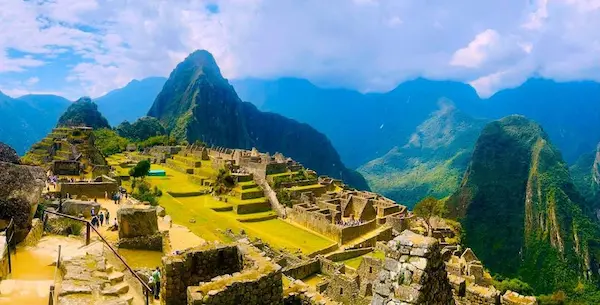
Why some believe it was a fortress or observatory
Because of its defensive position, some experts have argued that Machu Picchu might have served military or observational functions. Its steep cliffs, limited entryways, and commanding views over the Urubamba Valley made it easily defensible.
At the same time, its astronomical precision suggests a scientific role. Priests and engineers could have used it to study celestial phenomena crucial for agricultural and ritual calendars. Thus, Machu Picchu could have served both spiritual and practical purposes simultaneously.
What recent studies reveal about its true role
Modern technology, including LiDAR scans, has revealed hidden terraces, aqueducts, and pathways around the site. These findings indicate that Machu Picchu was part of a larger network of Inca settlements, connected through the Qhapaq Ñan roads.
This suggests that the city was not isolated but integrated into the empire’s broader administrative and ceremonial landscape. In this context, Machu Picchu may have functioned as a regional hub for governance, religion, and agricultural management.
Legacy and significance of Machu Picchu today
Centuries after its construction, Machu Picchu continues to inspire awe. It represents not only the genius of the Inca builders but also a vision of coexistence between humanity and the natural world.
A World Heritage Site and symbol of Inca genius
Recognized by UNESCO in 1983, Machu Picchu is now one of the most visited cultural landmarks in the world. It attracts scientists, historians, and travelers eager to experience its mystery firsthand.
Its survival through earthquakes, weather, and centuries of isolation is a testament to Inca engineering. Every year, preservation efforts seek to balance tourism with sustainability, ensuring that future generations can continue to explore its secrets.
Lessons from Machu Picchu about sustainability and harmony with nature
The Incas built without destroying. Their methods respected the landscape’s form, used local materials, and applied techniques that prevented environmental degradation. In modern times, these principles resonate strongly in discussions about sustainable development.
Machu Picchu teaches us that technology and ecology can coexist. Understanding why did the Incas build Machu Picchu allows us to rediscover values of respect, community, and equilibrium that remain relevant today.
Why Machu Picchu remains a mystery and a marvel
It was no accident that Machu Picchu was constructed. For the Incas, every terrace, temple, and stone carried deep meaning. It was a place where daily life, astronomy, and religion existed in perfect harmony. Even centuries later, Machu Picchu stands as a lasting answer to the question “Why did the Incas build Machu Picchu?”—a testament to their ingenuity and their profound connection with nature. It reminds us that their purpose was not merely to survive, but to build something that would endure forever.

