
Hi there. If you’re here, it’s probably because you want to know what happened to the Inca civilization after the Spanish arrival. Many people have heard of the grandeur of the Inca Empire its architecture, roads, and breathtaking cities high in the Andes but few truly understand what came next.
In this post, I’ll walk you through that turning point in history in a simple, human way how an advanced civilization faced invasion, collapse, and transformation. Together, we’ll explore how much of that world still lives on today.
Before the conquest understanding the Inca Empire’s power
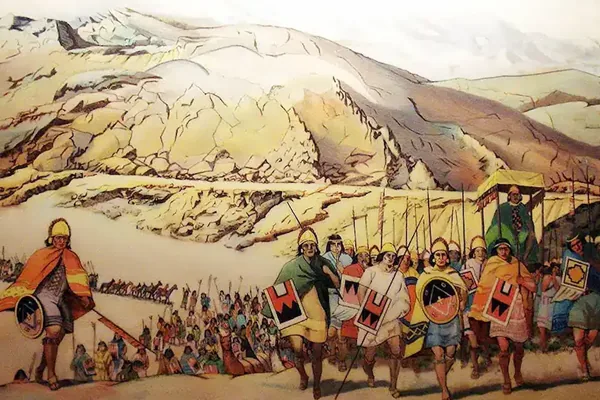
It’s worth pausing to see what their world looked like before conquest changed everything. The Incas were not just warriors or builders of stone cities they were visionaries who managed to thrive in one of the planet’s most challenging geographies. Their empire stood as a model of organization, resilience, and ingenuity long before European ships appeared on the horizon.
A complex and expansive civilization
Before diving into what happened to the Inca civilization, it’s essential to understand its state before the Spanish arrived. Known as Tahuantinsuyu, the Inca Empire was one of the most advanced and organized societies in pre-Columbian America. It stretched across present-day Peru, Ecuador, Bolivia, Chile, and Argentina.
Its capital, Cusco, was the heart of an efficient administrative system built on community labor, resource management, and a sophisticated road network that connected mountains, coasts, and jungles. The Incas had developed a state strong enough to control vast territories and integrate diverse cultures under one rule.
Internal weakness before the spanish came
When examining what happened to the Inca civilization, we must also consider its internal tensions. Before the arrival of Europeans, the empire had already been weakened by a civil war between two brothers: Huáscar and Atahualpa, sons of the late ruler Huayna Cápac.
This war divided the empire’s leadership, leaving it fragile and disunited when Francisco Pizarro’s forces appeared on the coast in 1532. The Spanish would soon exploit these divisions and this internal conflict is one of the main reasons behind what happened to the Inca civilization.
You may also like: Where to eat cheap in Cusco: Route and Tips

The Spanish conquest the turning point
Their cities were connected by a vast network of roads, their administration functioned with remarkable precision, and their people shared a deep spiritual bond with nature and their gods. Yet, beneath this harmony, tensions and rivalries simmered.
Atahualpa’s capture and the fall of Cusco
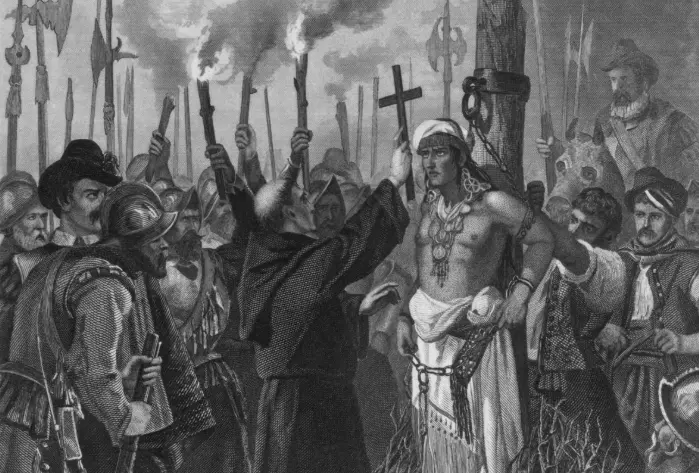
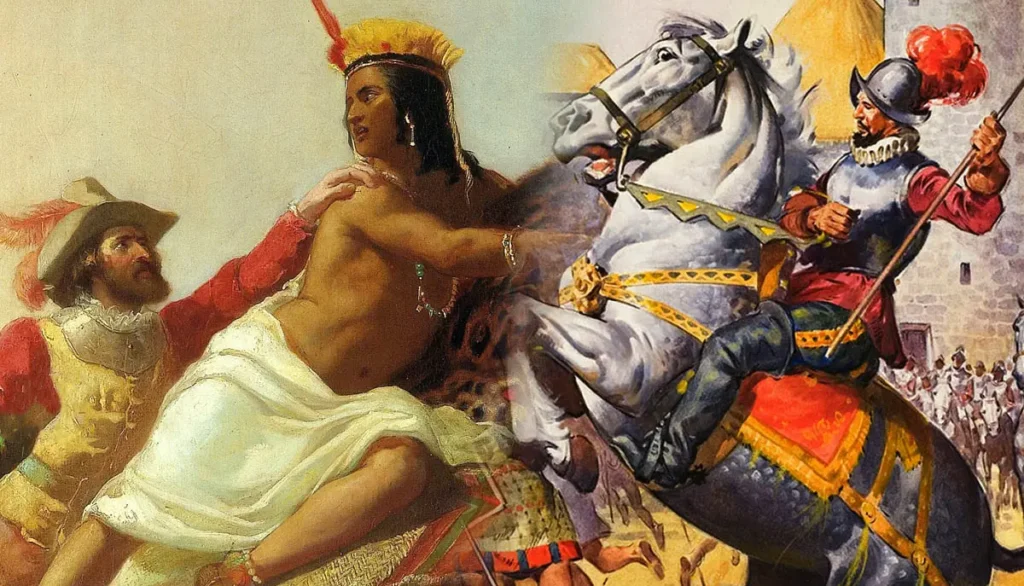
The key event that defines what happened to the Inca civilization is the Spanish conquest. In 1532, Francisco Pizarro and his men arrived in Cajamarca, where they met the Inca ruler Atahualpa. The meeting turned into an ambush. The Spaniards captured Atahualpa, executed many of his soldiers, and later killed him despite having accepted a vast ransom of gold and silver for his release .
Imagine the psychological impact: the sun god’s representative on Earth, suddenly in chains. The Inca political system, centered on divine kingship, was shattered in a single blow.
External factors that accelerated the collapse
When we talk about what happened to the Inca civilization, we must remember that the Spanish were not alone in bringing about its fall.
- Disease: Smallpox and other European diseases had spread through the Andes even before Pizarro arrived, devastating entire populations with no immunity.
- Alliances: The Spaniards allied with local tribes resentful of Inca domination, using them as powerful allies in battles.
- Technology and Strategy: Horses, firearms, and metal armor gave the Spaniards an advantage in combat.
So, what happened to the Inca civilization was not a simple military defeat it was the result of a combination of epidemic, betrayal, and technology that overwhelmed a society already weakened from within.
How did the arrival of the Spanish affect the Inca civilization?
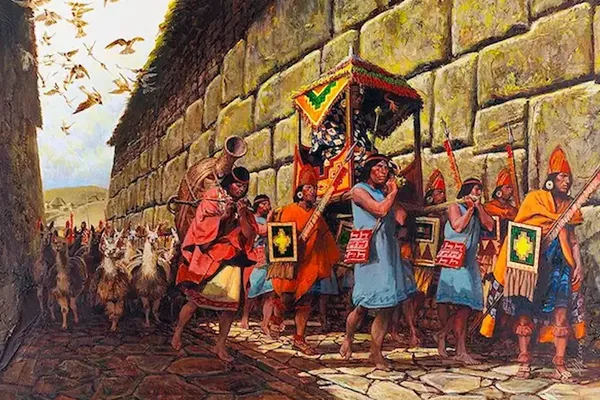
The arrival of the Spanish had a profound impact on the Inca Empire. By the time Francisco Pizarro reached the Andes in 1532, the civilisation had already been weakened by a civil war between Atahualpa and Huáscar, as well as diseases such as smallpox that had spread throughout the region. These circumstances made it easier for the Spanish to seize control of the empire.
To understand what happened to the Inca civilization, it is important to recognise that the conquest affected every aspect of Inca society. Political institutions were dismantled, many temples were destroyed or converted for colonial use, and Indigenous communities were forced to adapt to a new social and economic system under Spanish rule.
What happened to the Incas after the Spanish conquest?
After the Spanish conquest, the Inca Empire ceased to exist as an independent state, but the Inca people did not disappear. Some communities resisted Spanish control for decades, particularly in Vilcabamba, while others gradually adapted to life under colonial administration. Many traditions survived despite the significant political and cultural changes that followed the conquest.
Today, what happened to the Inca civilization can still be seen in the enduring legacy of its people. The Quechua language, traditional farming methods, weaving techniques, and cultural celebrations continue to be preserved across the Andes, demonstrating that the influence of the Incas remains an important part of Peru’s heritage.
What factors brought about the fall of the Inca civilization?
Several factors contributed to the collapse of the Inca Empire, making its decline the result of multiple events rather than a single battle. Internal conflict played a major role, as a civil war between the brothers Atahualpa and Huáscar divided the empire just before the arrival of the Spanish. At the same time, diseases such as smallpox spread across the Andes, reducing the population and weakening political stability.
When examining what happened to the Inca civilization, historians also point to the Spanish conquest as a decisive factor. The capture of Emperor Atahualpa, the occupation of Cusco, and the introduction of a new colonial administration gradually dismantled the Inca political system. Although the empire fell during the sixteenth century, many aspects of Inca culture endured and continue to be preserved in the traditions, language, and communities of modern Peru.
Breaking down an Empire, the new Colonial order
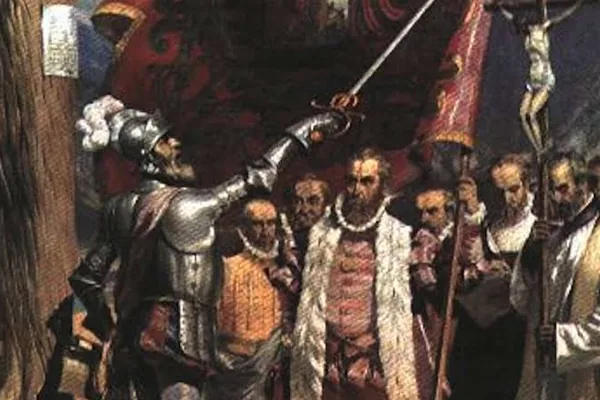
The Spanish conquest didn’t simply mark the fall of a great civilization; it initiated the creation of a completely new order in the Andes. What happened to the Inca civilization wasn’t just about losing territory or leaders it was about the systematic dismantling of their way of life. The following sections explore how this transformation unfolded: from the destruction of Inca governance to deep cultural and spiritual changes that shaped Peru’s identity for generations.
Dismantling inca administration
After the conquest, the Spanish replaced the Inca state with their colonial administration. Systems like the encomienda were introduced, where native communities were forced to work and pay tribute to Spanish colonizers. This shift destroyed the communal economic model that had sustained the empire for centuries.
This was a crucial part of what happened to the Inca civilization: the dismantling of its political, economic, and spiritual systems a process that changed the Andes forever.
Cultural and religious transformation
Religion became another powerful tool of domination. Spanish missionaries destroyed temples and idols, built churches on sacred Inca sites, and replaced traditional beliefs with Catholicism.
However, this wasn’t total erasure. Over time, Andean people began to blend elements of both worlds Catholic saints with Inca deities, and Christian festivals with Andean rituals. This cultural syncretism is an essential part of what happened to the Inca civilization showing that even under pressure, culture adapts and survives.
Resistance and the Neo-Inca State
The fall of Cusco did not mark the end of the Inca spirit. What happened to the Inca civilization after the Spanish arrival was far more complex than a simple defeat it was a story of courage, survival, and cultural endurance. While the empire’s political structure collapsed, the heart of its people continued to beat strongly across the Andes.
From organized resistance to the creation of a hidden kingdom in Vilcabamba, and later, through the traditions that still live in modern communities, the Inca legacy proved impossible to erase.
The rebellions and the hidden kingdom
After Cusco fell, resistance didn’t end. In 1536, Manco Inca Yupanqui led a rebellion that nearly expelled the Spaniards. Later, he retreated to the jungle and established the Neo-Inca State in Vilcabamba, which lasted until 1572.
This final bastion kept Inca traditions alive for nearly 40 years. It’s a powerful reminder that what happened to the Inca civilization was not just collapse it was also defiance and hope.
Enduring Legacy in the Andes
Even after Vilcabamba fell, many Inca traditions endured: the Quechua language, terrace farming, and communal labor systems still shape Andean life today.
If you ever travel through the Sacred Valley or the mountains of Cusco, you’ll see that this heritage is alive. Some of the best experiences are guided by a local Peru tour operator, where you can learn directly from communities that still practice ancestral techniques and celebrate Inca festivals passed down for centuries.
You may also like: Hidden places in Cusco: Discover the best-kept secrets
Tourism, memory, and living history
History is not just something we read about in books or museums in Peru, it breathes through the mountains, the people, and the places that keep the memory of the Incas alive. Through tourism, education, and community initiatives, travelers and locals together play a vital role in preserving this ancient heritage.
Preserving the past through responsible travel
Another way we see what happened to the Inca civilization is through cultural tourism. Places like Machu Picchu are now among the world’s most visited archaeological sites.
Walking through its stone walls, you can still feel the mystery of a civilization that mastered architecture, astronomy, and agriculture in extreme landscapes. To experience it respectfully, many travelers choose certified MachuPicchu tours
that emphasize education and conservation rather than simple sightseeing.
Reviving the Inca Trails
The ancient Inca road network the Qhapaq Ñan remains one of the greatest engineering achievements in human history. Today, sections of it are restored and open to modern hikers.
Joining Inca Trail treks allows travelers to walk the same paths that once connected the empire, crossing valleys, snow-capped peaks, and cloud forests. These treks are more than an adventure; they’re a living classroom that helps people understand what happened to the Inca civilization and how its achievements endure centuries later.
The Economic system of the Inca Empire
The Inca Empire was not just a vast territory ruled by powerful leaders; it was an incredibly organized society sustained by collective effort, cooperation, and balance with nature. Every system from agriculture to architecture reflected a deep understanding of community and sustainability.
Understanding how the empire worked
To better appreciate what happened to the Inca civilization, it helps to understand what made it so efficient before the conquest. The Inca economy wasn’t based on money but on reciprocity and labor exchange what historians call the mita and ayni systems.
Communities contributed work to state projects (roads, agriculture, or temples), and in return, the state guaranteed food and security. It was a model of cooperation that kept the empire strong without the need for markets or coins.
When the Spanish imposed taxes and private ownership, they destroyed this delicate balance another crucial part of what happened to the Inca civilization.
Examples of Inca economic genius
- Terrace farming: The Incas built thousands of terraces across mountains to optimize crop growth.
- Storage houses (qullqas): They stored food strategically to prevent famine.
- Llama caravans: They managed trade networks that transported goods across vast regions.
Each of these examples shows how advanced the Incas were and how devastating the collapse became when these systems were dismantled.
You may also like: Untold Secrets in the History of the Inca Empire

Cultural legacy and modern identity
Though the Spanish conquest dismantled the political structure of the Incas, it couldn’t erase their cultural roots. These roots survived through language, art, agriculture, and the values that still guide Andean communities today.
This enduring legacy reveals that the Incas were not simply a civilization lost to time, but a living influence that continues to shape how Peruvians see the world, connect with nature, and celebrate their past. Let’s look at how this legacy remains alive through two essential aspects: the Inca influence on modern Peru and why the Inca story still matters.
The Inca influence on modern Peru
When reflecting on what happened to the Inca civilization, it’s clear that it never truly disappeared. The Andean worldview, respect for nature, and community spirit remain deeply woven into Peruvian identity.
The Quechua language, Andean music, and textile traditions are still strong in rural regions. The yearly Inti Raymi (Festival of the Sun) in Cusco is a direct homage to Inca roots a bridge between past and present.
Why the Inca story still matters
Today, learning about what happened to the Inca civilization reminds us of human resilience. The Incas lost political control, but they didn’t lose their essence. Their agricultural wisdom, ecological understanding, and respect for the environment have inspired modern sustainability movements.
So when we look at Machu Picchu or walk through the Sacred Valley, we’re not just seeing ruins we’re witnessing the survival of spirit and knowledge that outlived conquest.
The end of an empire and the birth of a legacy
To understand what happened to the Inca civilization is to understand how strength and fragility coexist in every society. The Spanish arrival brought destruction and change, but it also revealed the endurance of a culture that refused to vanish.
Even today, the Inca legacy lives in the Andes’ terraces, the rhythm of Quechua songs, and the stories told in every mountain village. History, after all, is not just about what was lost but about what continues.
Thank you for joining this journey. Hopefully, it helps you see that the Incas are not just part of the past they’re a living presence shaping Peru and the world today.

