
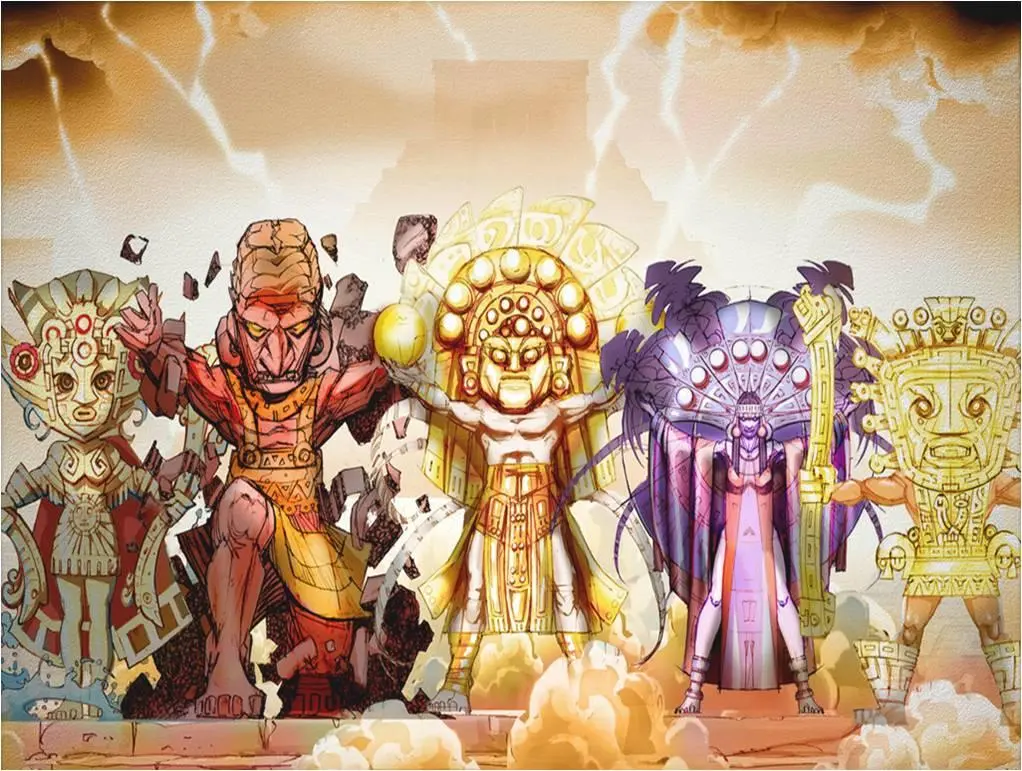
Peru is widely known for its impressive archaeological sites, breathtaking landscapes, and rich cultural heritage. However, beyond the stone walls of ancient cities and the traditions preserved by local communities, there is another fascinating world waiting to be discovered: the stories, legends, and beliefs that have shaped the country’s identity for centuries.
Many of these tales originated long before the rise of the Inca Empire, while others were developed and preserved by the Incas themselves. Passed down through generations, they explain the creation of the world, the origins of important civilizations, and the connection between humans, nature, and the spiritual realm.
Today, Peruvian mythology remains an essential part of the country’s cultural legacy. Travelers exploring Peru often encounter references to mythical beings, sacred animals, legendary heroes, and supernatural places that continue to inspire local traditions. Understanding these stories offers a deeper perspective on the beliefs that influenced ancient societies and still resonate throughout modern Peru.
You might be interested in: National animals of Peru: wildlife, meaning and where to see them
What is Peruvian mythology?
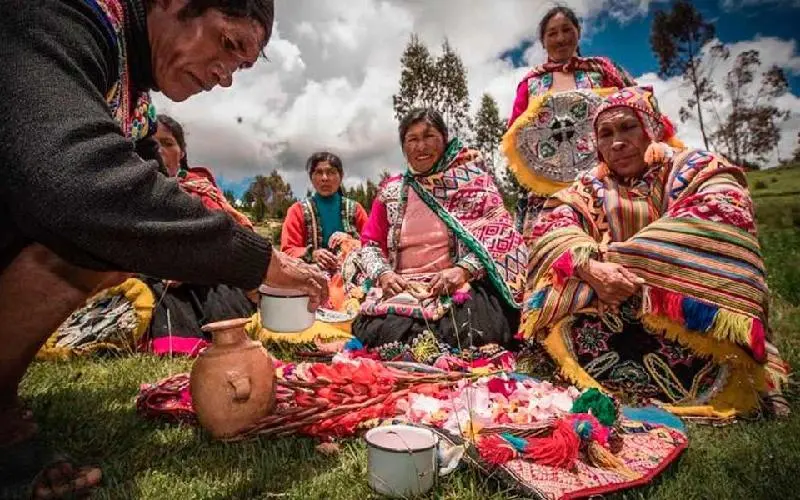
Peruvian mythology refers to the collection of myths, legends, spiritual beliefs, and traditional stories that emerged from the diverse cultures that inhabited the region long before the arrival of Europeans. These narratives were used to explain natural phenomena, teach moral lessons, preserve cultural values, and strengthen the relationship between communities and the environment.
Many Western mythologies that focus primarily on gods and heroes, Peruvian traditions often emphasize harmony between humans and nature. Mountains, rivers, animals, and celestial bodies were frequently considered sacred entities with spiritual significance.
Some common themes found throughout these stories include:
- The origin of humanity.
- The creation of the natural world.
- Sacred animals and supernatural beings.
- The power of the mountains and the earth.
- The relationship between humans and divine forces.
- Lessons about respect, balance, and community.
These beliefs played a crucial role in shaping the social and spiritual life of ancient civilizations and continue to influence cultural traditions throughout Peru today.
Why Peruvian mythology is still important today
Although centuries have passed since many of these stories were first told, their influence remains visible across Peru. Festivals, traditional dances, local art, and oral storytelling continue to preserve ancient beliefs and symbols that originated in these myths.
Mythology also helps travelers understand how indigenous communities perceive the world around them. Many people in the Andes and the Amazon still maintain a profound respect for nature that reflects the teachings of ancestral legends.
Visitors exploring remote regions often discover that myths are not simply considered stories from the past. Instead, they remain part of local identity and cultural memory. In some communities, legends continue to guide traditions, celebrations, and spiritual practices.
Those interested in learning more about Amazonian traditions can complement their cultural journey by exploring the rainforest, where stories about mystical beings and powerful spirits remain deeply rooted in local communities. Staying at Amazon garden lodge can provide travelers with an opportunity to experience the natural environment that inspired many of these fascinating narratives.
You might be interested in: What is the best time to go to Machu Picchu? Travel tips
10 fascinating stories from Peruvian mythology
The myths and legends of Peru offer a remarkable glimpse into the imagination and worldview of ancient civilizations. Some stories explain the origins of entire empires, while others warn of supernatural dangers hidden within forests, mountains, and rivers.
These tales have survived for centuries because they continue to capture the curiosity of those who hear them. Whether based on historical events, spiritual beliefs, or symbolic teachings, each legend contributes to the rich tapestry of Peruvian mythology.
1. The legend of Manco Cápac and Mama Ocllo
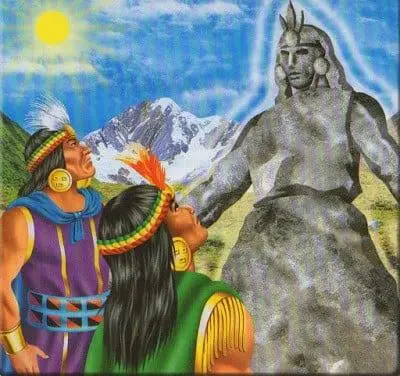
One of the most famous stories in mythology tells the origin of the Inca civilization. According to the legend, the Sun God Inti observed that humanity was living without order, knowledge, or guidance. To help the people, he sent his children, Manco Cápac and Mama Ocllo, to Earth.
Emerging from the sacred waters of Lake Titicaca, the siblings carried a golden staff given to them by Inti. They were instructed to travel north and establish a city where the staff sank easily into the ground.
After a long journey through the Andes, they arrived in the Cusco Valley, where the staff disappeared into the earth. Recognizing this as the chosen location, they founded what would eventually become the capital of the Inca Empire.
According to the story:
- Manco Cápac taught men agriculture, governance, and construction.
- Mama Ocllo taught women weaving, domestic skills, and community organization.
- Cusco became the spiritual and political center of the empire.
- The legend reinforced the divine authority of Inca rulers.
Beyond explaining the origins of the Inca state, this story highlights the importance of knowledge, social order, and cooperation within Andean society.
2. The god Viracocha and the creation of the world
Among the most powerful deities in mythology, Viracocha is often regarded as the creator of the universe. Ancient traditions describe him as a supreme god who emerged from the waters before the existence of the sun, moon, or stars.
According to the myth, Viracocha created the heavens, the earth, and the first inhabitants. However, his initial creations displeased him, leading him to destroy them and begin again. He then created a new humanity from stone and gave life to people across different regions of the Andes.
The story also tells how Viracocha traveled throughout the land teaching wisdom, laws, and civilization before eventually disappearing across the ocean.
Several important themes appear in this legend:
- Creation and rebirth.
- Divine intervention in human affairs.
- The spread of knowledge and culture.
- The connection between humanity and sacred forces.
Even today, many historians consider Viracocha one of the most influential deities in the spiritual traditions of the Andes.
3. The legend of the Ayar brothers
Another important story within mythology explains the origins of the Inca people through the adventures of four brothers and their sisters. According to the legend, the siblings emerged from the caves of Pacaritambo after being chosen to establish a new civilization.
The four brothers, Ayar Manco, Ayar Cachi, Ayar Uchu, and Ayar Auca, began a journey across the Andes in search of a suitable place to build their kingdom. Along the way, they faced numerous challenges, rivalries, and supernatural events that tested their strength and leadership.
As the story progresses, only Ayar Manco successfully completes the journey. He eventually becomes Manco Cápac, the founder of Cusco and the first ruler of the Inca people.
The legend reflects several important concepts:
- Leadership and sacrifice.
- The search for a homeland.
- The divine origins of the Inca dynasty.
- The transformation of individuals into sacred beings.
Many scholars believe this myth may preserve symbolic memories of migration patterns and the formation of early Andean societies.
4. The story of the Amaru serpent
The Amaru is one of the most fascinating creatures found in mythology. Often described as a giant serpent with features of multiple animals, including birds, llamas, and reptiles, the Amaru was believed to inhabit the boundary between different worlds.
In Andean cosmology, existence was often divided into three realms:
- Hanan Pacha (the upper world).
- Kay Pacha (the world of the living).
- Ukhu Pacha (the underworld).
The Amaru served as a powerful symbol connecting these realms. Unlike many serpents in Western mythology, it was not necessarily viewed as evil. Instead, it represented transformation, wisdom, fertility, and the forces of nature.
Ancient depictions of the Amaru can still be found in Andean art, textiles, and archaeological sites. Its image continues to appear in modern cultural expressions throughout Peru, particularly in regions where indigenous traditions remain strong.
5. The Fox of the Andes
Animals play a significant role in Peruvian mythology, and few are as prominent as the Andean fox. In many traditional stories, the fox is portrayed as a clever but often arrogant character whose actions lead to unexpected consequences.
One of the most popular versions tells of a fox who wished to visit the heavens. Through the help of a condor, he managed to reach the sky and participate in a great celestial feast. However, his greed soon caused problems.
Instead of showing gratitude, the fox consumed far more food than he should have and behaved disrespectfully toward the heavenly hosts. As punishment, he eventually fell back to Earth.
The legend teaches lessons about:
- Humility.
- Respect for others.
- Self-control.
- The consequences of greed.
Stories involving the fox remain popular in Andean communities because they combine humor with valuable moral teachings.
6. The Tunche of the Amazon
While many Andean legends focus on mountains and sacred lakes, Amazonian traditions introduce travelers to a very different world filled with dense forests, hidden rivers, and mysterious spirits.
One of the most feared figures in Peruvian mythology is the Tunche, a supernatural being said to wander deep within the rainforest. According to local beliefs, the Tunche announces its presence through an eerie whistle that echoes through the jungle.
Descriptions vary from region to region. Some stories portray the Tunche as the spirit of a deceased person, while others describe it as a guardian of the forest that punishes those who disrespect nature.
Common elements found in Tunche legends include:
- Mysterious sounds in the jungle.
- Encounters during nighttime.
- Warnings against reckless behavior.
- Respect for the natural environment.
Although interpretations differ, the Tunche remains one of the most enduring and intriguing figures in Amazonian folklore, demonstrating how mythology continues to shape local perceptions of the rainforest.
7. The Yacumama, mother of the rivers
Among the most legendary creatures of the Amazon, few inspire as much fascination as the Yacumama. Its name comes from Quechua words that can be translated as “Mother of the Waters.”
According to mythology, the Yacumama is an enormous serpent that inhabits rivers, lagoons, and remote waterways throughout the Amazon Basin. Some legends describe it as so large that it can swallow boats and create powerful currents.
For indigenous communities, however, the Yacumama represents much more than a dangerous creature. It is often viewed as a guardian spirit responsible for protecting aquatic ecosystems and maintaining balance within nature.
The legend reflects several important beliefs:
- Rivers possess spiritual significance.
- Nature should be respected.
- Humans are not separate from the environment.
- Powerful forces exist beyond human understanding.
Even today, stories about the Yacumama continue to be shared throughout the Peruvian Amazon, particularly among communities that maintain strong connections with traditional knowledge.
8. The Pishtaco legend
Among the most unsettling figures in Peruvian mythology is the Pishtaco, a mysterious character that has inspired fear in Andean communities for centuries. Unlike many mythological beings associated with nature or creation, the Pishtaco is often portrayed as a dangerous outsider who preys on unsuspecting travelers.
Descriptions of the Pishtaco vary depending on the region and historical period. In many versions of the story, he is depicted as a tall man who wanders isolated roads, mountains, and rural areas searching for victims. According to legend, he steals body fat from people, a substance that was once believed to possess great value and power.
Historians suggest that this myth may have evolved during the colonial period, reflecting local fears surrounding exploitation and foreign influence. Over time, the Pishtaco became a symbol of distrust toward unknown individuals and external threats.
The legend remains significant because it reflects:
- Social fears and historical experiences.
- The importance of community protection.
- Cultural resistance to outside forces.
- The adaptation of myths over time.
Even today, stories about the Pishtaco can still be heard in remote Andean regions, demonstrating how ancient legends continue to evolve and remain relevant within local culture.
9. The enchanted city of Paititi
The search for lost cities has fascinated explorers for centuries, and few legends have generated as much curiosity as Paititi. Often described as a hidden city filled with immense riches, it is one of the most enduring mysteries in Peruvian mythology.
According to various accounts, Paititi was established deep within the forests east of the Andes. Some stories claim that Inca nobles fled there after the Spanish conquest, taking valuable treasures and sacred objects with them. Others suggest that it was an ancient city that existed long before the arrival of Europeans.
Over the years, numerous explorers have attempted to locate Paititi. Despite countless expeditions, no definitive evidence has confirmed its existence, adding to the mystery surrounding the legend.
Several factors contribute to the story’s popularity:
- The possibility of undiscovered civilizations.
- Connections to the Inca Empire.
- The vast and unexplored Amazon rainforest.
- The human fascination with hidden treasures.
Whether real or mythical, Paititi continues to capture the imagination of historians, archaeologists, and travelers who dream of uncovering one of South America’s greatest secrets.
10. The Condor and the Hummingbird
Birds occupy a special place in Peruvian mythology, often serving as messengers between the earthly and spiritual worlds. One particularly meaningful story involves the condor and the hummingbird, two creatures that symbolize very different qualities.
The condor, one of the largest flying birds in the world, has long been associated with strength, wisdom, and the heavens. The hummingbird, despite its small size, represents perseverance, agility, and determination.
In traditional versions of the legend, the two birds embark on a journey together and face various challenges. Although the condor possesses great power, the hummingbird often succeeds through patience and adaptability. The story teaches that courage and intelligence can be just as valuable as physical strength.
The symbolism behind this tale includes:
- Respect for different abilities.
- The balance between strength and humility.
- Cooperation and mutual support.
- The importance of perseverance.
These themes continue to resonate in modern Peru, where both birds remain important cultural symbols.
You may also be interested in: Is Machu Picchu Hard to Hike? A Complete Guide for Travelers
Where to experience Peruvian mythology during your trip
Learning about myths in books is fascinating, but experiencing the landscapes that inspired them offers a completely different perspective. Throughout Peru, travelers can visit locations connected to legendary stories, sacred traditions, and ancient beliefs that have survived for generations.
Many destinations provide opportunities to better understand the cultural background behind Peruvian mythology and its influence on local communities.
Some of the most significant places include:
Cusco
As the former capital of the Inca Empire, Cusco is closely linked to stories about Manco Cápac, Mama Ocllo, and the origins of Inca civilization. Many archaeological sites, temples, and museums explore these traditions in detail.
Lake Titicaca
According to one of Peru’s most famous legends, Manco Cápac and Mama Ocllo emerged from the waters of Lake Titicaca before founding the Inca Empire. The lake remains one of the country’s most sacred locations.
The Sacred Valley
Ancient agricultural terraces, ceremonial centers, and mountain sanctuaries throughout the Sacred Valley provide insight into the spiritual beliefs that shaped Andean civilization.
The Peruvian Amazon
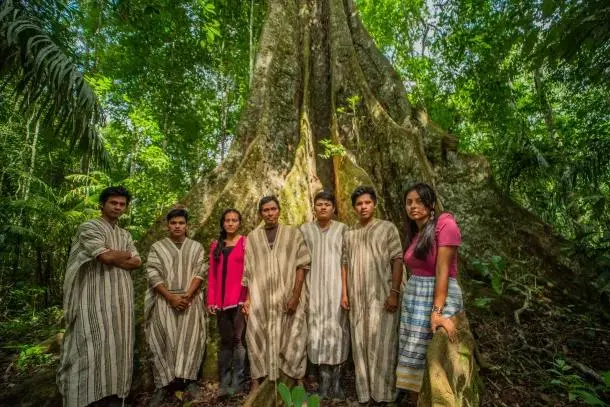
The rainforest is home to countless stories involving beings such as the Tunche and the Yacumama. Many indigenous communities continue to preserve oral traditions that connect mythology with the natural environment.
Ayacucho and the Andes
Several Andean regions maintain festivals, dances, and storytelling traditions that incorporate elements from pre-Columbian myths and local legends.
You may also be interested in: Cusco train to Machu Picchu: the scenic journey through the heart of the Inca world
Discover Peru beyond its history
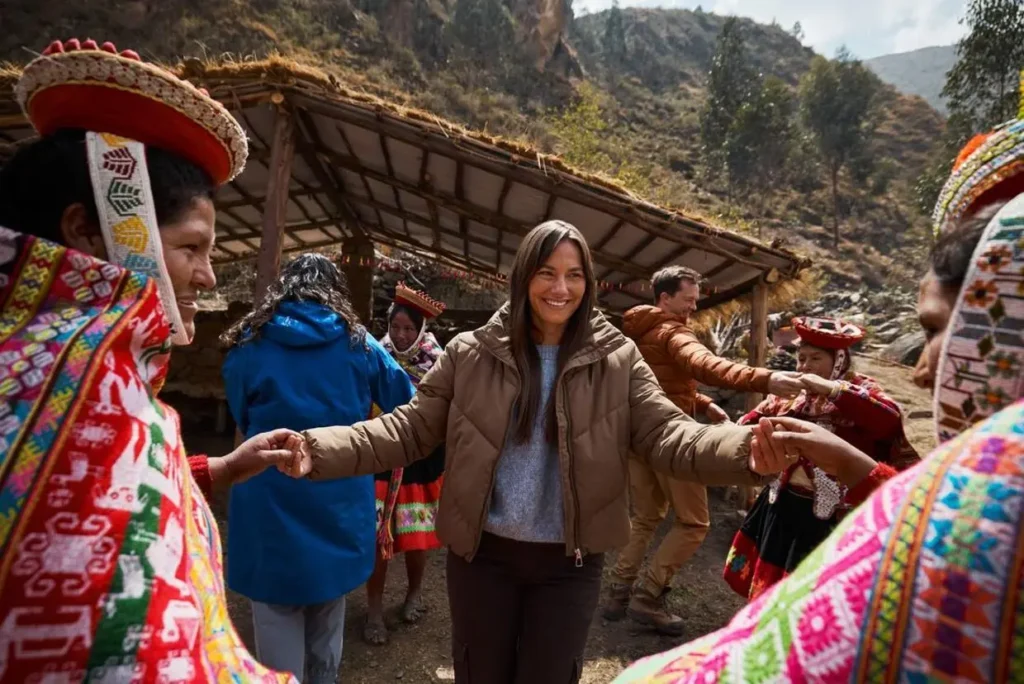
Ancient ruins and archaeological sites are only part of Peru’s remarkable heritage. Behind every mountain, river, and forest lies a collection of stories that reveal how past civilizations understood the world around them. These myths offer valuable insights into spirituality, community life, and the deep respect for nature that characterized many Andean and Amazonian cultures.
Exploring mythology allows travelers to connect with a different side of the country, one shaped not only by historical events but also by imagination, symbolism, and oral tradition. Whether you are walking through the streets of Cusco, visiting Lake Titicaca, or venturing into the Amazon rainforest, these legendary tales add another layer of meaning to every journey.
For those seeking a deeper cultural experience, understanding these stories can transform a trip into an opportunity to discover the beliefs, values, and traditions that continue to influence Peru today.

