
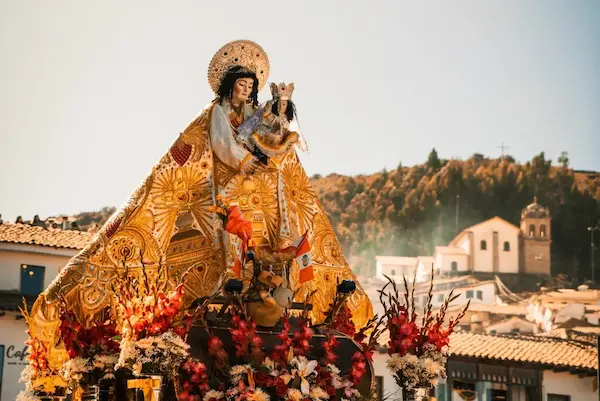
If you are planning to visit Peru, experiencing corpus christi cusco 2026 should be at the top of your list. This iconic festival is one of the most important religious and cultural celebrations in Cusco, blending Catholic traditions with ancient Andean beliefs.
Every year, thousands of travelers and locals gather in Cusco’s historic center to witness a vibrant procession of saints, traditional dances, and unique gastronomy. The corpus christi cusco 2026 celebration is not just a religious event it is a living expression of history, identity, and cultural fusion.
In this complete guide, you will discover everything you need to know about corpus christi cusco 2026, including dates, history, traditions, and travel tips.
You might be interested in: National animals of Peru: wildlife, meaning and where to see them
When is Corpus Christi Cusco 2026?
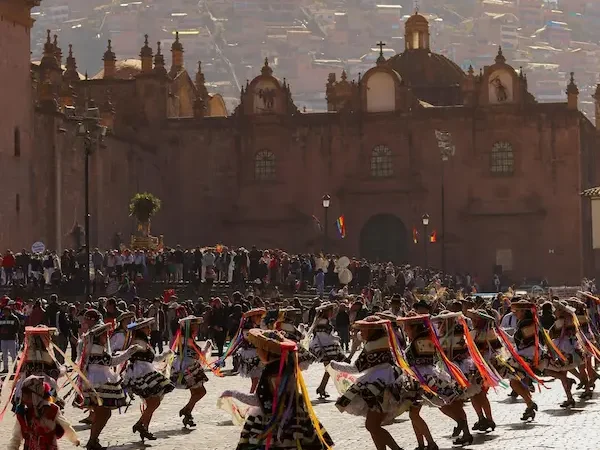
The date of Corpus Christi Cusco 2026 depends on the Catholic calendar, as the celebration takes place 60 days after Easter Sunday. In 2026, the main day will be celebrated on Thursday, June 4. However, in Cusco, the festivities extend over several days with different traditional events.
Typically, the festival follows this structure:
- Wednesday (eve): Entrance of the saints, when sacred images from different churches arrive at the Cusco Cathedral.
- Thursday (main day): The central procession takes place in the Plaza de Armas, bringing together thousands of locals and visitors.
- Following week: Octave celebrations, when the saints return to their respective parishes.
This schedule makes the celebration part of Cusco’s most festive season, when the city is filled with cultural events, religious traditions, and a vibrant atmosphere.
Every year, thousands of travelers and locals gather in Cusco’s historic center to witness colorful processions, traditional dances, and authentic gastronomy. This iconic festival is not only a religious event but also a powerful expression of identity and cultural fusion.
If you are planning your trip to Peru, you can also explore Machu Picchu trips or choose a Cusco 6 days 5 nights tour to complement your experience and make the most of your time in the region.
History of Corpus Christi in Cusco
To understand corpus christi cusco 2026, it is essential to explore its origins, which date back to the colonial period when Spanish authorities introduced Catholic traditions in the Andes. Before the Spanish arrival, the Incas held important ceremonies where mummified rulers were paraded through the city as a way of honoring their ancestors. Over time, these rituals were transformed and replaced by Catholic processions featuring saints and virgins, creating a unique blend of beliefs. This cultural fusion gave rise to what we see today, where Catholic devotion merges with Andean traditions and indigenous symbolism. As a result, the celebration has become one of the most authentic and meaningful cultural expressions in Peru, reflecting centuries of history, identity, and continuity.
You might be interested in: What is the best time to go to Machu Picchu? Travel tips
What happens during Corpus Christi Cusco 2026?
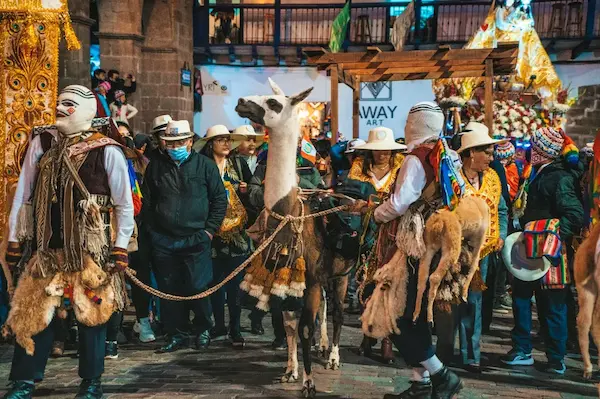
The celebration of corpus christi cusco 2026 unfolds over several days, each filled with meaning, devotion, and centuries-old traditions that bring together communities from across the city and surrounding areas.
The entrance of the saints
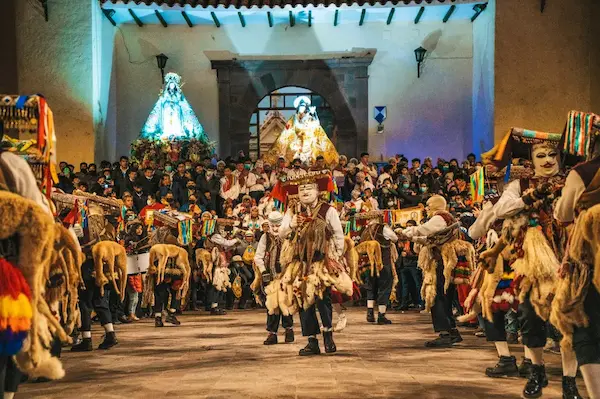
The festivities begin with the “Entrada,” where 15 saints and virgins are carried from their churches to the Cusco Cathedral. This moment is highly anticipated, as each image represents a specific neighborhood or parish, and their arrival symbolizes unity and shared identity.
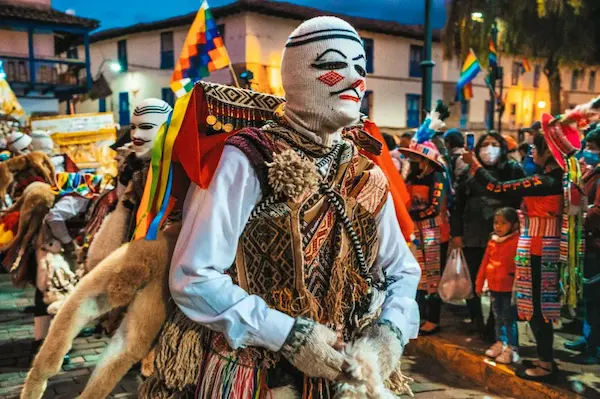
Each group is accompanied by traditional musicians, dancers in colorful costumes, and devoted followers who walk alongside the images. The streets become filled with energy, music, and offerings, creating a powerful and emotional atmosphere that marks the official start of the celebration.
The main procession
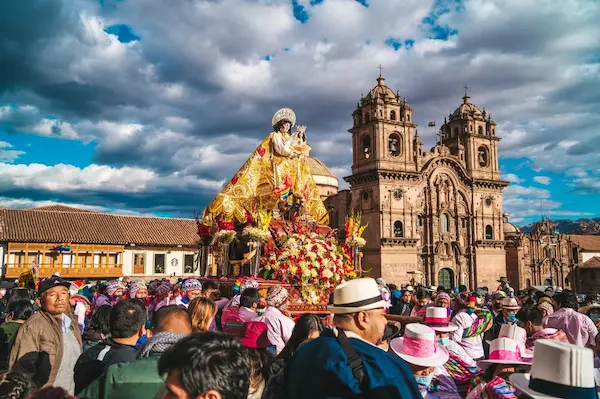
The highlight of the festival is the grand procession in Cusco’s Plaza de Armas. During this event, the Blessed Sacrament leads the procession, followed by the saints and virgins in a carefully established order that reflects their historical and religious importance.
Thousands of people gather to witness this moment, including locals, pilgrims, and visitors from around the world. The air is filled with incense, traditional music, and expressions of faith, while the streets are decorated with flowers and temporary altars. It is a deeply symbolic event that reflects both religious devotion and cultural heritage.
The octave celebration
After the main day, the sacred images remain inside the cathedral for several days, where they are visited by devotees who come to pay their respects. This period allows for reflection and continued celebration within the community.
At the end of the octave, the saints and virgins are carried back to their original churches in another procession, closing the cycle of festivities. This final moment is just as meaningful, as it represents the return of each image to its community, reinforcing the strong connection between tradition, faith, and local identity.g the end of the festival.
You might be interested in: Top 5 festivals in Cusco you must know
The 15 saints of Corpus Christi Cusco 2026
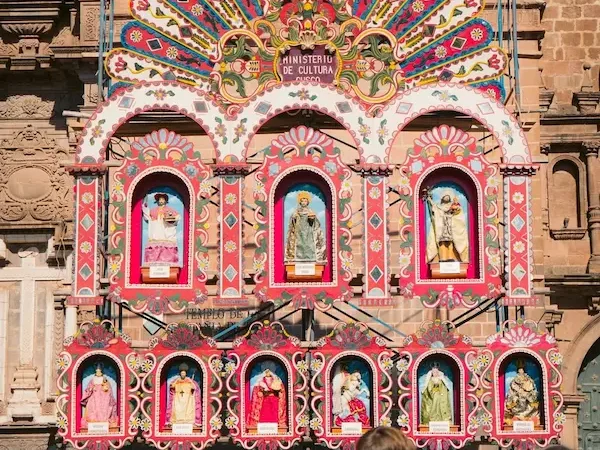
One of the most important elements of corpus christi cusco 2026 is the participation of the 15 saints and virgins that represent different parishes and districts of the city. Each image is deeply respected by its community and is carried in a grand procession to the Cusco Cathedral.
These sacred figures are not only religious symbols but also reflect centuries of tradition, identity, and cultural syncretism. During corpus christi cusco 2026, each saint arrives accompanied by dancers, musicians, and devoted followers, creating a vibrant and emotional atmosphere.
Here are the 15 saints and virgins that take part in the celebration:
- Saint Anthony (San Antonio): Known as the protector of lost items and patron of marriages, he is one of the most beloved figures in Cusco.
- Saint Jerome (San Jerónimo): Represents one of the traditional districts of Cusco and is associated with wisdom and religious devotion.
- Saint Christopher (San Cristóbal): The patron saint of travelers, often depicted carrying the Child Jesus.
- Saint Sebastian (San Sebastián): A symbol of resilience and faith, especially venerated in nearby communities.
- Saint Barbara (Santa Bárbara): Associated with protection against storms and natural forces.
- Saint Anne (Santa Ana): Considered the grandmother of Jesus, she represents family and tradition.
- Saint Blaise (San Blas): Protector of throat illnesses and patron of artisans, especially in the San Blas neighborhood.
- Saint Peter (San Pedro): One of the most important apostles, symbolizing leadership within the Church.
- Saint Joseph (San José): Represents humility, work, and family values.
- Virgin of the Nativity (Virgen de la Natividad): Symbolizes birth and renewal, widely venerated in Cusco.
- Virgin of Remedies (Virgen de los Remedios): Associated with healing and protection.
- Virgin Purified (Virgen Purificada): Represents purity and spiritual devotion.
- Virgin of Bethlehem (Virgen de Belén): One of the most important figures, considered the protector of Cusco.
- Virgin of the Immaculate Conception (Inmaculada Concepción): A central figure in Catholic tradition, symbolizing divine grace.
- Saint James (Santiago Apóstol): Often associated with Spanish influence and historical conquest, representing the colonial legacy.
Each of these figures is carried on elaborately decorated platforms adorned with flowers, silver ornaments, and traditional textiles. The weight of these platforms can exceed several hundred kilograms, requiring dozens of people to carry them through the streets.
During corpus christi cusco 2026, the gathering of all these saints in the Plaza de Armas symbolizes unity among Cusco’s communities and highlights the deep connection between faith, history, and culture.
This procession is one of the most powerful and visually striking moments of corpus christi cusco 2026, making it a must-see experience for visitors.
Why Corpus Christi Cusco 2026 is unique
There are many religious festivals around the world, but Corpus Christi Cusco 2026 stands out for several reasons. First, it combines Catholic and Andean traditions in a way that is rarely seen elsewhere, creating a unique expression of cultural and spiritual fusion.
Second, the scale of the event is truly impressive, with massive processions, richly decorated platforms (andas), and thousands of participants filling the streets of Cusco’s historic center.
Another aspect that makes this celebration special is the strong involvement of local communities. Each parish, including San Blas, Santa Ana, and San Sebastián, prepares for months to honor its patron saint. They organize music, traditional dances, and offerings that reflect their identity and heritage.
Finally, Corpus Christi Cusco 2026 is deeply rooted in local identity, making it an authentic experience rather than a staged tourist event. Visitors are not just observers; they become part of a living tradition that has been preserved for centuries.
If you want to experience this celebration in a deeper and more complete way, you can combine it with an 11-day Peru tour package, allowing you to explore not only Cusco but also Machu Picchu, the Sacred Valley, and other highlights of the country.
You might be interested in: Hiram Bingham train machu picchu: the ultimate luxury journey to the lost city of the incas
Best places to experience Corpus Christi Cusco 2026
The main location for corpus christi cusco 2026 is the Plaza de Armas, where the central procession takes place and the atmosphere is at its most vibrant and crowded.
However, you can also enjoy the festival from different spots around the city, each offering a unique perspective:
- Cusco Cathedral: The heart of the celebration, where all the saints gather. This is the best place to witness key religious moments and see the images up close before and after the procession.
- Nearby streets around Plaza de Armas: Ideal for avoiding the largest crowds while still experiencing the movement of the procession, traditional music, and local interactions.
- San Blas neighborhood: Known for its artistic vibe, this area offers a more relaxed and cultural perspective, with beautiful viewpoints and local artisans.
- San Pedro Market area: A great place to experience the local side of the celebration, especially if you want to try traditional food like chiri uchu and see how locals celebrate.
- Santa Ana viewpoint: Provides a panoramic view of the city, allowing you to appreciate the scale of the festivities from above.
- Local parishes (San Sebastián, San Jerónimo): These districts are where many saints originate, and you can witness more authentic, community-based celebrations before they head to the city center.
- Side streets during the return procession: Less crowded and more intimate, these areas allow you to observe the effort and devotion involved in carrying the saints back to their churches.
Each of these locations offers a different way to experience the festival, from large-scale celebrations in the historic center to more authentic and local moments in the surrounding neighborhoods.
Things to do during Corpus Christi Cusco 2026
During Corpus Christi Cusco 2026, there are many activities you can enjoy beyond watching the main procession. The city becomes full of cultural experiences, making it the perfect time to immerse yourself in local traditions.
Explore the historic center
You can start by exploring the historic center, especially around the Plaza de Armas, where most of the action takes place during the celebration.
Ideas:
- Walk around the Plaza de Armas while the images of saints arrive from churches like San Blas, San Sebastián, and Santa Ana.
- Watch traditional comparsas (dance groups) performing in streets such as Calle Triunfo and Calle Plateros.
- Visit the Church of La Compañía de Jesús for a quieter but equally beautiful atmosphere.
- Join a guided walking tour focused on Corpus Christi traditions (many depart from the main square).
Try traditional food
Corpus Christi is the only time of year when chiri uchu is widely available, making it a must-try dish.
Ideas:
- Try chiri uchu at traditional spots like Mercado San Pedro or small local eateries around Calle Tullumayo.
- Look for stalls selling it near Plaza San Francisco during the festival days.
- Visit restaurants such as Pachapapa (in San Blas) or Kusikuy for more curated versions.
- Pair it with chicha de jora or frutillada from local vendors.
Experience culture and art
Cusco’s cultural scene becomes more active during Corpus Christi, especially in artistic neighborhoods.
Ideas:
- Walk through the San Blas neighborhood and visit workshops like Taller Mendívil (traditional figurines).
- Visit Museo Inka (near Plaza de Armas) to understand the historical background of the region.
- Check Centro Qosqo de Arte Nativo for evening dance performances.
- Explore small galleries along Cuesta de San Blas.
Visit nearby attractions
You can easily combine the festival with short trips around Cusco.
Ideas:
- Visit Sacsayhuamán (10–15 minutes by taxi from the center).
- Take a half-day trip to Pisac (market + ruins).
- Explore Ollantaytambo if you plan to continue to Machu Picchu.
- Hire a local guide for a Sacred Valley tour (Pisac, Urubamba, Ollantaytambo).
Upgrade your travel experience
Many travelers combine Corpus Christi with premium or longer itineraries in Peru to make the most of their trip.
Ideas:
- Take the Hiram Bingham luxury train to Machu Picchu.
- Stay at hotels like Belmond Hotel Monasterio or Palacio del Inka.
- Book private tours with companies like Abercrombie & Kent or Explora.
- Add a tour to Rainbow Mountain (Vinicunca), one of the most stunning landscapes in the Andes.
- Combine your trip with Lima (food tours in Barranco) and Ica (Huacachina and wineries).
You might be interested in: Traditional textile center of Cusco: Complete Cultural Guide
Travel tips for Corpus Christi Cusco 2026
If you are planning to attend corpus christi cusco 2026, here are some important tips to help you make the most of your experience while enjoying the festival safely and comfortably:
Book in advance
June is peak season in Cusco, so hotels, tours, and even restaurants fill up quickly during this time. It is highly recommended to book your accommodation and activities at least a few weeks in advance to secure better options and prices.
Arrive early
The best viewing spots in the Plaza de Armas are taken early in the morning, especially on the main day of the procession. Arriving early will give you a better chance to find a good place and avoid large crowds.
Respect local traditions
Remember that this is a deeply religious celebration for locals. Dress appropriately, follow the flow of the processions, and be respectful when taking photos, especially near sacred images.
Try local food
Don’t miss the opportunity to taste traditional dishes like chiri uchu, which is only prepared during this celebration. Exploring local food is an essential part of the cultural experience.
Stay hydrated and prepare for weather
Cusco’s weather in June can be sunny during the day and cold in the evening. Bring layers, sunscreen, and water to stay comfortable throughout the festivities.
Be aware of crowds
Large crowds are expected, especially in central areas. Keep your belongings secure and plan meeting points if you are traveling in a group.
With a bit of planning, you can fully enjoy the vibrant atmosphere, traditions, and cultural richness that make this festival such a memorable experience.
You might be interested in: Top 5 best Peru tour operator for your trip
Final thoughts of Corpus Christi Cusco 2026
In summary, corpus christi cusco 2026 is more than just a festival it is a powerful celebration of identity, faith, and history that brings together centuries of tradition in a single event. From the grand processions to the traditional food, every detail reflects the rich cultural heritage of Cusco and the deep connection its people have with their beliefs.
Before or after enjoying the festival, you can also explore our complete selection of Machu Picchu tours to fully experience one of the most iconic destinations in Peru.
Beyond its visual beauty, this celebration offers a meaningful insight into the soul of the Andean world, where past and present coexist through rituals, music, and community participation. If you are planning a trip to Peru, make sure to include corpus christi cusco 2026 in your itinerary. It is an unforgettable experience that allows you to truly connect with the culture and spirit of Cusco long after your journey ends.

