
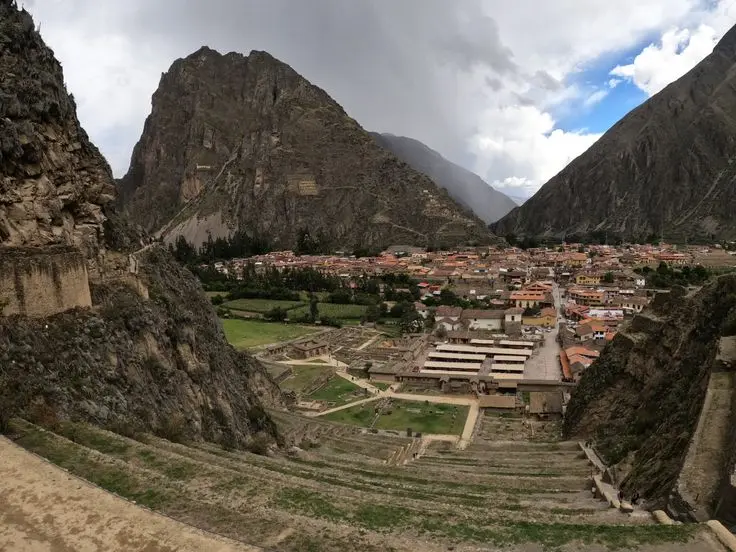
To better comprehend the History of Ollantaytambo you must examine the manner in which power was exercised, not simply the stone walls and terraces. While Ollantaytambo is a clearly symbolic site, it was also functional in an administrative sense as part of the political structure of the Inca Empire.
The Inca Empire had a very structured hierarchy of authority with local leaders running their communities under the authority of Cusco. As a “regional” centre Ollantaytambo was also where agricultural production, military organisation, and ceremonies intersected.
Therefore, with its role in the administrative processes of the Inca Empire, Ollantaytambo is intertwined with governance, with decisions made here affecting all the surrounding valleys, labour allocation and food storage. The manifestation of this was through daily routine; power was not an idea but something that was visible. An example would be the manner in which architectural structures reinforced political power, with large plazas available for gatherings, ceremonies and announcements, control being achieved through the act of participation
You may also like: What happened to the Inca civilization after the spanish arrival
History of Ollantaytambo and the social life of Its people
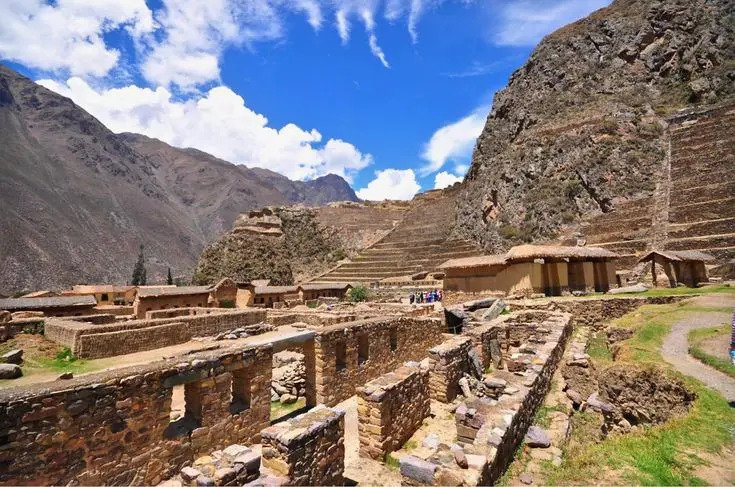
The History of Ollantaytambo is also the story of ordinary people. Farmers, artisans, builders, and families shaped the rhythm of life. Daily activities followed the agricultural calendar, closely tied to seasonal cycles and ritual obligations.
Community labor, known as ayni and minka, was fundamental. Everyone contributed whether building terraces, maintaining canals, or harvesting crops. This shared responsibility strengthened social cohesion and ensured survival in a challenging environment.
Living in Ollantaytambo meant understanding your place within a collective. Individual identity existed, but community came first. This principle runs deeply through, offering insight into why the Inca Empire maintained internal stability for so long.
Rituals, belief, and sacred space
Religion was not separate from daily life. In the History of Ollantaytambo, ceremonial spaces were integrated into the urban and agricultural landscape. Temples, carved stones, and mountain alignments served as constant reminders of spiritual presence.
Ollantaytambo was dedicated in part to the worship of Pachamama and the apus . The surrounding peaks were not scenery they were guardians.
Ceremonies reinforced social order and cosmic balance. These rituals aligned human activity with celestial movements, ensuring harmony between worlds. Understanding the History of Ollantaytambo requires recognizing that belief was lived, not merely practiced.
Adaptation, survival, and transformation
After the Spanish arrival, many Inca cities were destroyed or abandoned. Ollantaytambo was different. The History of Ollantaytambo during the colonial period is one of adaptation rather than disappearance.
Spanish settlers built structures on top of Inca foundations, yet much of the original layout survived. Indigenous families remained, continuing traditions while navigating imposed systems. This blending created a layered historical identity that still defines the town.
The resilience of Ollantaytambo lies in continuity. Despite cultural disruption, the town never lost its function as a living space. This makes the History of Ollantaytambo exceptionally valuable it shows survival rather than erasure.
How memory survived without writing
The Incas did not use written language as we know it, yet the History of Ollantaytambo was preserved through oral tradition, ritual practice, and spatial memory.
Stories were passed from generation to generation. Knowledge lived in movement, song, and repetition. Architecture itself became a teaching tool children learned history by walking through it.
Even today, local narratives add emotional depth to the History of Ollantaytambo, offering perspectives that go beyond academic interpretation.
You may also like: Hidden places in Cusco: Discover the best-kept secrets
History of Ollantaytambo in the context of andean engineering
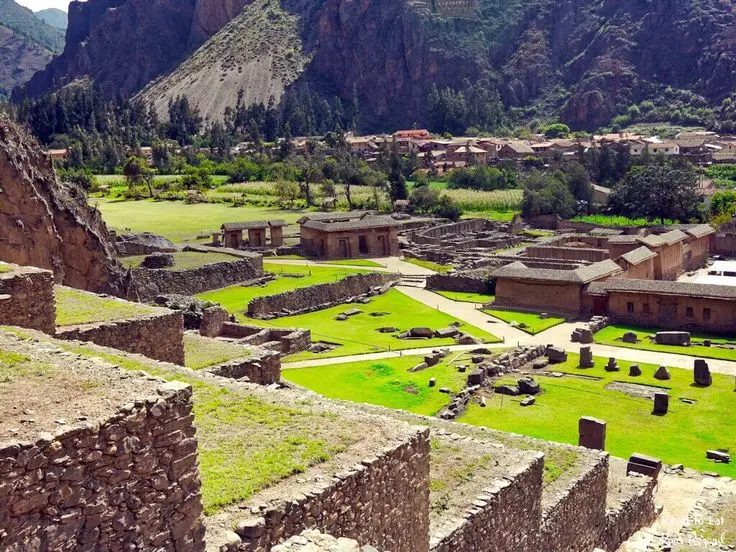
Engineering in Ollantaytambo was not experimental it was refined through centuries of observation. The History of Ollantaytambo reveals mastery of hydraulics, geology, and environmental adaptation.
Drainage systems prevented erosion. Slanted walls absorbed seismic impact. Stone joints allowed movement during earthquakes. These techniques were practical responses to lived experience.
This level of sophistication challenges modern assumptions about “primitive” societies. The History of Ollantaytambo shows that advanced knowledge does not require modern tools only deep understanding.
Relationship with movement and travel
Ollantaytambo historically functioned as a gateway. Roads connecting the Andes and the jungle passed through this region, facilitating trade, communication, and military movement. Many travelers today follow similar routes while joining inca trail treks, unknowingly retracing paths once used by messengers and armies. This continuity reinforces how movement shaped the History of Ollantaytambo.
Travel was never random. It was structured, ritualized, and purposeful reflecting a worldview where every journey carried meaning.
Tourism, preservation, and responsibility
Modern interest in Ollantaytambo brings both opportunity and challenge. Tourism supports local economies, but it also raises questions about preservation. Visitors often arrive through broader tours in cusco, encountering Ollantaytambo as one stop among many. Yet its complexity deserves time and attention.
Responsible engagement means understanding the History of Ollantaytambo not as entertainment, but as shared heritage. Preservation is not only about protecting stones it is about respecting living culture.
Why this place changes you
Many people leave Ollantaytambo feeling altered, even if they cannot explain why. The History of Ollantaytambo works quietly. It does not overwhelm it settles.
Walking its streets invites reflection. You begin to question speed, permanence, and progress. You realize that endurance can be gentle, and intelligence can be humble. Those who arrive through trekking tours often expect scenery. What they receive instead is perspective.
You may also like: What happened to the Inca civilization after the spanish arrival
History of Ollantaytambo and how to get there today
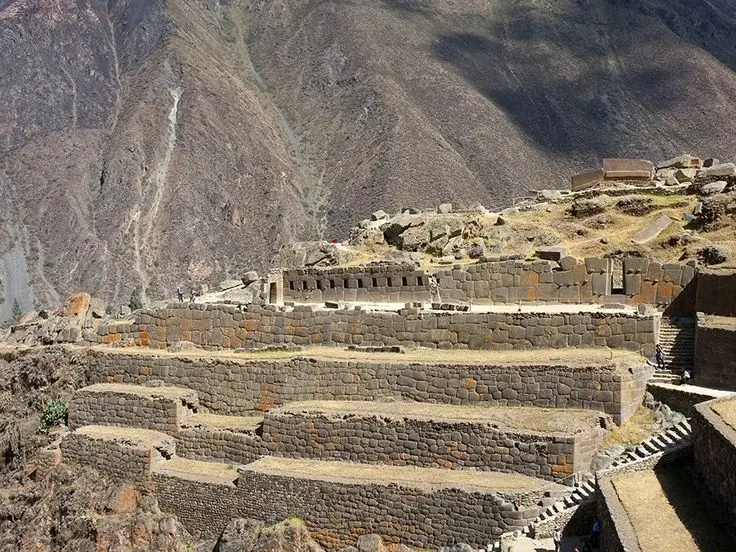
Understanding the History of Ollantaytambo also means understanding its accessibility. Historically, Ollantaytambo was designed as a gateway connecting regions, valleys, and ecosystems. Today, that role continues, though in a modern context.
Ollantaytambo is located in the Sacred Valley of Peru, approximately 72 kilometers from the city of Cusco. The journey itself offers insight into the geography that shaped the History of Ollantaytambo. Mountains rise gradually, rivers accompany the road, and agricultural terraces appear long before you arrive.
There are several ways to reach Ollantaytambo:
- By car or private transport: The drive from Cusco takes around 1.5 to 2 hours, depending on traffic and stops. This route follows parts of the Urubamba Valley, offering visual context to the agricultural importance of the region.
- By colectivo or shared transport: Local shared vans operate daily, reflecting how movement through the valley has always been communal.
- By train: Ollantaytambo is a major railway station for travelers heading deeper into the Andes. Historically, this reinforces its role as a transition point within the History of Ollantaytambo.
Arriving in Ollantaytambo feels different from arriving in a typical town. You do not “enter” history you transition into it.
Time as part of the experience
One common mistake visitors make is treating Ollantaytambo as a short stop rather than a place to inhabit, even briefly. To truly absorb the History of Ollantaytambo, time matters. A few hours are enough to see the main archaeological site, but not enough to understand the town. The deeper layers of the History of Ollantaytambo reveal themselves slowly.
Recommended length of stay:
- One full day: Allows exploration of the ruins, the main plaza, and the historic streets.
- Two days: Ideal for experiencing daily life, early mornings, and evenings when the town becomes quieter and more reflective.
- Three days or more: Best for travelers seeking connection rather than itinerary. This timeframe allows space for walking without purpose, observing routines, and feeling how the History of Ollantaytambo exists beyond monuments.
Time here is not about how much you see, but how deeply you notice.
You may also like: 20 The most important churches in Cusco
History of Ollantaytambo and the beauty beyond the ruins
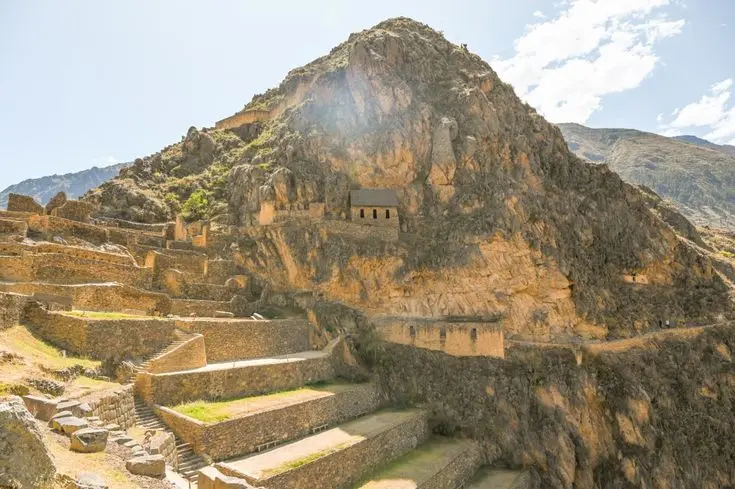
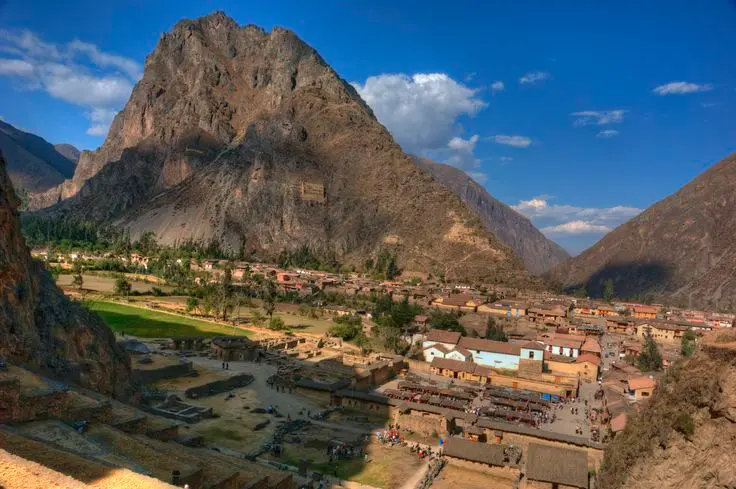
The beauty of Ollantaytambo is not limited to its archaeological structures. The History of Ollantaytambo is woven into landscapes, light, sound, and daily rhythm. Mountains surround the town like guardians. Their presence is constant and intentional. In Inca belief, these peaks were living entities, shaping destiny and protection. This spiritual geography remains visible and emotionally tangible.
What visitors often find beautiful includes:
- The contrast between massive stone architecture and delicate agricultural terraces
- Morning light reflecting off ancient walls
- The sound of water flowing through Inca channels
- Children playing in streets designed centuries ago
The History of Ollantaytambo is not silent it hums quietly through everyday life.
Experiencing history at human scale
Walking through Ollantaytambo’s streets is one of the most powerful ways to understand its past. Unlike reconstructed cities, these streets were never redesigned to fit modern convenience. They still follow Inca logic. Narrow paths guide movement. Stone steps vary in height. Water channels cut through walkways. These features force you to slow down, to adapt just as residents have done for generations.
This physical experience reflects as lived history rather than curated history. You are not separated from the past by glass or barriers. You walk on it.
Mountains, rivers, and balance
Nature is not a backdrop, it is a participant. The Incas chose this location because it allowed cooperation with natural forces rather than resistance against them. The Urubamba River provided water, transportation, and fertility. Mountains regulated climate and offered protection. Terraces stabilized slopes and maximized land use.
This integration reveals a core principle of the History of Ollantaytambo: survival through balance. Nature was not something to conquer, but something to understand deeply.
You may also like: Where to eat cheap in Cusco: Route and Tips
Why the history of Ollantaytambo still matters today
The History of Ollantaytambo shows us that it isn’t just the ruins left behind by a former people; it is the testament to the lifestyle of a very special civilization that learned to coexist with land, community and time. Through its unique strategic location, sophisticated engineering techniques, beautiful sacred buildings, methods of agricultural production and sustainable urban layout, Ollantaytambo was a powerful political, spiritual, and social centre of the Inca Empire. Its involvement in fighting back against the Spanish conquest, ability to survive the colonial fight for its continued existence, and remaining as a vibrant town today represents a very unique continuity which exists nowhere else in the Andes.
By understanding the History of Ollantaytambo, we can see that a combination of knowledge, belief and collective responsibility created a society that learned to co-exist with and be a steward of nature rather than a conqueror or destroyer, and that legacy of stewardship is still relevant to this day!

