
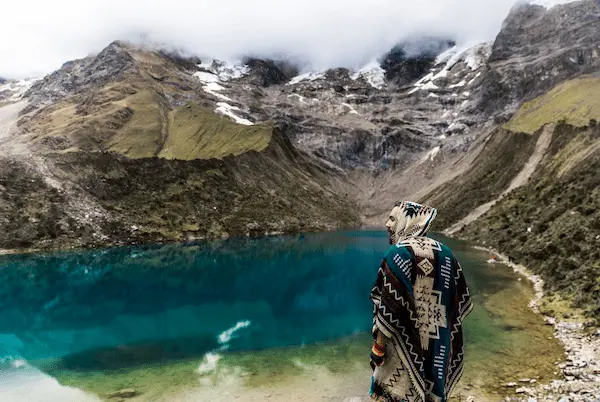
The notion of experiential travel in Peru has gained relevance in recent years as travelers increasingly search for encounters that go beyond superficial sightseeing. It is not only about visiting places but also about immersing oneself in the daily rhythms, emotions, and untold stories of a culture. To speak of experiential travel is to speak of a perspective: one that values depth over speed, attention over accumulation, and memory over mere consumption of images.
Traveling this way turns every moment into an opportunity for discovery. A shared meal becomes a narrative of flavors and traditions, a local festivity unfolds as a lesson in community belonging, and even silence perhaps on a mountain trail becomes a companion that reveals the subtle pulse of the landscape.
You may also like to read: Machu Picchu Circuits 2025
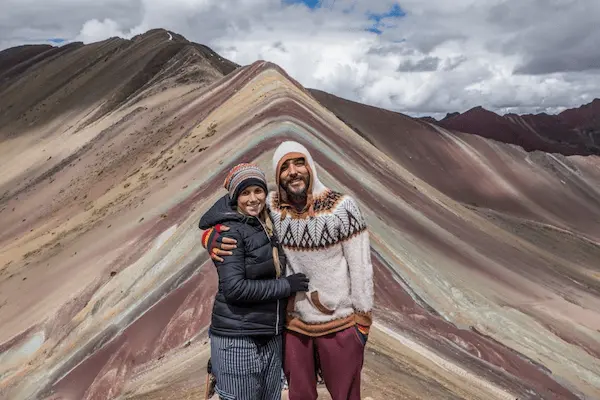
What does experiential travel in Peru really mean?
To understand experiential travel in Peru is to recognize the difference between simply “being somewhere” and truly “living somewhere.” The first is external, almost detached, like passing through without leaving or receiving any imprint. The second, in contrast, implies openness: it invites dialogue with the land, with its people, and with the reflections that inevitably arise in the process.
It is about walking at the rhythm that the place itself suggests slower on mountain paths, unhurried in village squares, attentive in markets filled with voices and colors. It is about listening without haste, understanding that oral traditions and everyday practices carry centuries of wisdom that cannot be compressed into a schedule.
In this sense, the journey is not linear but circular: travelers arrive thinking they will observe, yet they often discover that they are also being observed, questioned, and even redefined by the encounter. A single exchange, a ritual witnessed at dawn, or a gesture of hospitality can quietly shift perspectives. What begins as a search for knowledge often ends as a moment of transformation.
How is it different from traditional tourism?
Traditional tourism often emphasizes quantity: how many cities can be visited, how many monuments can be photographed, how many activities can be completed within a limited schedule. Experiential travel, however, values intensity over accumulation. A single day weaving alongside a family of artisans in the Sacred Valley, listening to their stories and observing the patience of their craft, may resonate longer than weeks of rushed sightseeing. What remains is not the number of places checked off a list but the depth of a single exchange.
This contrast becomes particularly evident when exploring Peru, a country whose landscapes and cultures resist simplification. The Andean peaks invite silence and reflection, the desert coasts reveal resilience in scarcity, the Amazonian forests demand humility before their immensity, and the urban centers pulse with layers of history and reinvention. In each of these spaces, the essence of place does not reveal itself instantly but gradually, through lived encounters that require patience, attention, and openness.
In this way, experiential travel in Peru becomes a dialogue with diversity itself: with climates that change in a matter of hours, with languages that carry ancestral worldviews, and with traditions that remain alive not as relics but as everyday practices. Such experiences remind the traveler that to understand a place is not to consume it quickly, but to allow it to unfold slowly, in fragments that only make sense when lived with presence.
Why is Peru such a fertile ground for experiential travel?
The question is not difficult to answer. Peru is a territory where history, spirituality, and daily practices converge in layers that remain alive. To experience Peru is to enter into a landscape shaped by millennia of civilizations, where agricultural terraces coexist with bustling markets, and where ancient rituals are performed alongside modern celebrations.
Communities scattered across valleys, highlands, and jungles carry knowledge that has resisted time. The simple act of sharing coca leaves, of observing how a dish is prepared, or of joining the rhythm of a festival drumbeat embodies the spirit of experiential travel in Peru. The country does not offer itself as a spectacle; it invites participation.
What makes this participation so meaningful is its authenticity. There is no script, no predetermined choreography designed solely for outsiders. Instead, each encounter flows naturally from the everyday life of those who inhabit the land. A meal served in a family kitchen, a weaving demonstration offered not as performance but as continuation of tradition, or a celebration that welcomes guests as companions rather than spectators all of these reveal that in Peru, culture is not frozen in the past but alive in the present, ready to be shared with those willing to engage with respec.
You may also like to read: Routes and Secrets of the Peruvian Amazon Jungle
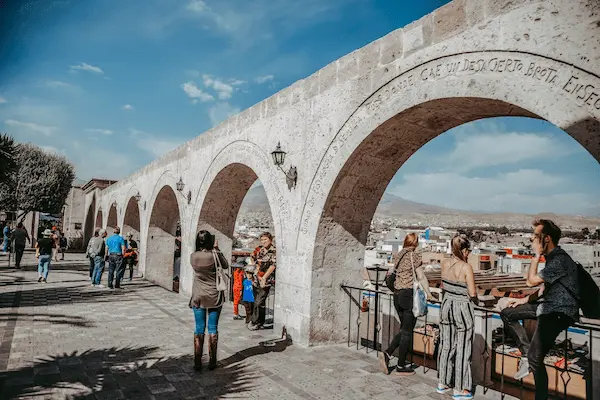
How does memory shape the journey?
One of the profound dimensions of experiential travel in Peru is the role of memory. Travel is not only what occurs in the present moment but also what is remembered, reinterpreted, and retold later. Memory transforms a fleeting instant into something durable.
Participating in the New Year rituals in the Sacred Valley, for example, is not just about witnessing a celebration but about absorbing the symbolism that communities attribute to cycles of time. The event becomes a personal narrative that may resurface months or even years later, reshaped by reflection. Encounters such as these, like those offered through New year in the Valley, turn into markers of identity rather than mere anecdotes.
What role do communities play in experiential travel?
The heart of experiential travel lies in human connection. Communities are not destinations; they are partners in dialogue. They hold stories of resilience, adaptation, and continuity. Their rituals, work practices, and creative expressions are not theatrical displays but integral aspects of everyday life.
In the Andean region, for instance, participation in agricultural cycles reflects a worldview where human beings, nature, and the cosmos are interwoven. Such practices offer travelers a chance to understand not just how potatoes are planted, but also how reciprocity and respect for the land form the basis of social organization. Initiatives such as those curated by Etnica travel provide pathways into these living traditions, always grounded in authenticity.
How does the Andean landscape shape the experience?
The Andes are more than mountains; they are guardians of myths and silent witnesses of history. Their immensity redefines scale, reminding visitors of their own fragility and interconnectedness. To walk along an Inca trail is not merely to admire an engineering achievement but to step into a network of roads that once united vast territories and continue to connect people with their environment.
The geography challenges travelers: altitude demands adaptation, paths require endurance, and climates shift unpredictably. Yet within those challenges lies the transformative power of experiential travel in Peru a recognition that vulnerability is part of the journey and that landscapes are not backdrops but active participants.
How do festivals reflect the spirit of experiential travel?
Festivals are one of the clearest windows into cultural identity. They combine music, dance, ritual, and communal energy into expressions that transcend mere entertainment. In Peru, festivities such as Inti Raymi, Corpus Christi, or regional carnivals embody collective memory and faith.
For the traveler, immersion in these celebrations offers a chance to experience Peru through its rhythms and symbols. Rather than observing from the sidelines, participation even if only as a respectful guest reveals how joy, spirituality, and tradition coexist. The atmosphere of festivals illustrates how experiential travel is not about consumption but about sharing a living heritage.
You may also like to read: The Best Trekking in Peru: Routes, Tips, and Unique Experiences
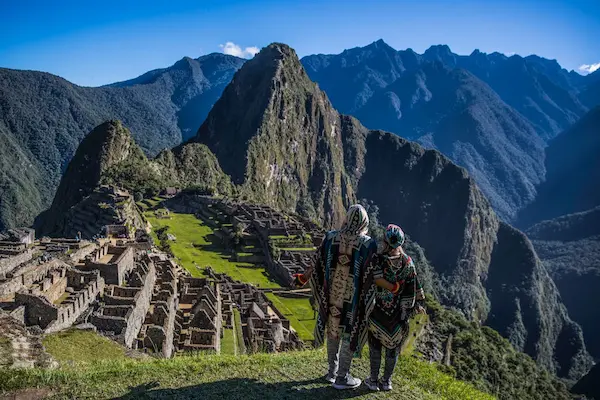
How does Cusco embody experiential travel?
Cusco, often referred to as the historical capital of Peru, is more than a destination; it is a meeting point of worlds. Here, Inca foundations support colonial structures, and modern life thrives amid ancient stones.
Choosing to engage with the city through experiential travel means walking beyond the main square. It means visiting local markets, learning the significance of rituals performed in the highlands, or exploring nearby valleys with the guidance of those who inhabit them. Opportunities such as tours Cusco demonstrate how history and daily life intertwine seamlessly, offering travelers more than a simple itinerary they offer an encounter with continuity.
How does experiential travel contribute to self-discovery?
Every journey is also an inward exploration. The slower pace of experiential travel in Peru encourages introspection. When one listens to a story by the fire in a mountain village or contemplates the stars far from urban light, questions naturally arise: What does it mean to belong? What values truly endure?
Such reflections are often absent in hurried tourism. By contrast, experiential travel cultivates spaces where silence speaks, where vulnerability allows learning, and where distance from the familiar reveals aspects of oneself that might otherwise remain hidden.
What role does nature play in shaping experience?
Nature in Peru is vast, diverse, and deeply revered. In the Amazon, rivers dictate rhythms of life; in the desert, the absence of water shapes resilience; in the highlands, mountains are considered sacred beings. Experiencing these landscapes is not only about admiration but also about recognizing interdependence.
To travel in such settings is to accept that humans are not the center but participants in a greater system. This awareness embodies the essence of experiential travel in Peru: a recognition that journeys are not about domination of nature but about respectful coexistence.
How do travelers carry these experiences back home?
The most lasting souvenirs of experiential travel are not material. They are stories retold at family gatherings, reflections written in journals, or quiet shifts in perspective. One may leave Peru with artisanal crafts or photographs, but the deeper treasure lies in the values absorbed community, reciprocity, reverence for tradition.
These intangible legacies influence how travelers approach their own lives, shaping attitudes toward time, consumption, and relationships. To experience Peru in this way is to carry within oneself an expanded sense of belonging to a broader human narrative.
The subtle permanence of experiential travel
Ultimately, experiential travel in Peru is not a checklist of destinations but a weaving of moments, emotions, and shared humanity. It is a form of travel that leaves no spectator untouched because it transforms observation into participation and presence into memory.
Peru, with its layered histories, landscapes of contrasts, and communities of profound resilience, offers fertile ground for this type of journey. Yet the true essence does not lie in geography alone; it lies in the willingness of travelers to slow down, to listen, and to accept transformation.
As the stories of mountains, rivers, and people intertwine, the meaning of travel expands. What remains is not simply the memory of having visited, but the quiet certainty of having been part of something larger, even if only for a moment.

