
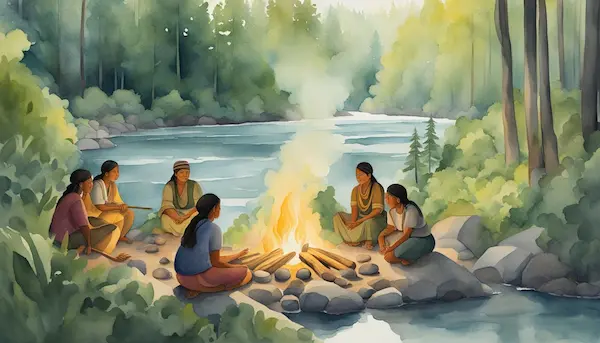
There’s something quietly powerful about looking back at how ancient civilizations lived. Not out of nostalgia, but out of curiosity because in many ways, they figured out things we’re still trying to solve today. Long before sustainability became a global concern, these societies were already developing ways to live in balance with their surroundings.
They didn’t have the technology we rely on now, yet they managed to build cities, grow food, organize communities, and thrive for generations without exhausting the resources around them. That wasn’t accidental. It came from observation, adaptation, and a deep understanding of nature.
Exploring how ancient civilizations lived sustainably is not just about history. It’s about recognizing patterns, learning from them, and understanding that some of the most effective solutions are not new they’ve simply been forgotten or overlooked.
Understanding Sustainability in Ancient Civilizations
When we talk about sustainability today, we often think of innovation, renewable energy, and modern solutions. But for ancient civilizations, sustainability was not a concept, it was a necessity.
They depended entirely on their environment. That meant they had to:
- Use resources efficiently
- Avoid overexploitation
- Adapt to changing conditions
- Preserve balance within ecosystems
Unlike modern societies, where excess consumption is common, ancient civilizations operated within natural limits. Their survival depended on it.
Sustainable Agriculture in Ancient Civilizations
One of the most impressive achievements of ancient civilizations was their ability to produce food in challenging environments without degrading the land. In conditions where resources were limited and climates could be unpredictable, these societies developed agricultural systems that prioritized balance, efficiency, and long-term sustainability.
Rather than forcing the land to meet their needs, they adapted their methods to fit the natural characteristics of the environment. This approach allowed them to maintain productivity over generations without exhausting the soil or surrounding ecosystems.
Terrace Farming: A Smart Adaptation
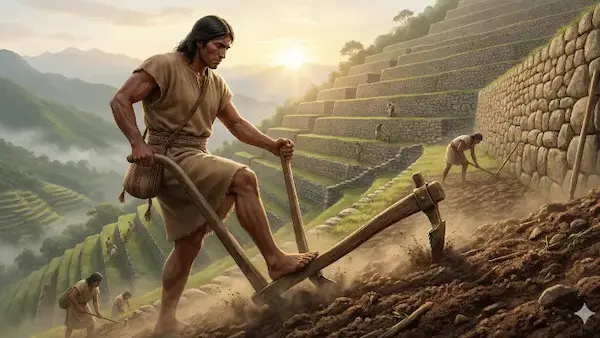
In mountainous regions, farming was made possible through terraces flat surfaces carved into slopes. This technique not only made agriculture viable in difficult terrains but also transformed the way land was used.
Benefits included:
- Preventing soil erosion: Breaking the slope into levels helped keep the soil in place, even during heavy rainfall.
- Retaining water: Terraces allowed water to be absorbed gradually instead of running off quickly.
- Maximizing usable land: Previously unusable areas became productive agricultural spaces.
- Creating microclimates for crops: Each level could offer slightly different growing conditions, supporting crop diversity.
This technique shows how ancient civilizations adapted their environment instead of trying to control it, working with natural landscapes rather than against them.
Crop Diversity and Rotation
Rather than relying on a single crop, ancient civilizations cultivated a variety of plants. This diversity was a key factor in maintaining stability within their agricultural systems.
- Reduced risk of crop failure: If one crop was affected by weather or pests, others could still thrive.
- Improved soil fertility: Different crops contributed to and absorbed nutrients in balanced ways.
- Maintained ecological balance: A diverse system helped prevent the spread of pests and diseases.
In addition, crop rotation played an essential role. By changing what was planted in a given area over time, the soil had the opportunity to recover, preserving its fertility without the need for artificial inputs.
A Long-Term Vision
What truly sets these agricultural practices apart is their long-term perspective. The goal was not to maximize short-term output, but to ensure that the land remained productive for future generations.
This mindset reflects a deep understanding of natural systems one that continues to influence modern sustainable agriculture today.
You may also be interested in: Is Machu Picchu Hard to Hike? A Complete Guide for Travelers
Water Management Systems
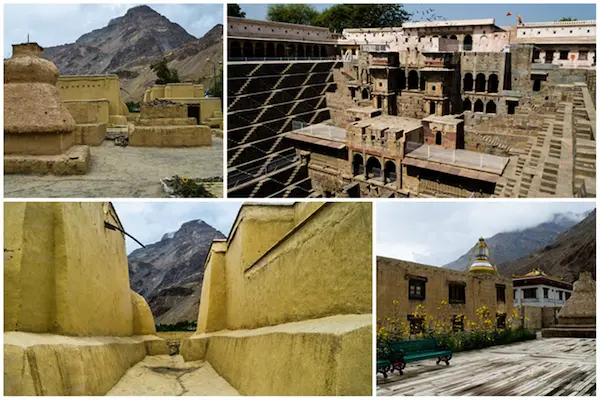
Water was one of the most valuable resources for ancient civilizations, and managing it effectively was essential for survival. In many regions, access to water was not constant, so communities had to develop systems that could handle both abundance and scarcity.
What makes these systems remarkable is not only their functionality, but their durability. Many were designed with a long-term vision, ensuring that water could be used efficiently without disrupting the natural balance of the environment.
Advanced Irrigation Techniques
To support agriculture and daily life, ancient civilizations developed irrigation systems that were both practical and highly adapted to their surroundings.
They created methods that allowed them to:
- Channel water efficiently: Through canals, channels, and carved pathways, water could be redirected from rivers or natural sources to fields and settlements.
- Store water during dry periods: Reservoirs and storage systems helped retain water for times when rainfall was scarce.
- Distribute it across agricultural areas: Carefully designed networks ensured that water reached multiple zones without waste.
In many cases, these systems were built using locally available materials such as stone, clay, or compacted earth. Their design often took advantage of gravity, allowing water to flow naturally without the need for external energy sources.
Another key aspect was maintenance. These systems were not static; they required regular care and collective effort, reinforcing a sense of shared responsibility within the community.
Respect for Natural Cycles
Instead of trying to control nature, ancient civilizations worked with it. Their approach was grounded in careful observation, patience, and a deep respect for natural rhythms. Rather than imposing rigid systems, they adapted their daily activities to align with environmental patterns, which allowed them to maintain balance over time.
- They followed seasonal patterns: Agricultural and water-related activities were closely aligned with natural cycles. Planting and harvesting were timed according to temperature changes, sunlight exposure, and seasonal transitions, increasing the chances of successful yields.
- Observed rainfall cycles: Over generations, communities developed a detailed understanding of weather behavior. This allowed them to anticipate periods of heavy rain or drought, preparing in advance to either store water or conserve it.
- Adjusted their activities accordingly: Daily life was flexible. Farming, construction, and resource use were all adapted based on environmental conditions rather than fixed schedules, making their systems more resilient.
This respect for natural rhythms helped maintain long-term sustainability. It reduced the risk of overexploitation and ensured that ecosystems had time to recover. More importantly, it reflects a mindset that valued balance over control something that continues to be highly relevant in today’s sustainability discussions.
A System Based on Balance
Water management was not only a technical achievement—it was also a reflection of a broader mindset. These societies understood that water was not an unlimited resource, and every decision around its use had long-term consequences. As a result, their systems were designed not just for efficiency, but for preservation.
What stands out is the balance they maintained between use and conservation. Water was distributed carefully, avoiding excess while ensuring that essential needs were met. This balance required constant attention and a clear understanding of the environment.
- Observation as a foundation: Communities closely monitored water sources, seasonal changes, and land conditions to make informed decisions.
- Adaptation over time: Systems were adjusted as conditions changed, allowing them to remain effective across different climates and periods.
- Collective management: Water was often treated as a shared resource, with communities working together to maintain infrastructure and regulate its use.
This approach created systems that were not only functional, but also resilient. By combining observation, adaptation, and collective responsibility, they developed solutions that could endure over generations without exhausting the resource.
Today, many of these principles continue to influence modern approaches to water conservation and resource management. In a world facing increasing environmental pressure, the idea of balance rather than control remains one of the most valuable lessons to revisit.
You may also be interested in: Cusco train to Machu Picchu: the scenic journey through the heart of the Inca world
Architecture and Sustainable Design
The way ancient civilizations built their homes and cities also reflects a deep understanding of sustainability.
Local Materials and Low Impact
Construction relied on materials that were:
- Readily available
- Biodegradable or reusable
- Suitable for the local climate
This minimized environmental impact and reduced the need for long-distance transportation.
Climate-Responsive Design
Buildings were designed to:
- Stay cool in hot climates
- Retain heat in colder regions
- Maximize natural light and ventilation
This reduced the need for external energy sources.
Social Organization and Resource Management
Sustainability in ancient civilizations was not only about technology—it was also about how societies were organized.
Collective Responsibility
Communities often worked together to:
- Maintain agricultural systems
- Manage water resources
- Build infrastructure
This shared responsibility ensured that resources were used wisely.
Knowledge Transmission
Sustainable practices were passed down through generations.
- Oral traditions
- Practical teaching
- Community participation
This ensured continuity and long-term resilience.
Traditional Knowledge and Environmental Awareness
Many ancient civilizations developed a deep understanding of their ecosystems.
They knew:
- Which plants were edible or medicinal
- How to manage soil health
- How to protect biodiversity
This knowledge was based on observation and experience, not theory.
Lessons from Ancient Civilizations for Modern Sustainability
Looking at ancient civilizations, it becomes clear that sustainability is not just about innovation, it’s about mindset.
Some key lessons include:
- Living within environmental limits
- Valuing long-term balance over short-term gain
- Understanding the interconnectedness of ecosystems
- Prioritizing community over individual consumption
Cultural Expression and Sustainable Materials
Sustainability also extended into daily life and cultural practices.
For example, many communities created tools, art, and even musical instruments made with recyclable materials, using what was available in their surroundings. This approach minimized waste and reinforced a culture of reuse.
Materials and Innovation
Even when working with materials that resemble modern ones, the philosophy was different.
Today, innovations like Lead-free PVC reflect a growing awareness of safer and more sustainable material use something that aligns with the principles followed by ancient civilizations, even if through different methods.
Companies such as Compoflex represent how modern industry can evolve by incorporating sustainability into production, echoing practices that prioritize long-term impact over immediate convenience.
Sustainability as a Way of Life
For ancient civilizations, sustainability was not a trend—it was embedded in every aspect of life.
- Food production
- Construction
- Social organization
- Cultural practices
Everything was interconnected.
You may also be interested in: Eco Tourism vs Traditional Tourism in 2026
Conclusion
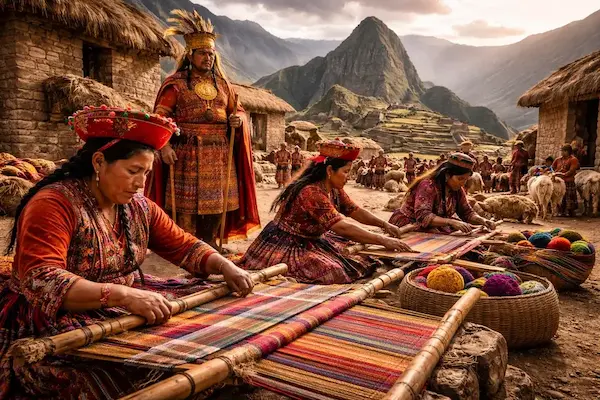
When you take a step back and really look at how ancient civilizations lived, it becomes clear that sustainability wasn’t something they aimed for it was simply how they understood the world.
They didn’t separate human life from nature. They worked with it, adapted to it, and respected its limits in ways that feel surprisingly relevant today. And while our context is different, the underlying principles still hold value.
Revisiting the practices of ancient civilizations is not about going backward. It’s about recognizing that many of the answers we’re searching for have already existed in different forms. The challenge now is learning how to reinterpret them in a modern world that often moves too fast to notice.
In the end, sustainability is not just about technology or innovation. It’s about awareness, balance, and intentionsomething that ancient civilizations seemed to understand far better than we often give them credit for.

