

Today I was reading about the Peruvian legends of the Andes and realized something about Peruvian culture: there is no single way to tell our past. On the coast, we grow up with stories tied to the sea, the desert, and the ancient cultures that once thrived there. But when we look toward the highlands, we find a different universe, filled with tales where mountains are sacred, lakes speak, and gods regain their importance, blending seamlessly with nature.
Each region preserves its own worldview and, through myths and legends, shares how its people understand life, the origins of the world, and their connection to the spiritual. That’s why today I want to share with you some of the popular highland legends you’ll likely hear during your journey across these remarkable places so keep reading!
What are the Peruvian legends of the Andes?
The Peruvian legends of the Andes are traditional stories passed down through generations in the Andean communities of Peru. They weave together history, indigenous worldview, spirituality, nature, and elements of the fantastic. These legends serve many roles in society: they explain the origins of the world, preserve communal values, warn of dangers, and honor the forces of nature and the gods.
You may also be interested in: Travel to Peru in september

How did the Peruvian legends originate?
The legends of the Peruvian Andes trace their roots to the oral traditions of pre-Hispanic civilizations. Long before writing systems were introduced, communities passed down their history, beliefs, and values through storytelling. The Andean worldview, where nature is alive and sacred, plays a central role: mountains (apus) are protectors, lakes hold mysteries, and animals often serve as messengers between the human and spiritual worlds. Over time, these ancient narratives blended with Spanish and even African influences, creating a rich tapestry of myths that reflect both continuity and transformation. Each legend is not only a tale but also a way of preserving memory, teaching lessons, and keeping cultural identity alive.
20 Peruvian legends of the Andes
Are you ready to discover what the Peruvian Andes have to offer? Among sacred mountains and ancient villages, Peruvian legends of the highlands are still told, stories that have survived the passage of time, where gods intertwine with men and everyday life becomes magical.
In this collection of 20 stories, we will travel to different corners of Peru to learn about the myths that still live on in the festivals, customs, and traditions of the highlands, reminding us that in the Andes, the real and the mythical always walk hand in hand.
1. The Ayar Brothers (Cusco)
Tradition has it that four brothers and their wives emerged from the Pacaritambo cave, sent by the gods to found the future Inca Empire. With the help of a golden staff, they were to find fertile land on which to build Cusco. However, jealousy and ambition sparked conflict: Ayar Cachi was locked in a cave because of his enormous strength, and Ayar Uchu was petrified in Huanacauri to guide his people. Finally, Ayar Manco, later known as Manco Cápac, succeeded in founding the great city of Cusco. This legend is one of the most important founding stories of the southern highlands.
2. Manco Cápac and Mama Ocllo
The Sun God sent his children, Manco Cápac and Mama Ocllo, from the waters of Lake Titicaca to civilize the Andean peoples. Armed with a golden staff, they were to plant the scepter in the soft earth that would indicate the ideal place to found the capital. After a long journey, they succeeded in doing so in the Cusco Valley. This legend reinforces the idea of the divine origin of the Incas and their civilizing mission.
You may also be interested in: Cusco tourist ticket: Complete guide 2025
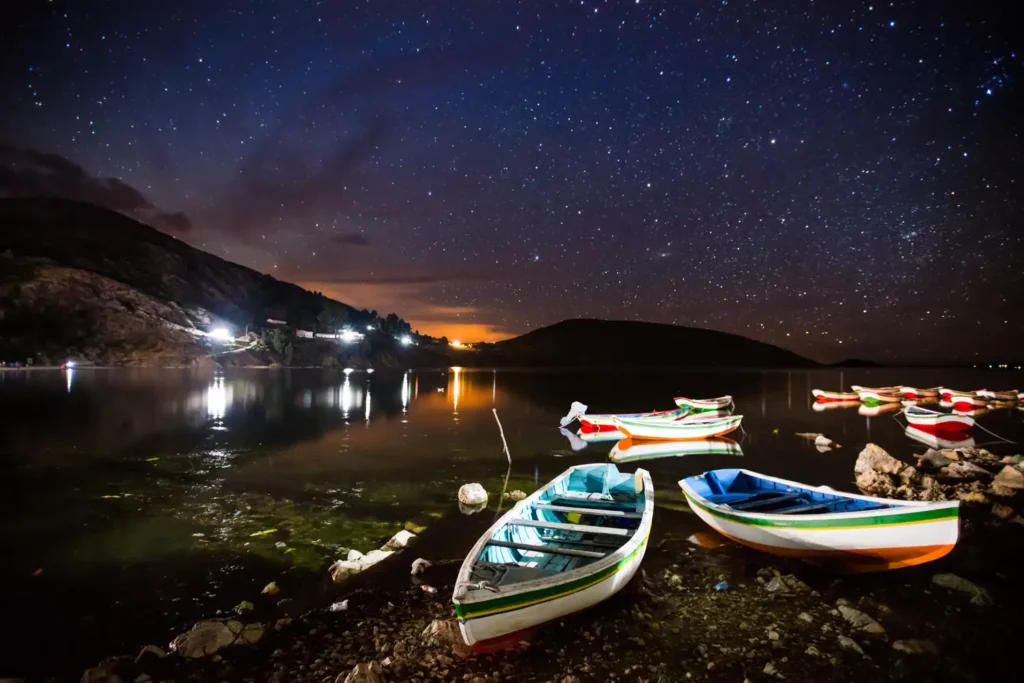
3. Lake Titicaca and its mysterious lights (Puno)
Lake Titicaca is considered sacred and the cradle of Andean civilization. In addition to being the setting for the myth of Manco Cápac, there are stories that tell of lights emerging from its waters on full moon nights, interpreted as guardian spirits or messages from the gods.
For the inhabitants, the lake is not only a source of life, but also a place where the human and the divine coexist, explore this destination through Lake Titicaca tours allows travelers to immerse themselves in its legends, connect with local communities, and experience one of the most mystical places in the Andes.
4. Inkarri
The legend of Inkarri states that the last Inca, who was beheaded after the Spanish conquest, was buried in Cusco. His buried head is slowly regenerating his body, and when it is complete, Inkarri will return to restore the Tawantinsuyo. This myth reflects the cultural resistance and hope of the Andean peoples to regain their greatness.
You may also be interested in: All about cultural traditions in Peru

5. Apu Ausangate
Ausangate, an imposing snow-capped mountain, is considered an apu or guardian spirit that provides water, fertility, and protection. It is believed that the apu grants riches to those who show it respect and make sacrifices, but punishes greed and disdain. Every year, during the Qoyllur Rit’i festival, thousands of pilgrims honor his spirit in a ritual that combines Andean tradition and Catholicism.
6. The legend of the Condors
The condor, the sacred bird of the Andes, appears in many Peruvian legends of the Andes. One of the best known tells of a young peasant who was turned into a condor to escape poverty and fly free in the skies. In other stories, the condor kidnaps women to make them his companions.
Today, you can even witness condors flying majestically during the Rainbow Mountain tours, making the experience not only visually stunning but also deeply connected to ancient Andean beliefs.
You may also be interested in: Incas Expeditions: Your best option as a Peru travel agency

7. The serpent of Sacsayhuamán
It is said that a giant serpent, symbol of wisdom and power, dwells within the walls of Sacsayhuamán. Some chroniclers claim that the Incas carved serpent figures into the stone to commemorate their spiritual strength. Locals believe that the serpent protects the empire’s hidden treasures and punishes intruders who desecrate the site.
8. The tunnels of Qoricancha
Qoricancha, the most sacred temple of the Sun, is said to be connected by underground tunnels to Sacsayhuamán and even Lake Titicaca. Legend has it that royal treasures and mummies were kept inside, protected by traps and guardian spirits. To this day, the idea of hidden passageways under the city of Cusco remains.
You may also be interested in: Traditional Inca food : What to eat and what it means

9. The treasure of Atahualpa
When Atahualpa was captured by the Spanish, he promised to fill one room with gold and two with silver in exchange for his freedom. Although he kept his promise, he was executed. Part of the treasure, taken to Cusco, mysteriously disappeared in the Andes. Legend has it that it remains hidden, protected by Inca spirits.
10. Paititi, the lost city
It is believed that after the fall of Cusco, a group of Incas fled to the jungle with treasures, founding the city of Paititi. Since then, explorers and gold seekers have tried to find it in the jungles east of Cusco and Madre de Dios. For locals, Paititi is real, a hidden refuge where Inca greatness still survives.
11. The Pishtaco
The pishtaco is a feared being: a man who murders to extract fat from his victims. With it, he would feed machines or sell its power to foreigners. This legend reflects the ancestral fear of exploitation and the loss of the body as a resource. Even today, in rural areas, the pishtaco is part of the popular imagination.
12. The Muki
The muki is a small creature with bright eyes and supernatural strength that lives in mines. It can help miners find rich veins of ore, but demands offerings of coca, alcohol, or friendship. Those who offend it are crushed to death or disappear in the tunnels.

13. El Abchanchu, the Andean vampire
El Abchanchu appears as a frail old man who asks for help on the roads. When someone helps him, he reveals his true form as a vampire and sucks the blood of his victim. This legend is a warning about mistrust and the danger hidden behind appearances.
14. Pacha Kamaq
A creator deity worshipped on the coast and assimilated by the Incas. According to legend, he created man and woman but forgot to give them food. The woman died, and plants grew from her body to feed humanity. Pacha Kamaq was later replaced by sun worship, but in the Andes he is still remembered as a forgotten god.
15. Yacana, the celestial llama
In the sky, the Incas saw dark constellations in the Milky Way. One of them was Yacana, the cosmic llama that descended to drink from the rivers. Its presence was believed to ensure fertility and abundance. This vision reflects the relationship between heaven and earth in the Andean worldview.
16. El Tunche
El Tunche is a spirit that appears at night with an eerie whistle. Sometimes it takes human form, even that of loved ones, to deceive travelers. It is associated with death and punishment for those who commit sins. In the eastern Andes, people still fear hearing its whistle at nightfall.
If you take a Manu National Park tour from Cusco, you will not only explore one of the most biodiverse places on Earth, but you will also hear legends that locals still share in the Amazon and the Andes. Among them is the chilling tale of El Abchanchu, a vampire disguised as an old man, and the mysterious whistle of El Tunche, feared by travelers at night. These stories enrich the journey, reminding visitors that the Peruvian jungle is not only alive with wildlife but also with ancient myths that shape its cultural soul.
You may also be interested in: Top 10 things to do in Cusco for first time travelers

17. La Uma
La Uma is a witch who detaches her head from her body and wanders at night with messy hair and red eyes. It is said that her presence brings misfortune and that she can only be driven away with thorny plants around houses. It is a cautionary myth about dark magic.
18. The enchanted lagoon of Urcos
It is said that the people of Urcos were warned by an old man about divine punishment, but they did not listen. A great flood covered the place, giving rise to the lagoon of Urcos. It is said that voices can be heard and lights can be seen in its waters, reminiscent of the lost city under the water.
19. Huáscarán y Huandoy, los amantes eternos (Áncash)
Dos jóvenes enamorados de familias rivales fueron asesinados por la oposición de sus padres. Los dioses, compadecidos, los transformaron en montañas nevadas: Huáscarán y Huandoy. Entre ellos quedaron las lagunas de Llanganuco, formadas por las lágrimas de la joven. Es una de las leyendas románticas más bellas de los Andes.
20. El mito de Wiracocha (Andes centrales y Cusco)
Wiracocha es el gran dios creador en la mitología andina. Según la leyenda, emergió del lago Titicaca para dar forma al cielo, la tierra y los hombres. Tras enseñarles leyes y artes, se marchó hacia el mar prometiendo volver algún día. Para los incas, Wiracocha simbolizaba el orden y el poder supremo del universo.
Tourism and peruvian legends
Peruvian legends of the Andes do not only live in books or in the memory of grandparents; they are also felt in the cultural tourism that runs through the high Andean villages. Travelers from all over the world arrive in Cusco, Ayacucho, Puno, or Ancash, attracted by the mountains and archaeological ruins, but they end up fascinated when hearing stories of mermaids inhabiting lagoons, apus protecting the mountains, or foxes predicting destiny. Many of these myths are integrated into tourist routes through narrations by local guides, theatrical performances during patron saint festivals, or visits to places considered magical.
You may also be interested in: Amazon Garden Lodge: Best Amazon travel agency
Places to visit in the Andes with legendary stories
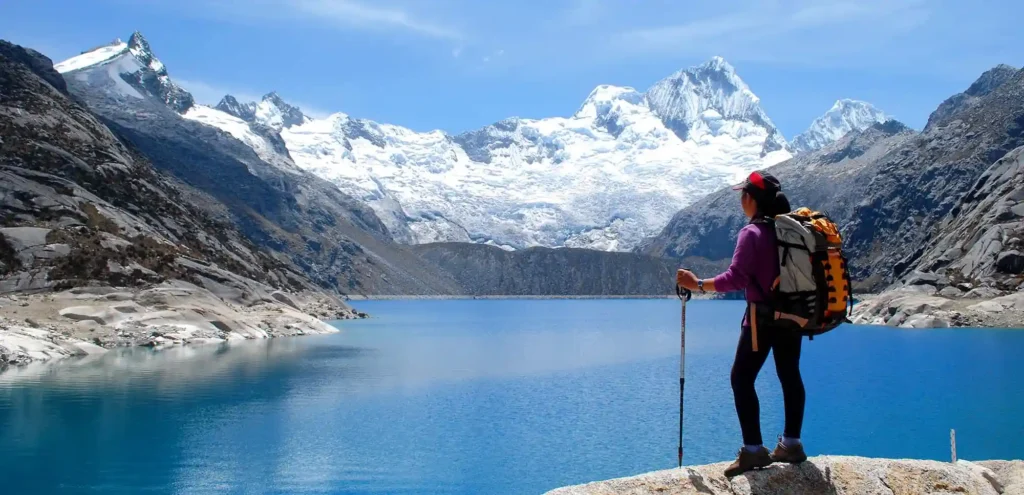
Exploring the highlands is not only about breathtaking landscapes and ancient ruins, but also about immersing yourself in the Peruvian legends of the Andes that give life to every mountain, lagoon, and valley. These places invite travelers to connect with myths passed down for generations:
Cusco
Among the massive stone walls of Sacsayhuamán, locals speak of a giant serpent that once slithered through the fortress, a symbol of wisdom and renewal.
Lake Titicaca
According to legend, Manco Cápac and Mama Ocllo emerged from this sacred lake, sent by the sun god to found Cusco and bring civilization to the Andes.
Ayacucho
In the Andean highlands, tales tell of a fox that could foresee the future of those who crossed its path, guiding or warning travelers.
Ancash
Stories abound of mermaids inhabiting Andean lagoons, luring shepherds and fishermen with their songs, reminding visitors of the mystical bond between water and life.
Apus of the Andes
In every region, the apus—powerful mountain spirits—are believed to protect communities, their legends honored through rituals and offerings that continue today.
Come and discover Peruvian legends
The Andes serve as more than just mountains; they are protectors of eternal tales, where legends and truth merge in every hallowed valley. From snakes hewn from rock to waters that murmur age-old tales, every myth beckons you to experience the soulful pulse of Peru. Explore Peruvian legends and allow their mystery to lead you through sceneries where culture and nature coexist harmoniously.
Your experience transcends travel—it is a journey into memory, heritage, and vibrant culture. Treading these routes signifies entering narratives that have persisted for hundreds of years, molding societies and convictions. Explore Peruvian legends and immerse yourself in an adventure where each step resonates with the essence of the Andes.

