
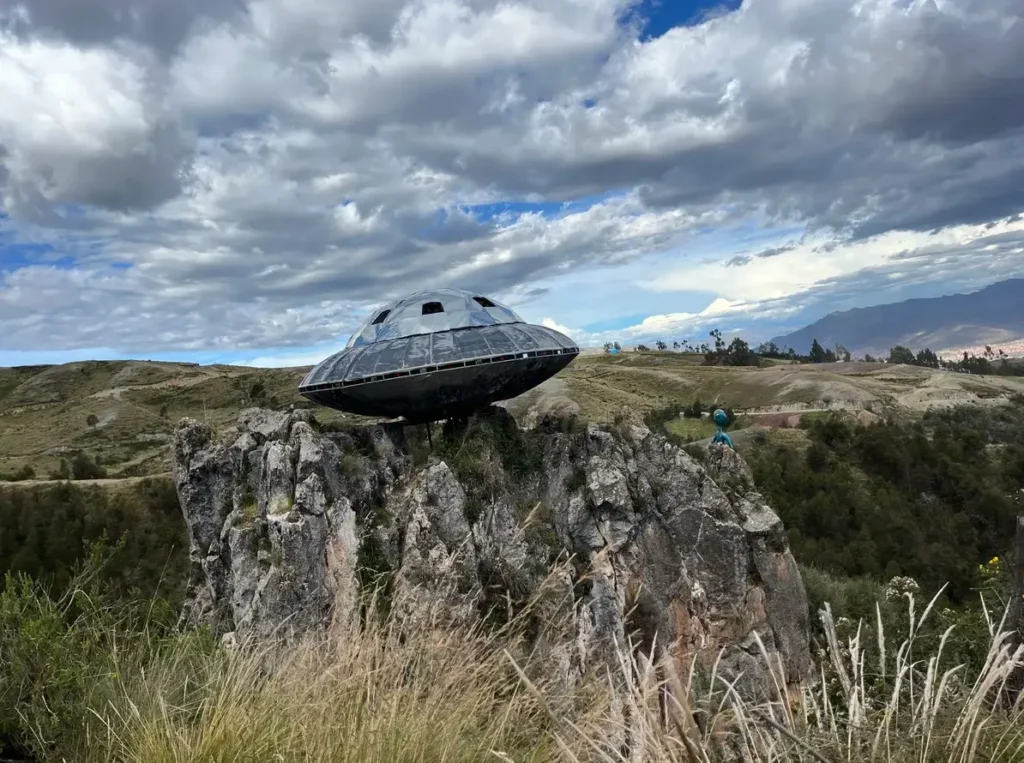
When we talk about the Andean world, it’s impossible not to feel a mix of amazement and curiosity. Cusco, the heart of the ancient Inca civilization, still holds stories that challenge our logic. Even today, travelers, historians, and researchers ask the same questions: How did they build such perfect structures? Why does their architecture align with astronomical patterns? What knowledge did the Incas truly possess?
In this post, I want to walk with you through the most intriguing side of Andean history: the Legends of Cusco, especially those that connect ancient engineering with modern alien theories. Whether you believe in extraterrestrial influence or see these tales as cultural metaphors, understanding them brings us closer to the complex worldview of the Andes.
This content is meant to informnot to convince. You and I will explore documented facts, anthropological interpretations, archaeological evidence, and the powerful stories that have been passed from generation to generation.
You may also like: Where to eat cheap in Cusco: Route and Tips

Why do these legends matter?
The term “Legends of Cusco” refers to a broad set of oral traditions, mythological narratives, and symbolic interpretations preserved from Andean cultures primarily the Inca civilization. These stories often combine historical events with the Inca worldview, spirituality, and explanations about natural or architectural phenomena that seemed extraordinary for their time.
Because they give us clues about how Andean societies understood the universe. These weren’t “simple stories”they were frameworks that shaped identity, values, and social structure.
According to the Peruvian anthropologist Jorge Flores Ochoa, Andean myths functioned as “narrative bridges between the human world and the sacred world”, helping explain origins, geography, and cosmic order. Many of these narratives later became what we now call legends.
Legends of Cusco in the context of the Inca civilization
To understand why Legends of Cusco persist today, we must understand the cultural landscape in which they were created. For the Incas, Cusco wasn’t just a city; it was the navel of the world the energetic and spiritual center of their universe. Legends related to Cusco often tie architecture, agriculture, astronomy, and social order to divine origins. These stories encoded complex cultural meaning that helped preserve knowledge through oral tradition.
The archaeologist María Rostworowski defines Inca narratives as “historical myths,” meaning they mix real events with supernatural symbolism. This combination helps explain why so many stories relate monumental constructions with gods or celestial beings.
Example
Think of the Koricancha Temple. It wasn’t only a golden sanctuary; it aligned with celestial movements. A legend might say the Sun itself instructed its construction. But archaeologists see it as advanced astronomical knowledge. Both interpretations coexist, giving the site an aura of mystery.
You may also like: 20 The most important churches in Cusco

Legends of Cusco: Alien theories
Now we enter one of the most controversial but fascinating interpretations: the belief that some Inca achievements may have been influenced by extraterrestrial beings. While scholars do not claim alien intervention, these theories grew from observable mysteries.In this context, Legends of Cusco linked with alien theories suggest that the Incas either communicated with beings from the sky or received knowledge that surpassed what is expected from a pre-industrial civilization.
Alien theories fall within the realm of pseudoarchaeology, a term used to describe alternative explanations that challenge academic consensus. Even when not scientifically proven, these theories are part of modern legend-building around Cusco.
Why people believe these theories?
People are drawn to explanations that connect:
- Advanced architecture
- Celestial alignment
- Massive stone manipulation
- Andean spiritual symbolism related to stars
In Cusco, these topics overlap so naturally that alien theories feel like extensions of ancient mysteries.
Key mysteries often linked to alien theories
Sacsayhuamán is one of the strongest examples used by alien theorists because of its gigantic stones and seismic-resistant engineering.Sacsayhuamán is an archaeological complex built with megalithic stones precisely carved and fitted, located on a hill overlooking Cusco.
What the legend says: A popular andean legend states that the gods gave the Incas supernatural strength or celestial tools to move the stones.
What alien theorists say : Writers like Erich von Däniken argue that such constructions may indicate influences or guidance from non human intelligence.
What science says : Archaeologists such as Jean-Pierre Protzen demonstrated that Incas used:
- Stone hammers
- Ramps
- Wooden beams
- Controlled fire and water techniques
Moray and extraterrestrial agricultural knowledge
Moray is known for its massive circular terraces that create different microclimates, according to the ministry of culture of Peru, moray functioned as an agricultural research center where Incas experimented with temperature variation, crop adaptation, and soil management.
Why alien theories appear here
- The design resembles a crater
- The terraces generate a temperature variation of up to 15°C
- The precision suggests advanced understanding of ecology
Some alternative theorists say moray looks like a “landing site” or “experimental sphere.” however, archaeological studies support agricultural purposes.
Example
During a Maras Moray tour full day, modern travelers often hear guides mention how the Inca knowledge of climate simulation seems surprisingly advanced for its time fueling more speculation around cosmic influence.
Legends of Cusco — The star people and ancient encounters
Many andean communities have legends about beings that came “from the sky” or “from the stars,” described as glowing or luminous. These legends fall under Andean cosmology, in which gods were associated with the sky, constellations, and natural phenomena rather than literal extraterrestrials.
Example:
In Puno and Cusco, legends tell of “tall white beings” living before the Incas. Some modern storytellers reinterpret them as aliens. But anthropologists classify them as pre-Inca mythological beings.
How modern tourism reinforces the legends of cusco and alien theories
Tour experiences often blend archaeological facts with legends to create immersive storytelling. This practice is known as “interpretive cultural tourism,” where guides offer a mix of verified historical information and traditional oral narratives.
During the Poc Poc Waterfall hike, guides frequently share ancestral stories tied to nature spirits and celestial watchers. Even though the waterfall has natural geological origins, the blending of landscape and legend makes alien theories feel more vivid to visitors.
You may also like: What happened to the Inca civilization after the spanish arrival

Celestial Architecture and Alien Interpretations
Understanding the architecture of the Inca civilization means understanding how profoundly they connected the earth and the sky. Many of the Legends of Cusco are centered on the idea that sacred structures were built under celestial instructionsor with help from non-human beings.
Celestial alignment refers to the intentional orientation of temples and structures toward astronomical events like solstices, equinoxes, or specific constellations.
According to the research of archaeologist R. Tom Zuidema, Inca architecture aligned with the movement of the Sun and important stars, especially those linked to agricultural cycles. Zuidema describes Cusco as a “cosmic diagram,” structured around ceque lines imaginary paths extending from the Qorikancha Temple to surrounding sacred points.
Why alien theories appear here?
Some enthusiasts believe that the precision of these alignments reveals knowledge beyond human capability. For example:
- The Qorikancha walls illuminate specific altars during equinoxes.
- Machu Picchu’s Intihuatana stone aligns perfectly with solar events.
- Sacsayhuamán’s zigzag forms resemble lightning, associated with sky deities.
While archaeologists attribute this to skilled observation and cultural ritual systems, alien theorists interpret it as evidence of advanced astronomical teaching provided by extraterrestrial beings.
Example
Imagine waking up before sunrise in ancient Cusco, looking at the Qorikancha walls glow as the first sunbeam hits precisely where it’s meant to. If you lacked scientific terms, wouldn’t you interpret this as divine or cosmic guidance? This is how the Legends of Cusco became so deeply rooted.
Symbols, sacred beings, and alien interpretations
In Andean cosmology, deities were often associated with natural forces, animals, the sky, mountains, and stars. Anthropologists like Catherine Allen explain that these sacred beings, known as wak’as, represented both spiritual and physical dimensions. They were not “gods” in the Western sense but relational forces.
Relation to alien interpretations
Because some myths describe luminous beings descending from the heavens or traveling through the firmament, alien-themed theories reinterpret these beings as extraterrestrial visitors. Stories of Apus (mountain spirits) often describe them communicating guidance or warnings. Modern retellings sometimes portray them as protectors from another dimension or cosmic origin, blending spirituality with modern sci-fi imagination.
Why alien theories persist in modern culture?
People seek extraordinary explanations for extraordinary achievements. This is known as the “awe heuristic,” a psychological phenomenon where, when humans feel overwhelmed by something impressive, they unconsciously search for an explanation that feels equally grand.
Why this applies to Cusco?
The Inca civilization achieved:
- Megalithic architecture
- Perfect stone fitting
- Agricultural engineering ahead of its time
- Sophisticated astronomy
- Social organization across vast territories
When modern viewers see these achievements, especially without deep historical knowledge, alien theories appear naturally appealing. A first-time visitor standing before Sacsayhuamán often says: “There’s no way humans could have done this.” But engineers and archaeologists repeatedly confirm that these structures were built with human ingenuity, experimentation, and collective labor.
The Balance Between Myth and Archaeological Truth
To appreciate the Inca legacy, we must balance wonder with critical thinking. Critical thinking involves comparing evidence, analyzing sources, and differentiating cultural meaning from scientific interpretation.
Why this matters
- It helps us value both:
- The rich symbolic universe of the Legends of Cusco
- The real achievements of the Inca civilization
You can visit Moray and:
- Appreciate its agricultural brilliance
- Enjoy the cosmic legends shared by guides
- Reflect on why such stories endure
- All three perspectives enrich the experience.
You may also like: Hidden places in Cusco: Discover the best-kept secrets

The human meaning behind the legends of Cusco
As we reach the end of this journey, I want to leave you with a personal reflection. The Legends of Cusco are powerful not because they prove extraterrestrial life, but because they reveal how humans try to understand beauty, mystery, and genius. Whether you believe the Incas created their marvels through divine guidance, cosmic encounters, or pure human intelligence, these stories add emotional depth to their legacy.
Cusco is a place where the sky feels close. The stones seem alive. The past feels present. And when you stand before monumental walls, terraces, or sacred temples, it’s easy to understand why alien theories continue to fascinate visitors from every corner of the world.
In the end, the true magic of Cusco lies in the coexistence of myth, history, science, and wonder all woven together in a way that keeps the soul of the Andes alive.

