

Peru is a country where history and culture are interwoven into everyday life. Among the most vivid expressions of its identity are the traditional festivals of Peru, events that bring together communities to celebrate, honor, and transmit heritage across generations. These festivals are windows into cultural traditions of Peru, revealing the ways in which music, dance, rituals, and communal participation define the social fabric of the nation. Understanding what is traditional festival in the Peruvian context goes beyond attendance; it involves recognizing the spiritual, historical, and social dimensions of these events.
Peru’s festivals span the entire calendar year and encompass a diverse range of cultural expressions. From highland ceremonies to coastal dances, each festival reflects a synthesis of indigenous, Spanish, and African influences, forming a unique cultural mosaic. The following ten festivals illustrate the depth and vibrancy of traditional celebrations in Peru, offering insight into the values and history embedded in these communal experiences.
You may also like to read: Hiking in Peru: Best Trails and Routes
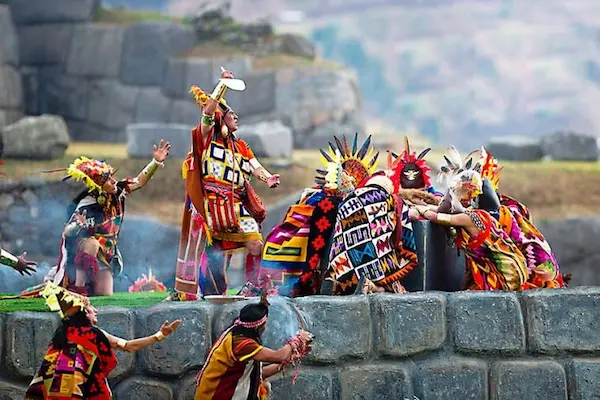
1. Inti Raymi – Festival of the Sun
One of the most renowned traditional festivals of Peru, Inti Raymi is celebrated annually in Cusco during the winter solstice in June. This festival honors Inti, the Incan Sun God, and is an emblem of the Andean worldview that emphasizes harmony between humans, nature, and the cosmos.
The festival is characterized by ceremonial processions, ritual offerings, and elaborate costumes that recreate Incan traditions. Participants wear garments with symbolic colors and designs, representing different social and religious roles. Through these ceremonies, communities reinforce their connection to the earth and the cycles of the seasons. Observing Inti Raymi provides a clear understanding of cultural traditions of Peru, illustrating how pre-Columbian beliefs have been preserved and adapted into contemporary celebrations.
Visitors can gain deeper insight into these traditions through curated experiences offered by Climb Sunday, which highlight cultural aspects alongside the visual spectacle of the festival. Beyond being a tourist attraction, Inti Raymi remains a living cultural practice that connects present-day Peruvians with their ancestral heritage.
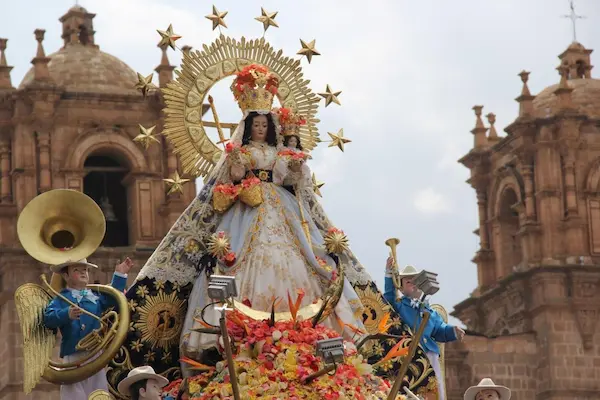
2. Virgen de la Candelaria – Puno’s Devotional Celebration
In Puno, the Virgen de la Candelaria is celebrated every February and represents a fusion of indigenous Andean rituals and Catholic devotion. Known for its vibrant costumes, intricate masks, and diverse dance groups, this festival exemplifies traditional celebrations in Peru where spirituality and artistry coexist.
The dances performed during this festival, including the Diablada and Morenada, convey historical and symbolic narratives. Each movement, costume, and mask carries meaning, reflecting centuries of cultural adaptation. The festival is a crucial platform for expressing communal identity, allowing locals to maintain and pass down their heritage.
For those studying what is traditional festival in Peru, the Virgen de la Candelaria demonstrates the interplay between faith, creativity, and regional identity. Participating in or observing these events through organized visits, such as Puno tours, allows one to appreciate the continuity and vitality of cultural traditions of Peru in contemporary society.
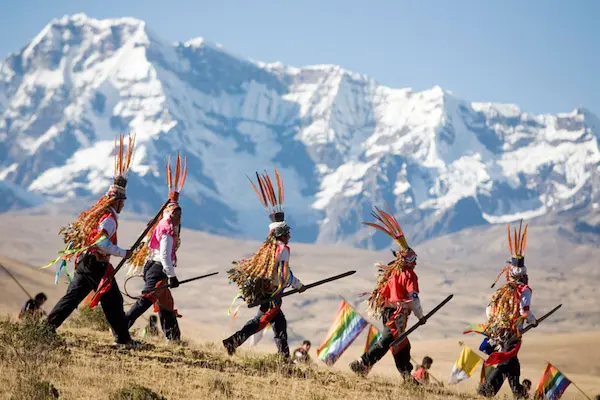
3. Qoyllur Rit’i – Pilgrimage and Snow Festival
The Qoyllur Rit’i festival, held in the Sinakara Valley near Cusco, is an extraordinary blend of indigenous and Catholic rituals. Pilgrims undertake a physically demanding journey to the glacier, carrying offerings and performing prayers along the way. This event highlights the spiritual dimension of traditional festivals of Peru, where devotion, endurance, and reverence for nature intersect.
The festival includes dances, music, and ceremonial acts that symbolize agricultural cycles and cosmological beliefs. For anthropologists and cultural enthusiasts, Qoyllur Rit’i provides a compelling example of how traditional celebrations in Peru continue to serve as channels for community cohesion and spiritual expression. This pilgrimage demonstrates that what is traditional festival in Peru is not merely ceremonial; it is an active engagement with history, faith, and the environment.
You may also like to read: Trekking in Peru: Essential Routes Every Traveler Should Know
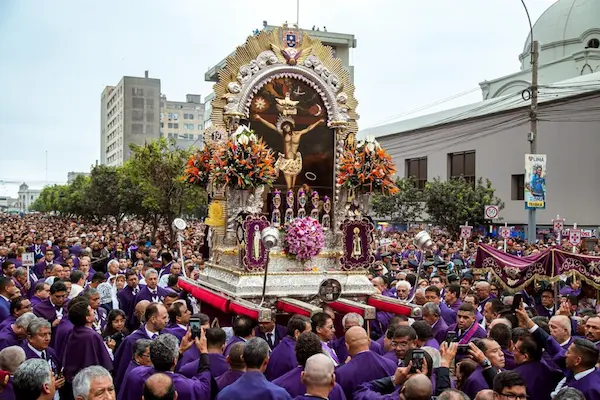
4. Señor de los Milagros – Lima’s Procession
Lima’s Señor de los Milagros is one of the most significant religious festivals in Peru. Celebrated every October, it commemorates a miraculous image of Christ painted on a wall in the 17th century. The festival features processions in which participants wear purple robes and carry large religious images through city streets.
This event exemplifies traditional celebrations in Peru where devotion is intertwined with artistic and cultural expression. Music, chants, and community participation reflect the enduring importance of faith in social life. Observing these processions offers insights into cultural traditions of Peru, including the African, Spanish, and indigenous influences that have shaped Lima’s urban heritage over centuries.

5. Carnaval de Cajamarca – Joyful Pre-Lenten Festival
The Carnaval de Cajamarca stands out for its exuberance and collective celebration. Occurring before Lent, it blends European carnival elements with Andean customs, producing a vibrant display of traditional festivals of Peru. Streets come alive with water fights, colorful masks, and rhythmic music, creating an atmosphere of joy and inclusivity that engages participants of all ages in an immersive communal experience. Local residents, as well as visitors, often take part in traditional dances and songs, reflecting centuries of cultural exchange and adaptation that define the region’s unique identity.
Beyond the spectacle, Carnaval de Cajamarca highlights how traditional celebrations in Peru serve as platforms for social cohesion. Communities gather not only to entertain but also to reinforce social bonds and shared heritage. The festival demonstrates that what is traditional festival in Peru extends beyond religious significance, encompassing cultural identity, humor, and collective participation. Additionally, the vibrant displays of costumes, masks, and allegorical figures are deeply symbolic, often representing historical narratives, agricultural cycles, or moral lessons, which allows both participants and observers to engage with Peru’s rich cultural memory in an experiential way.
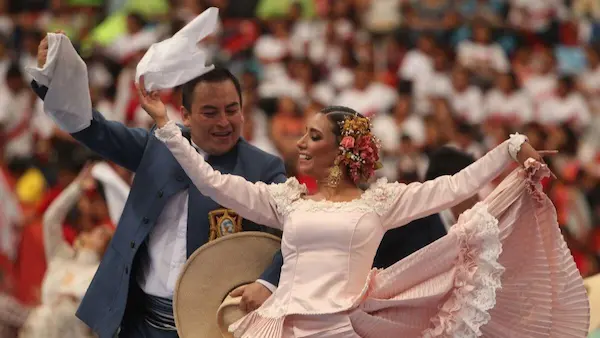
6. Semana de la Marinera – Coastal Dance Celebration
In Trujillo, the Semana de la Marinera celebrates Peru’s coastal dance heritage. The Marinera, a graceful and intricate dance, symbolizes courtship, social interaction, and regional pride. Competitions and performances attract dancers from across the country, showcasing the elegance, rhythm, and technical skill that define this tradition. The festival also serves as an educational platform, where younger generations learn the choreography, musical accompaniment, and cultural significance of the dance, ensuring that these practices are preserved and passed down.
This festival exemplifies cultural traditions of Peru, illustrating how coastal communities maintain and transmit artistic expressions that reflect both historical influences and contemporary interpretations. Observing the dance and its ceremonial aspects provides a deeper understanding of what is traditional festival in Peru, highlighting the balance between performance, tradition, and social expression. Beyond entertainment, Semana de la Marinera fosters community pride, celebrates regional identity, and reinforces social cohesion, demonstrating that traditional festivals of Peru are living, evolving expressions of culture and collective memory.
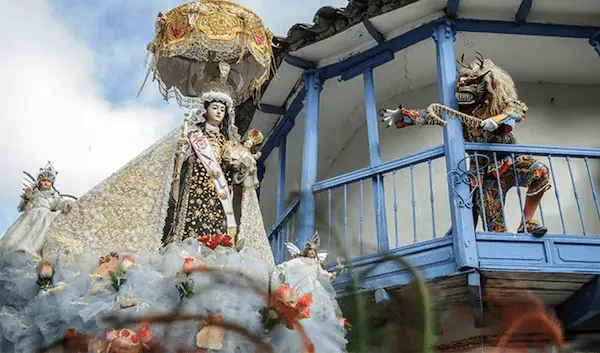
7. Fiesta de la Virgen del Carmen – Paucartambo’s Devotion
Paucartambo’s Fiesta de la Virgen del Carmen combines religious devotion with elaborate artistic displays, creating a festival that is both visually striking and culturally profound. Masked dancers, known as diablitos, perform choreographed movements that symbolically depict the eternal battle between good and evil, a theme deeply rooted in Andean cosmology and Catholic symbolism. The music, drums, and traditional instruments accompanying the dances enhance the ritualistic atmosphere, reflecting centuries of cultural synthesis that define traditional celebrations in Peru.
Through this festival, communities not only express spiritual devotion but also actively reaffirm their cultural identity. The intricate costumes, masks, and choreography are imbued with meaning, telling stories that preserve historical narratives, moral lessons, and ancestral wisdom. The interplay of narrative, costume, and communal participation exemplifies the multifaceted nature of cultural traditions of Peru, offering a unique lens through which heritage is maintained, celebrated, and transmitted across generations. Participation, observation, and preparation for the festival become acts of cultural continuity, emphasizing that what is traditional festival in Peru is deeply embedded in social, spiritual, and artistic life.

8. Additional Andean Seasonal Ceremonies – Beyond Inti Raymi
Cusco and the surrounding highlands host numerous smaller ceremonies throughout the year. These seasonal rituals, often linked to agricultural cycles, reinforce the connection between humans and nature. Participants engage in offerings, music, and dances that exemplify traditional festivals of Peru in their most spiritual and communal form.
These practices highlight what is traditional festival in Peru: communal events that preserve ancestral knowledge, agricultural wisdom, and social cohesion. Observing these ceremonies provides context for the more prominent festivals and illustrates the continuity of cultural traditions of Peru across generations.
You may also like to read: Travel to Peru in september
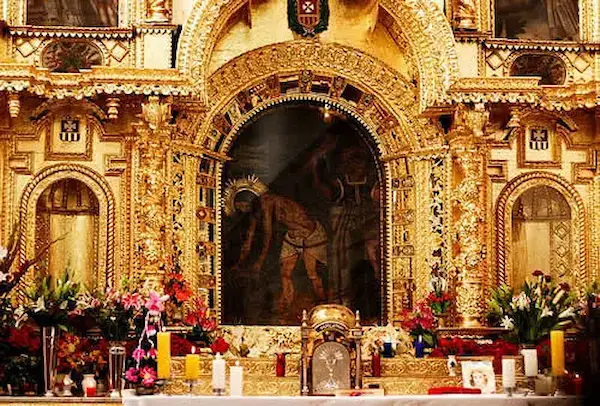
9. Señor de Huanca – Ayacucho’s Faith Expression
The Señor de Huanca festival in Ayacucho demonstrates the resilience of traditional celebrations in Peru in smaller regional contexts. Pilgrims, dancers, and musicians converge from nearby towns and villages to honor the sacred image of Christ, blending local Andean customs with Catholic practices in a seamless expression of faith and cultural continuity. The festival features processions, ritual prayers, and musical performances that highlight the rich interplay between religious devotion and community participation, providing a holistic view of how faith and tradition coexist.
Through its processions and rituals, the festival reflects not only spiritual devotion but also the intricate organization and cooperation required within the community. Local committees, families, and artisans collaborate to prepare costumes, decorate altars, and coordinate performances, demonstrating the deep social cohesion embedded in cultural traditions of Peru. This event exemplifies how heritage is transmitted organically, without the need for commercialization or spectacle, allowing observers to experience what is traditional festival in Peru as a living, participatory practice that reinforces identity, values, and communal bonds.
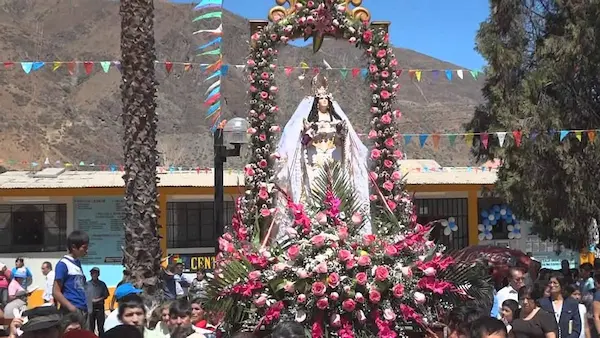
10. Fiesta de la Virgen de la Asunción – Community Heritage
Across various regions, the Fiesta de la Virgen de la Asunción exemplifies the enduring nature of traditional festivals of Peru. Communities come together to celebrate their patron saint with music, dance, and ritual, creating a space where spiritual devotion and social interaction converge. These gatherings often involve elaborate processions, traditional costumes, and performances that reflect regional variations and the historical influences that have shaped local customs. Through these expressions, communities actively preserve their heritage, reinforce cultural identity, and ensure that cultural traditions of Peru remain a living part of daily life rather than a static relic of the past.
In regions such as Arequipa, these festivals can be experienced within the broader context of regional cultural practices, providing insight into how communities sustain traditions over generations. Programs like Arequipa tours allow observers to appreciate not only the visual and performative aspects but also the communal organization and intergenerational participation that underpin these celebrations. Such festivals demonstrate that what is traditional festival in Peru encompasses both the spiritual and communal dimensions of culture, highlighting the ways in which collective memory, devotion, and artistry converge to maintain a vibrant and cohesive social fabric.
Conclusion
The ten festivals described above represent only a portion of Peru’s rich tapestry of celebrations. Each embodies the persistence, diversity, and vibrancy of cultural traditions of Peru, providing insight into the social, spiritual, and artistic fabric of the country. Understanding what is traditional festival in Peru requires attention not only to the visual spectacle but also to the deeper meanings of community, identity, and continuity that these events sustain.
From the highlands to the coast, from Andean rituals to urban processions, traditional festivals of Peru remain living expressions of history, culture, and communal memory. They are central to the preservation of identity and the celebration of heritage, offering enduring lessons in the importance of tradition in contemporary life.

