
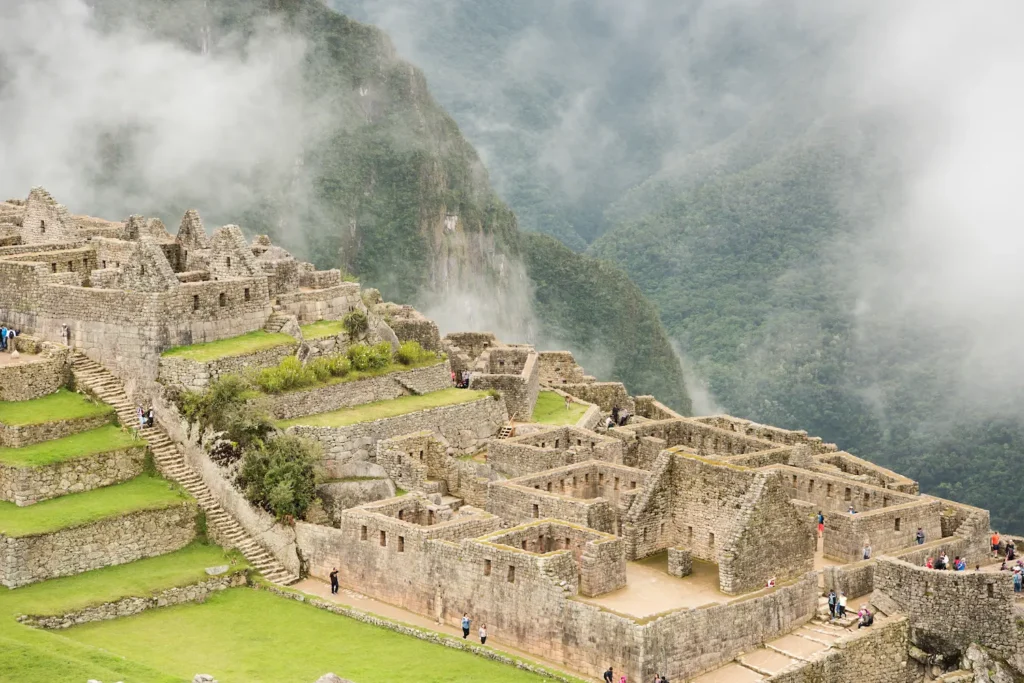
When I sit down to tell you about the history of the inca empire, I imagine you someone curious about one of the world’s most fascinating civilizations, maybe you’ve seen images of Machu Picchu bathed in morning mist or heard legends of the golden city of Cusco. But beyond the beauty and the ruins, the Inca story hides layers of meaning, innovation, and mystery.
In this journey, you’ll uncover the lesser-known side of the history of the inca empire stories of power, wisdom, engineering, and human resilience that helped the Incas rise and thrive against all odds. The Incas didn’t just build an empire; they built a worldview that still echoes through the Andes. Let’s walk that path together.
You may also like: Where to eat cheap in Cusco: Route and Tips
The beginning of the history of the Inca
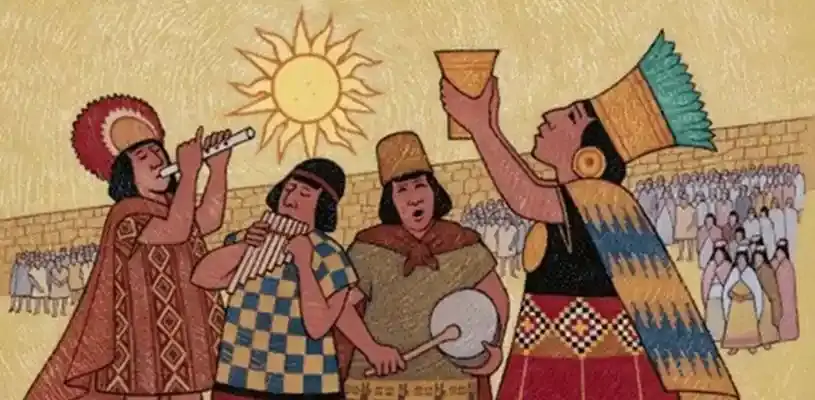
Every great civilization has a moment when myth meets history and in the case of the incas, this meeting shaped the destiny of an entire continent. The history of the inca empire is a story of resilience, vision, and unity born in the heart of the Andes. Before their golden age, the Incas were not yet rulers of vast lands, but a small community learning to survive in a world of challenges. Over time, through leadership, faith, and ingenuity, they rose to become one of the most extraordinary empires the world has ever known.
Origins and myths of the Inca civilization
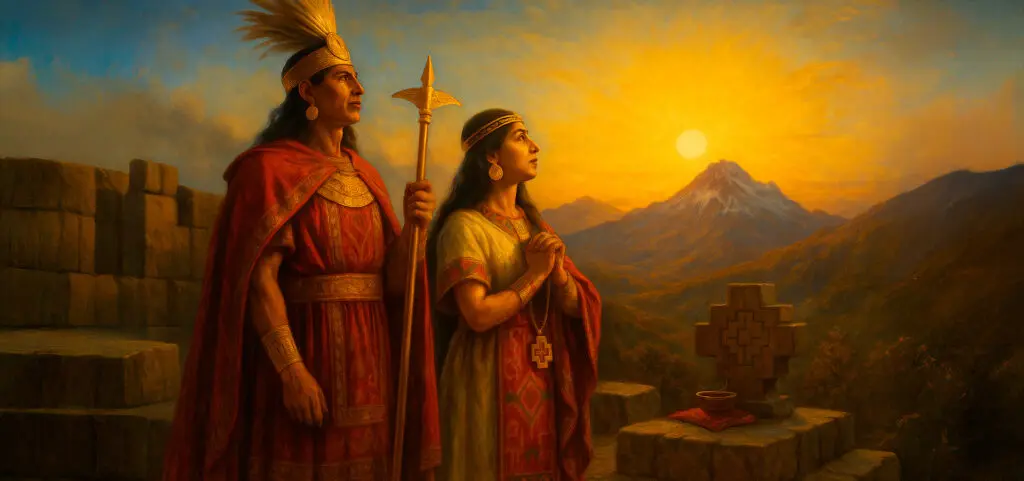
The history of the inca empire begins not with documents, but with myth. According to Inca legend, the first Inca, Manco Cápac, and his sister-wife Mama Ocllo emerged from Lake Titicaca, sent by the Sun God, Inti, to bring order to the world.
This myth defined the Incas’ divine origin and shaped their belief that Cusco was the “navel of the world.”
Historically, however, scholars like John Hemming and data from the Smithsonian Magazine suggest that the Inca people started as a small highland tribe around the 12th century. By the time of Pachacútec (1438–1471), they transformed into a powerful empire stretching from Ecuador to Chile the largest in pre-Columbian America.
Territorial expansion
The history of the inca empire shows that their expansion was not only through war. The Incas were skilled diplomats and administrators. They integrated conquered peoples through alliances, marriages, and a sophisticated system of governance called Tawantinsuyu, meaning “the four regions together.”
- An example: conquered leaders were often allowed to keep their positions if they pledged loyalty to the Sapa Inca (the emperor). This ensured peace and local cooperation while strengthening imperial unity.
The great rulers who shaped history
Among the many Inca rulers, Pachacútec is often regarded as the true founder of the empire. He reorganized Cusco, introduced architectural innovations, and initiated the construction of Machu Picchu. His successors, Túpac Inca Yupanqui and Huayna Cápac, expanded the empire even further, creating a network of roads and administrative centers across mountains, deserts, and jungles.
You may also like: Tourism in Northern Peru: Authentic Experiences for Travelers

Society and culture in the history of the Inca
The Incas were not only master builders but also social architects, creating a civilization that valued cooperation over competition and saw nature as a partner, not a resource. Their social systems, beliefs, and innovations reveal a harmony between human ambition and collective responsibility that remains deeply inspiring today.
The structure of power
The history of the inca empire reveals a highly structured society. The emperor, known as the Sapa Inca, ruled with divine authority. Beneath him were nobles, priests, artisans, and farmers all part of an intricate hierarchy based on reciprocity and collective responsibility.
The Incas didn’t use money. Instead, they practiced ayni, a system of mutual aid where communities worked together for the common good. Everyone had duties from building terraces to cultivating crops ensuring that no one starved.
The system and economic balance
A key feature in the history of the inca empire was the mit’a system, a rotating labor tax. Each community contributed workers for state projects: roads, temples, or agricultural terraces. This collective labor created the infrastructure that still amazes engineers today.
For instance, the Moray terraces near Cusco served as an agricultural laboratory where the Incas tested crops at different altitudes and climates proof of their environmental genius.
Religion, astronomy, and knowledge
Religion was the core of Inca life. The Sun God, Inti, was the most important deity, but the Incas also worshipped the Moon (Mama Quilla), the Earth (Pachamama), and mountain spirits (Apus). Temples were not just places of worship but centers of science, where priests observed celestial movements to predict seasons and guide agriculture.
Without a written language, they used quipus cords with colored knots to record numbers and possibly stories. Modern researchers at Harvard and MIT are still decoding these mysterious devices, which might hold more information about the history of the inca empire than we ever imagined.
You may also like: Hidden places in Cusco: Discover the best-kept secrets
Engineering and hidden secrets in the history of the Inca
The history of the inca is not only defined by its rulers and conquests but also by its extraordinary engineering vision. From the high peaks of the Andes to the edges of the Amazon, the Incas shaped an empire that blended innovation with nature. Their mastery of stonework, agriculture, and infrastructure turned harsh terrains into centers of life and culture. Even today, scientists and travelers alike marvel at the precision and ingenuity that allowed this civilization to thrive without modern technology.
The Inca road system: connecting a continent
The history of the inca cannot be told without mentioning the Qhapaq Ñan an astonishing network of over 30,000 kilometers of roads that united mountains, valleys, and deserts. This system allowed messages, goods, and armies to travel efficiently using runners known as chasquis. According to UNESCO, this ancient highway is one of the most impressive engineering feats of the pre-industrial world.
Bridges made from woven grass, stairways carved into cliffs, and tunnels through rock show that the Incas adapted construction techniques to every environment without iron tools or the wheel.
One of the most immersive ways to trace these ancient routes today is through curated historical programs like Incas expeditions, which retrace segments of this network for travelers seeking to understand the empire’s scale through experience rather than textbooks.
The architectural genius of the Incas
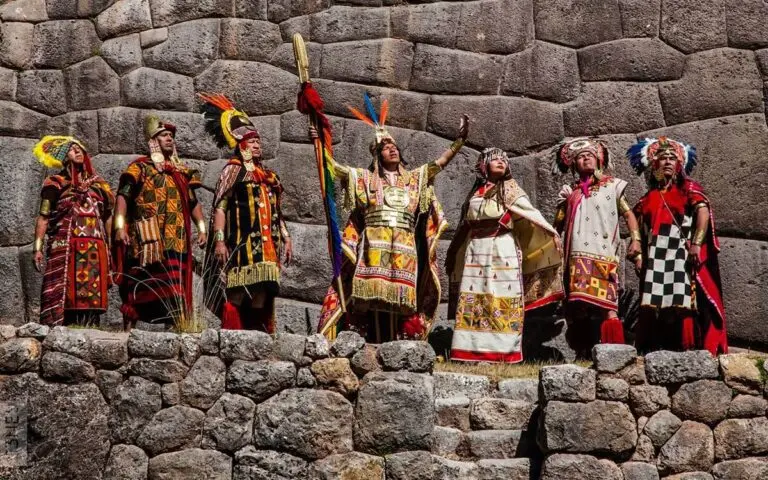
Every stone in Inca architecture tells a story. Cusco’s walls, Sacsayhuamán’s terraces, and Machu Picchu’s temples demonstrate precision stone-cutting so perfect that even a knife blade can’t fit between blocks.
Modern engineers have studied these techniques and found that the irregular shapes and angled joints allowed structures to resist earthquakes centuries before seismic design existed.
The Incas saw architecture as both science and spirituality: cities were designed in harmony with sacred landscapes, aligning buildings with solstices and mountain peaks.
The hidden secrets still being studied
Despite centuries of research, the history of the inca continues to reveal mysteries:
- How did the Incas transport and lift massive stones without wheels or iron?
- What was the full purpose of the quipu? Was it accounting or storytelling?
- Why was Machu Picchu abandoned so suddenly?
Archaeologists are still uncovering new answers. DNA studies, for example, have revealed migration patterns that show how the empire moved entire populations to maintain balance and loyalty. Each discovery brings us closer to understanding the humanity behind the empire’s grandeur.
You may also like: Fishing in the amazon river of Perú
The fall and legacy in the history of the Inca Empire
The history of the inca empire is not only a tale of glory and expansion but also one of resilience after loss. While its political structure collapsed under conquest, its cultural essence endured through centuries, shaping the soul of modern Andean identity.
The spanish conquest and collapse
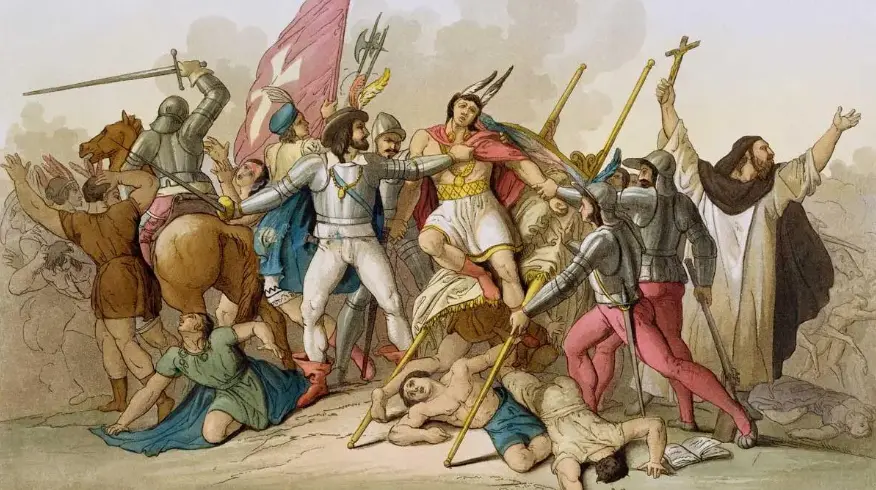
The fall of the history of the inca empire began in tragedy and confusion. By the time Spanish conquistadors arrived in 1532, the empire was weakened by a civil war between two brothers Atahualpa and Huáscar. Francisco Pizarro took advantage of this conflict, capturing Atahualpa in Cajamarca and eventually executing him.
The conquest marked the end of Inca political power, but not the end of their culture. Many Andean communities preserved their traditions, language, and spirituality in secret, allowing Inca heritage to survive colonization.
Cultural survival and modern echoes
Today, the legacy of the history of the inca empire is alive in the Quechua language, in festivals like Inti Raymi, and in the agricultural techniques still used across the Andes.
Andean communities continue to honor the Earth, the Sun, and the cycles of life with ceremonies that echo their ancestors’ worldview.
For travelers wanting to see the living remnants of that culture, a cultural itinerary such as Manu tour 4 days offers a profound immersion blending Inca heritage, biodiversity, and Andean spirituality in one of Peru’s most pristine regions.
The living legacy through modern eyes
Walking through Cusco or visiting Ollantaytambo, you can still feel the pulse of the ancient empire , the history of the Inca Empire is not just preserved in museums but in the daily lives of people who carry that heritage proudly.
Farmers use terraces designed centuries ago, artisans craft textiles with ancient patterns. Children grow up hearing the myths of Manco Cápac and Mama Ocllo, just as the Inca once did.
If you want to step directly into this past, one of the most intimate experiences is hiking the short Inca trail to Machu Picchu, where each step follows paths once used by messengers and pilgrims. It’s a living timeline, where you don’t just learn history you feel it.
You may also like: Why did the incas build Machu Picchu?
Science, climate, and sustainability in the history of the Inca
Understanding the history of the inca empire means recognizing how science and spirituality worked hand in hand with nature. Long before modern technology or environmental policies, the Incas achieved balance with their surroundings through intelligent design, innovation, and respect for the Earth. Their civilization thrived not by dominating nature, but by learning from ita principle that feels more relevant today than ever.
Environmental engineering and agricultural wisdom
The history of the inca empire was inseparable from nature. The Incas understood the Andes’ harsh geography and turned it into their greatest ally. They built terraces to prevent soil erosion, irrigation channels to control water flow, and microclimates to cultivate more than 70 types of crops, including potatoes, maize, and quinoa.
Modern sustainability experts study these ancient systems as models for climate adaptation. For example, terraces in Pisac and Moray have inspired modern water management projects in the Andes.
Lessons for the modern world
The Inca worldview based on reciprocity, balance, and respect for nature carries lessons for our era of ecological crisis. In a time when humanity seeks sustainability, the history of the inca empire reminds us that prosperity can coexist with harmony.
As an example, their agricultural diversity protected them from famine: when one region failed, others compensated. It’s a timeless principle of resilience that modern societies still strive to achieve.
Reflections on the Inca empire
Exploring the history of the inca empire is more than learning about kings and conquests; it’s rediscovering a civilization that mastered adaptation, unity, and respect for nature. The Incas left behind more than stones they left a blueprint for coexistence.
From their architecture that dances with earthquakes to their communities that thrive in reciprocity, their story invites us to rethink what progress means. And maybe, as you finish reading this, you’ll feel a pull to see it for yourself to walk the trails, touch the stones, and hear the whispers of an empire that still breathes in the Andes.

