
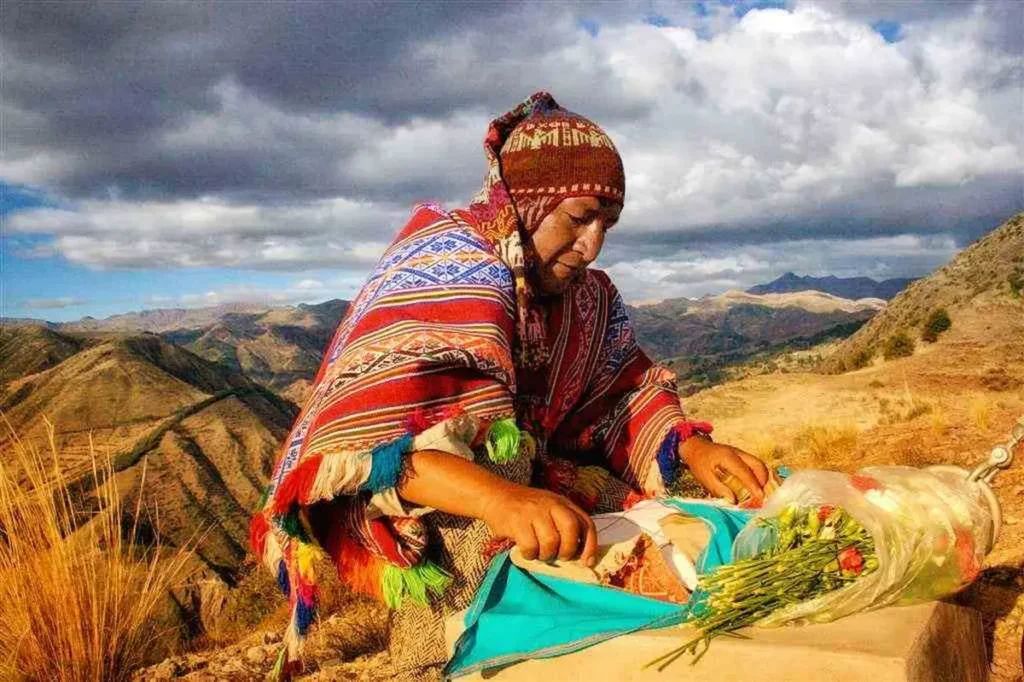
Every August 1st, in the heart of the Peruvian Andes, Pachamama Day is celebrated, a deeply significant day that honors Mother Earth. More than a folkloric event, this ancient ceremony represents a millennia-old spiritual bond between Andean peoples and the nature that surrounds them.
This sacred day invites us to reflect on the balance between humankind and their environment. Through rituals of offering, gratitude, and respect, a tradition is kept alive that is not only cultural but also spiritual. And for those who visit Peru during this time, the experience is transformative.
Below, we explore how this spiritual bond is expressed in various destinations, routes, and unique experiences in Peru. From breathtaking landscapes like Pallay Punchu to luxurious train rides to Machu Picchu, the spirit of Pachamama is present in every corner.
The Deep Meaning of Pachamama Day
In the Andean worldview, Pachamama, or Mother Earth, is considered a living deity who sustains all life. Her worship dates back to pre-Inca times, and her influence endures to this day in the cultural practices of communities throughout the Andean highlands.
On August 1st, payments are made to the earth, where coca leaves, corn, chicha, flowers, and other symbolic elements are offered. The ceremony is led by a paq’o, or Andean priest, and can take place in plazas, farms, or in people’s own homes.
This practice not only represents a spiritual ritual but also an act of reciprocity: one gives to the earth to receive its abundance. Thus, the spiritual bond is maintained and strengthened each year, consolidating the harmonious relationship between humans and their environment.
You may also like: Machu Picchu Anniversary: Pride of Peru and the World
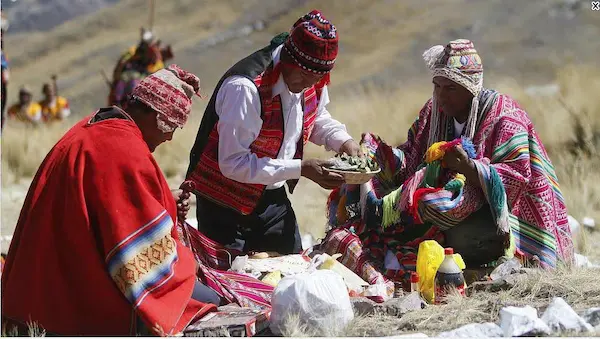
Experiencing Andean Spirituality in Sacred Places
Peru is a country with hundreds of destinations charged with energy and meaning. Visiting these places during the month of August allows travelers to immerse themselves in the Andean worldview and feel the connection with Pachamama in an authentic way.
One of these places is the Sacred Valley of the Incas, where traditional ceremonies are held on the banks of the Urubamba River. Also in Sacsayhuamán, just outside of Cusco, mass rituals are held that bring together entire communities.
Even in lesser-known destinations, such as Apurímac or Puno, ceremonies have an intimate and deeply spiritual atmosphere. In all of these spaces, tourists not only observe but can also participate, learning from ancestral knowledge with respect and openness.
A Look at Pallay Punchu: Living Nature and Culture in Balance
If there’s one place where you can feel the spiritual connection with Pachamama, it’s Pallay Punchu full day. This impressive mountain, located in the Cusco region, stands out for its multicolored stripes reminiscent of an Andean poncho.
Pallay Punchu is not just a photogenic landscape; It is also a place of deep connection with the earth. The hike to its summit is demanding, but it is filled with moments of introspection, silence, and contact with nature. There is no better way to understand the value of the earth than to walk on it, listen to the Andean wind, and feel the energy of the surroundings.
During the month of August, many nearby communities perform their own rituals of gratitude to Pachamama in this area. Participating in or witnessing one of these ceremonies turns the visit into an unparalleled cultural and spiritual experience.
The Luxury Train: A Respectful and Elegant Experience in the Andes
Another way to experience the essence of the Andes is through a journey on the Luxury Train from Cusco to Machu Picchu. This service combines comfort, gastronomy, and stunning landscapes, all within a context of respect for nature.
During the journey, passengers enjoy dishes prepared with local ingredients, live music, and panoramic windows that allow them to contemplate the Andean landscapes in all their magnificence. It’s a way to get closer to Pachamama without sacrificing comfort, ideal for those seeking to experience Peru from a sophisticated and conscious perspective.
Furthermore, this type of transportation has a lower environmental impact compared to other forms of access, contributing to responsible tourism. Most importantly, it allows you to arrive at Machu Picchu with a more connected attitude to the earth, in harmony with the legacy of the ancient Incas.
You may also like: Exploring Peruvian Amazon Tribes
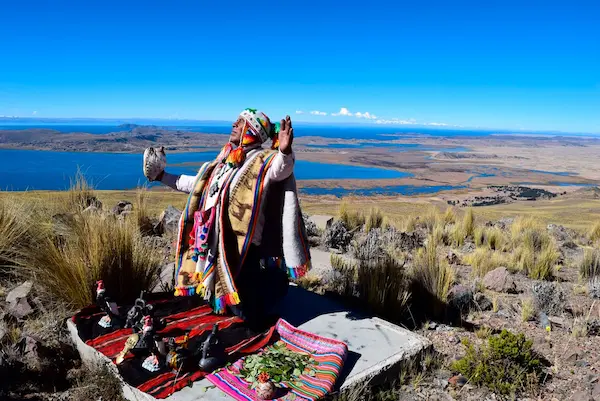
Responsible Tourism: How to Strengthen the Spiritual Bond with the Earth
Traveling through Peru involves much more than taking photos or visiting archaeological sites. It is an opportunity to reconnect with the essential, to understand that the earth is not a resource, but a living being that deserves respect.
Responsible tourism in Peru promotes practices such as:
- Participating in rituals with local communities
- Leaving no waste in natural spaces
- Valuing ancestral knowledge without exoticizing it
- Consuming local and artisanal products
- Choosing services operated by a Peru travel agency with a sustainable approach
These small actions help keep the essence of the spiritual bond with Pachamama alive. They also profoundly enrich the traveler’s experience.
Returning with a Full Heart
Those who travel to Peru during the month of August not only return with photographs of breathtaking landscapes, but with their hearts full of learning and emotions. Participating in ancestral rituals, exploring sacred mountains, or enjoying a train ride that respects the environment connects us with a more conscious and transformative way of traveling.
This is the true value of keeping the spiritual bond with Pachamama alive: understanding that each trip can be a way of honoring, caring for, and thanking the earth that sustains us.
Machu Picchu: A Spiritual Legacy High in the Andes
We cannot talk about Pachamama Day without mentioning Machu Picchu. This sacred citadel, beyond its architectural majesty, is a deeply spiritual site. Its temples, astronomical alignments, and strategic location reflect a worldview that revolves around respect and veneration for the earth.
Visiting Machu Picchu in August allows visitors to experience this energy more intensely. Many travelers combine their visit with a small ceremony of thanksgiving, either at Intipunku (the Sun Gate), the Temple of the Condor, or in front of the main plaza.
The silence, the morning mist, the birdsong, and the murmur of the Vilcanota River create an atmosphere that invites contemplation. Here, the spiritual bond is strongly felt, and every step among the ruins becomes a moving meditation.
You may also like: National Holidays in Peru
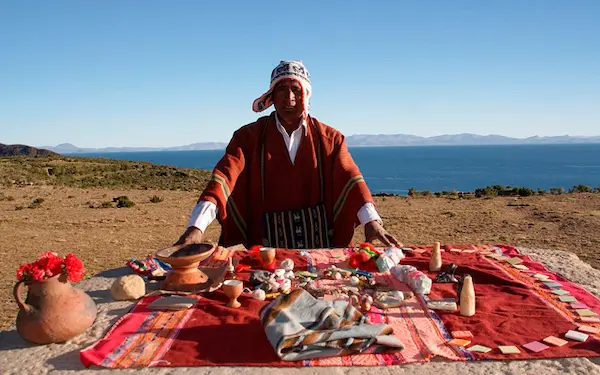
Recommendations for Experiencing Pachamama Day in Peru
If you’re planning to travel to Peru in August and want to participate in the Pachamama celebrations, here are some recommendations for a respectful and enriching experience:
- Consult with local operators or guides about authentic events open to the public.
- Bring an open mind, willing to learn without judgment.
- Do not interrupt ceremonies or take photos without permission.
- Participate actively, if invited, with humility and respect.
- Contribute to local communities by purchasing handicrafts or products made for the occasion.
Participating mindfully will make your trip not only unforgettable, but also meaningful.
A Living Land, an Eternal Bond
Pachamama Day is not just a local celebration; it is a universal call to reconnect with the earth. And Peru, with its vast geography, ancient culture, and hospitality, offers the perfect setting to experience this spiritual bond authentically.
From hiking the trails of Pallay Punchu to crossing the Andes on a luxury train, to the excitement of discovering Machu Picchu or sharing a ceremony with a Quechua community, every experience in Peru has the potential to reconnect us with what’s essential.
And if you do it with a Peru travel agency that understands and respects this worldview, you’ll be contributing to more conscious tourism and the preservation of these ancient practices that give life and meaning to the depths of Peru.

