

The social organization of the Incas was one of the fundamental pillars that allowed the expansion and consolidation of the Tahuantinsuyo as the largest empire in pre-Columbian America. By understanding how its social classes were structured, we can appreciate the complexity of a civilization that managed to integrate millions of people under a centralized and highly efficient administration in Cusco.
From the very first moment, it is fascinating to observe how this hierarchical order not only defined political power but also established the religious and economic responsibilities of each individual within the community. The social organization of the Incas was based on a very sharp pyramid, where birth and privilege determined the fate of the inhabitants, always under the watchful eye of the sovereign.
You may also like: What is hiking and trekking

Origins and bases of the social organization of the Incas
The structure we know today did not emerge from nowhere but was the result of centuries of evolution and assimilation of previous Andean traditions. The founders of Cusco understood that to govern such a rugged and diverse territory, it was vital to establish clear rules that everyone would respect and follow without question for the common good.
This division allowed every resource, from maize to precious metals, to be managed with astonishing precision by state officials throughout the empire. The social organization of the Incas guaranteed that the state always had labor available for major public works and constant military expansion into new territories within the vast Andean region.
The concept of reciprocity in the Andean structure
One of the most interesting concepts within this system was reciprocity, which acted as a social glue between the different classes and levels. It was not just about commanding and obeying, but about a constant exchange of favors and services that maintained the balance within the extensive population of this great and powerful empire.
The Inca state requested labor from its subjects, but in return, it offered protection, food in times of scarcity, and the organization of major religious festivals. This dynamic was essential to maintain internal peace and ensure that the social organization of the Incas functioned like a well-oiled machine during many centuries of military glory and success.
Vertical control of ecological zones
To complement the social structure, the Incas used a system to control various climates that ensured the provision of products from all regions. Family groups moved according to the needs of the social organization of the Incas, allowing the diet of both the nobility and the common people to be always varied and highly nutritious.
This system was not only economic but also strengthened the bonds between distant communities and the administrative center located in the city of Cusco. Thus, the social organization of the Incas achieved a territorial cohesion that few ancient civilizations could replicate with such success and for such a long period of historical expansion.
You may also like: Significado e importancia cultural de las Líneas de Nazca

The Sapa Inca: The center of the social organization of the Incas
At the pinnacle of the entire structure stood the Sapa Inca, who was considered the son of the sun and possessed absolute power over life. His presence was sacred, and no one could look him directly in the eyes, which reinforced his divine status in front of all the people he governed with a very firm hand.
As the head of the social organization of the Incas, the sovereign was in charge of making the most important geopolitical decisions and leading sacred rituals. His life was surrounded by unimaginable luxuries, wearing the finest vicuña fabrics and carrying gold jewelry that symbolized his direct connection with the main deities of the high heavens.
The Auqui and the succession of imperial power
The election of the successor, known as the Auqui, was a delicate process that sought to ensure the continuity of the empire with the most capable leader among the sons. The firstborn was not always the chosen one, as military and administrative skills were valued to keep the social organization of the Incas intact in the face of possible political crises.
The young prince was prepared from an early age in the arts of war and politics, accompanying his father on various conquest campaigns. This rigorous training guaranteed that, upon taking the throne, the new Sapa Inca would have the respect of the nobility and the capacity to guide the entire empire toward prosperity.
The Coya and the role of women in the nobility
The Coya was the principal wife of the Inca and played a role of utmost importance in the court, representing the feminine energy within cosmology. Although political power rested mainly with the men, she significantly influenced family decisions and the management of the properties of the most important royal panaca.
Her presence balanced the social organization of the Incas by presiding over ceremonies dedicated to the Moon and the fertility of the earth throughout the valley. Women of the high nobility enjoyed exclusive privileges and were treated with a reverence similar to that of the monarch, always maintaining their own loyal retinue of servants.
You may also like: Tour Lago Sandoval 2026: La mejor experiencia amazónica que no debes perderte

Blood and privilege nobility
Below the immediate royal family was the blood nobility, composed of the direct descendants of the former Inca rulers who resided in the capital. These groups, known as panacas, owned vast tracts of land and had the honor of holding the highest public offices within the state administration.
For those looking to explore these historical sites, it is ideal to hire tours Cusco to understand the magnitude of the palaces these nobles once inhabited. The social organization of the Incas reserved for them the most advanced education and the right to wear large gold earplugs that distinguished their superior status.
1) The Panacas and the royal lineage
The panacas were not just noble families; they had the sacred mission of preserving the deceased Inca’s mummy and keeping his memory alive through generations. This system ensured that the prestige of the lineage remained intact, granting its members a political and religious influence that was decisive in the social organization of the Incas.
Each new panaca was formed when a Sapa Inca took the throne, leaving his previous family to manage his personal assets and lands gained during his reign. This division of lineages prevented the excessive concentration of land in a single family branch, allowing the social organization of the Incas to remain dynamic and in constant territorial expansion.
2) The Orejones and their administrative importance
The Spanish called these nobles “orejones” due to the large discs they wore in their earlobes as a physical mark of their elevated rank and status. These men were the eyes and ears of the Inca in the most distant provinces, ensuring that imperial laws were strictly followed in every corner of the vast territory of the sun.
Their loyalty was fundamental to the stability of the empire, as they managed food warehouses and organized the census of the local population every year with precision. Thanks to their labor, the social organization of the Incas remained firm against the logistical challenges of governing a territory with such extreme and distant geographies from each other.
3) The non-Inca nobility and local curacas
There was also a nobility of privilege or non-Inca nobility, integrated by leaders of conquered peoples who chose to ally peacefully with Cusco’s power after the initial invasion. These curacas maintained some authority over their original communities, but they had to report directly to the Sapa Inca and send their children to be educated in the capital.
This political strategy was brilliant, as it allowed for the assimilation of new ethnic groups without completely destroying their previous local leadership structures in the peripheral provinces. In this way, the social organization of the Incas grew in an inclusive yet hierarchical manner, ensuring that new territories felt part of the great Tahuantinsuyo political project.
4) Elite education at the Yachaywasi
Children of the nobility, both blood and privileged, attended the Yachaywasi or “House of Knowledge” to receive a rigorous training in history, laws, and religion. This educational center was the intellectual heart where the future of the social organization of the Incas was shaped, ensuring that leaders deeply understood state administration.
Under the guidance of the Amautas, the young apprentices mastered the use of quipus and the military tactics necessary to protect the borders of the expanding empire. By centralizing the education of the children of conquered chiefs, the social organization of the Incas achieved cultural unification and an unbreakable loyalty toward the figure of the sovereign.
You may also like: Textiles Incas y su Significado Cultural

The people and the base of the social organization of the Incas
The vast majority of the population belonged to the working class, those who with their daily effort economically sustained the entire elite and the army. Without the tireless work of these peasants and artisans, the empire could not have built its architectural wonders or fed its huge and complex state bureaucracy.
It is possible to see the paths these workers traveled by going on a trekking in Peru along the ancient routes that connected communities with the centers. The social organization of the Incas demanded total dedication from them, but also guaranteed access to basic resources that were often lacking in other civilizations of the world.
The Hatun Runa: The agricultural engine of the empire
The Hatun Runa, or “big men,” were the common citizens dedicated mainly to agricultural work, livestock, and the construction of necessary public infrastructure. They lived in small rural communities, and their lives were marked by the cycles of nature and the labor demands imposed by the centralized state.
Although they possessed no luxuries, their role was the most vital within the social organization of the Incas, as the sustenance for the entire Tahuantinsuyo came from their hands. They paid their tribute through the mita, a rotational work system that allowed the empire to carry out colossal works such as temples and roads.
Mitimaes and Yanaconas: Groups with special functions
Within the popular stratum, there were groups with particular statuses, such as the mitimaes, who were families moved to new regions to colonize or secure strategic borders. This population mobility was a very effective tool for political and cultural control to unify diverse customs under a single and solid Inca-style identity.
On the other hand, the yanaconas were servants who had been detached from their original ayllus to serve the nobility or the imperial state directly. Their position in the social organization of the Incas was hereditary, and although they did not have the communal obligations of the general people, their freedom was restricted by their permanent service.
You may also like: Las mejores excursiones de un día desde Cusco 2026: Guía de viaje completa

The Ayllu as the core of the social organization of the Incas
The ayllu was the basic unit of Andean society, consisting of a group of families united by kinship ties and the shared work of the fields. This institution was so strong that it managed to survive even after the fall of the empire, keeping alive many traditions that still persist in the rural communities of Peru.
Within the ayllu, land ownership was not individual but collective, and it was distributed annually according to the needs of each family that integrated it. The social organization of the Incas fostered this communal union to ensure that no one was left helpless, always promoting mutual aid among all its members during harvests.
Kinship ties and community work
The sense of belonging to an ayllu gave individuals a clear identity and a social safety net against climatic difficulties or daily personal challenges. Members shared common ancestors and worshipped their own local divinities, creating a social fabric that was very resistant to the external pressures of modern times.
Work in the ayllu was carried out under the principle of ayni, where today one person helped their neighbor with the promise of receiving similar help tomorrow. This collaborative spirit was what allowed the social organization of the Incas to be so productive, managing to transform mountain slopes into fertile and beautiful terraces.
The role of elders in the community
Elders within the ayllu enjoyed special respect due to their experience and accumulated knowledge about climate, agriculture, and the laws of coexistence. They acted as advisors to the curacas and ensured that the traditions of the social organization of the Incas were correctly transmitted to the new generations of young people.
Their work was fundamental to maintaining the spiritual cohesion of the group, mediating internal conflicts and directing the most important local ceremonies of the Andean community. In the social organization of the Incas, old age was not a burden but a stage of wisdom that contributed directly to the well-being and stability of the group.
You may also like: ¿Cuántos días necesitas en Perú?
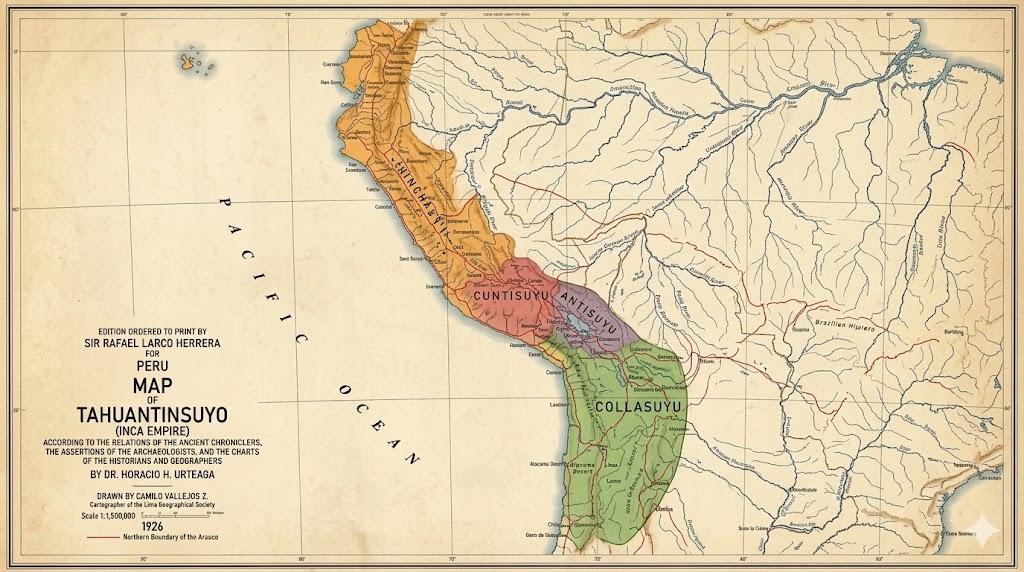
Mobility and stratification in the Tahuantinsuyo
Although Inca society was mostly closed, there were small gaps through which some individuals could rise in rank thanks to their military or civil merits. A brave soldier or a brilliant administrator could receive land or noble women as a reward for their loyalty and distinguished service to the reigning Sapa Inca.
If you wish to plan a visit that fits your historical interests, you can opt for customized tours that take you to the lesser-known corners of this history. The social organization of the Incas rewarded efficiency, which encouraged citizens to strive for the common good of the empire and its continued territorial expansion.
However, these social promotions were rare, and most people were born, lived, and died within the same social stratum that their parents always knew. This stability was precisely what the rulers sought to avoid internal conflicts and maintain absolute order in a territory that extended for thousands of miles.
Learning about the past of this civilization allows us to better understand the current identity of Andean peoples and their resilience through centuries of history. The social organization of the Incas left a legacy of order, work, and respect for hierarchy that can still be felt when walking through the ancient streets of Cusco today.
I hope this journey through the social classes of the Tahuantinsuyo has helped you value the greatness of a people who knew how to organize to reach the stars. There are always new details to discover about how these men and women managed to dominate the highest mountains with wisdom and an enviable social system.

