
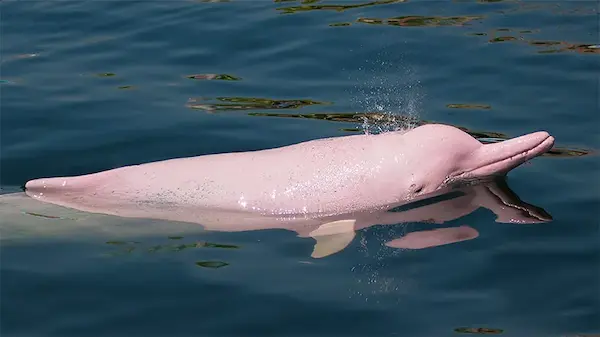
Deep in the winding rivers of the Amazon Basin lives one of the most fascinating mammals on the planet: the amazon pink dolphin. Scientifically known as Inia geoffrensis, this freshwater dolphin has captured the attention of explorers, scientists, and river communities for generations.
Unlike the dolphins that inhabit oceans around the world, this unique species lives entirely in freshwater. It moves through rivers, flooded forests, and narrow tributaries that weave through the Amazon rainforest. Its unusual pink coloration, flexible body, and curious behavior make it one of the most remarkable animals in South America.
For many Indigenous communities living along the Amazon rivers, the dolphin represents much more than wildlife. It is surrounded by stories, myths, and spiritual meaning. According to traditional legends, the dolphin can transform into a human at night and visit nearby villages, returning to the river before sunrise.
Today, these animal is both a biological marvel and an important cultural symbol of the Amazon region. Learning about its history, behavior, and place in local traditions helps us understand why this extraordinary animal continues to inspire curiosity, respect, and fascination throughout the rainforest.
You might be interested in: Cusco train to Machu Picchu: the scenic journey through the heart of the Inca world
The natural history of the amazon pink dolphin
The amazon pink dolphin belongs to a group of freshwater dolphins that evolved separately from ocean dolphins millions of years ago. Scientists believe their ancestors entered river systems when sea levels were much higher, eventually adapting to life in freshwater environments.
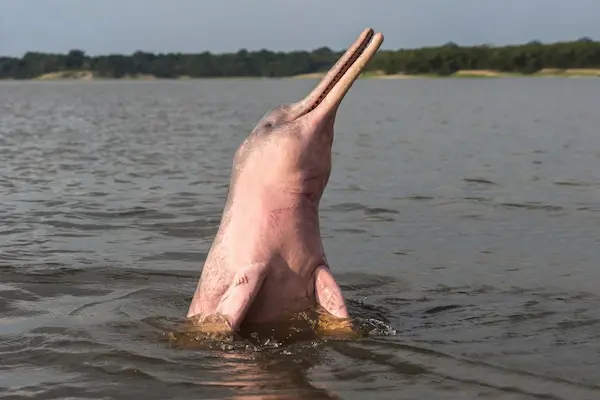
Over time, these dolphins developed unique physical characteristics suited for navigating the complex river systems of the Amazon. One of their most remarkable features is their flexible neck, which allows them to turn their heads in multiple directions. This ability helps them maneuver through submerged tree branches and flooded forests during the rainy season.
Their long snout and numerous teeth allow them to catch a wide variety of prey, including fish, crabs, and small river animals. In fact, the amazon pink dolphin has one of the most diverse diets among dolphin species.
Why these animal turns pink
One of the most famous characteristics of the amazon pink dolphin is its unusual coloration. While young dolphins are typically gray, many adults develop a pink hue as they mature.
Scientists believe several factors contribute to this color change. One explanation is the gradual loss of pigmentation as the dolphin ages. Another theory suggests that blood vessels close to the skin become more visible, creating a pink appearance.
Interestingly, males are often more pink than females. This may be related to social behavior, as males frequently engage in playful or competitive interactions that leave scars on their skin. These scars may also influence the pink coloration.
Legends and myths
One of the most famous legends describes the dolphin as a magical being capable of transforming into a handsome man during the night. According to the story, the dolphin leaves the river and appears at village celebrations wearing elegant white clothing and a hat that hides the blowhole on his head.
Although these stories are part of folklore rather than scientific fact, they illustrate the deep cultural importance of the species. For many people living near the Amazon rivers, the dolphin represents mystery, transformation, and the powerful connection between humans and nature.
The role of the amazon pink dolphin in the Amazon ecosystem
As a top predator in the freshwater environment, it helps regulate fish populations and contributes to the overall health of the aquatic ecosystem. By feeding on a wide variety of fish species, the dolphin prevents any single species from becoming overly dominant.
Because dolphins require clean water and abundant food sources, their presence can also indicate a healthy river system. When dolphin populations decline, it may signal environmental problems such as pollution or overfishing.
In this way, the amazon pink dolphin serves not only as a fascinating animal but also as an indicator of the health of the Amazon rainforest’s waterways.
Fascinating curiosities
For example, unlike ocean dolphins, these river dolphins often swim slowly and navigate through flooded forests during the rainy season. Their flexible bodies allow them to move easily around submerged trees.
They are also known for their intelligence and curiosity. Some researchers have observed dolphins interacting with boats or investigating unfamiliar objects in the water.
Another interesting fact is that the amazon pink dolphin has one of the largest brains among freshwater mammals, which may contribute to its complex behavior.
You may also be interested in:Places to Go on Valentine’s Day
The scientific discovery of the amazon pink dolphin
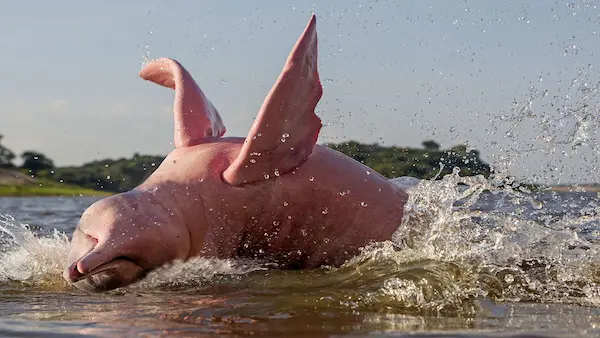
The amazon pink dolphin has been known by local communities for centuries, but its scientific study began much later when European explorers started documenting the wildlife of South America during the eighteenth and nineteenth centuries.
Naturalists traveling through the Amazon Basin were fascinated by reports of a freshwater dolphin that looked very different from the ocean species they already knew. When specimens were finally observed and recorded, scientists classified the species as Inia geoffrensis, recognizing it as a unique type of river dolphin.
How researchers study the amazon pink dolphin in the wild
Studying the amazon pink dolphin in its natural environment presents unique challenges for scientists. The vast river systems of the Amazon Basin, combined with dense vegetation and constantly changing water levels, make it difficult to track and monitor these elusive animals.
To better understand their behavior, researchers often rely on a combination of observation techniques and modern technology. Some scientists use drones or specialized river boats to observe dolphin activity without disturbing them. Others use acoustic equipment to record underwater sounds, since dolphins communicate using clicks and whistles.
Photo identification is another important method used by researchers. By studying the scars, markings, and physical characteristics of individual dolphins, scientists can identify and monitor specific animals over long periods of time.
Why Peru is ideal for nature and hiking exploration
Peru is one of the few countries in the world where travelers can experience several ecosystems within relatively short distances. From the Amazon rainforest to the Andean highlands and coastal deserts, the country offers extraordinary environmental diversity.
This variety makes Peru especially attractive for outdoor enthusiasts interested in wildlife, culture, and adventure. Many visitors combine wildlife observation in the rainforest with mountain exploration through hiking day trips in the Andes.
These journeys reveal how different landscapes shape the natural and cultural heritage of the country. The rivers of the Amazon support species like the amazon pink dolphin, while the mountains preserve ancient Inca traditions and breathtaking hiking routes.
Indigenous knowledge and the amazon pink dolphin
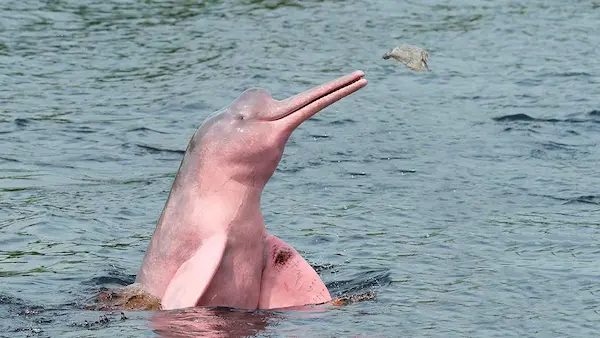
For many indigenous communities living along the Amazon rivers, the amazon pink dolphin has always been more than just a biological species. Long before scientists began studying the animal, local populations already possessed extensive knowledge about its behavior, habitat, and seasonal movements.
Indigenous fishermen often observed how dolphins followed schools of fish or appeared more frequently during certain times of the year when rivers flooded surrounding forests. These observations helped communities understand the rhythms of the river ecosystem.
Where travelers can see the them?
Today, several regions of the Amazon Basin provide opportunities to observe the amazon pink dolphin in its natural habitat. Areas in Peru, Brazil, and Colombia offer eco-tourism programs focused on responsible wildlife observation.
One of the most popular locations is the Peruvian Amazon near the city of Iquitos, where river systems and flooded forests create ideal conditions for dolphins. Visitors traveling through these waterways sometimes see dolphins swimming alongside boats or surfacing quietly in calm sections of the river.
Because the species is protected in many areas, responsible tourism plays an important role in conservation. Guides often educate visitors about the importance of protecting river ecosystems and respecting wildlife.
For travelers interested in exploring the natural and cultural diversity of Peru, adventures that combine rainforest exploration with experiences in the Andes, such as Lares Treks, offer a broader perspective on the country’s remarkable landscapes.
Nature adventures in Peru beyond the rainforest
Many travelers who visit the Amazon rainforest also explore the highlands of Peru, where the landscapes change dramatically from tropical forests to towering Andean mountains.
These diverse environments allow visitors to experience both wildlife-rich jungles and ancient mountain civilizations in a single journey. While these animal represents the mystery of the rainforest rivers, the Andes offer completely different forms of exploration.
Shorter adventures in the mountains, such as the lares trek 2 days, allow travelers to discover remote villages, alpine lakes, and traditional Andean communities within a limited timeframe.
These experiences demonstrate the incredible diversity of Peru’s ecosystems, from the winding rivers of the Amazon to the dramatic peaks of the Andes.
You may also be interested in: How many days do you need in Peru?
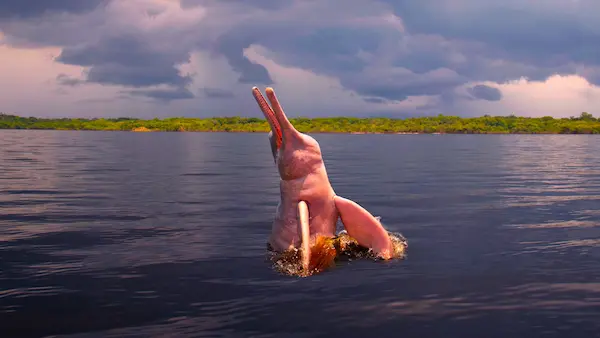
The enduring mystery of the amazon pink dolphin
The amazon pink dolphin remains one of the most fascinating animals living in the rivers of South America. Its unusual appearance, incredible adaptations, and strong presence in local traditions make it far more than just another species of dolphin. For many people in the Amazon region, it represents both a natural wonder and a powerful cultural symbol.
Over the years, stories about this remarkable creature have traveled from ancient river legends to modern scientific studies. Even today, the dolphin continues to spark curiosity among researchers, travelers, and nature lovers who want to learn more about life in the Amazon.
Protecting the them is essential not only for preserving biodiversity but also for safeguarding an important part of the region’s natural heritage. By understanding and respecting this unique animal, we can help ensure that future generations will still have the chance to witness one of the Amazon’s most mysterious and captivating inhabitants.

