
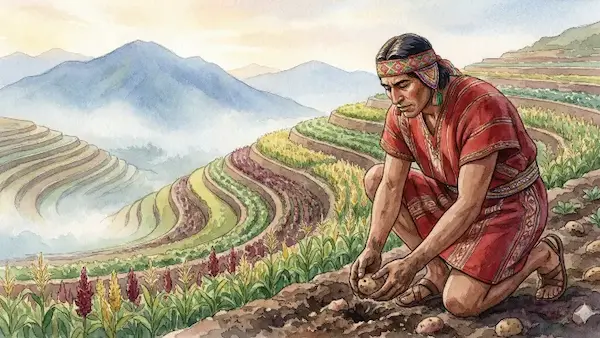
When people think about the Inca civilization, the first images that usually come to mind are Machu Picchu, stone architecture, and mountain landscapes. However, behind all of that cultural and architectural brilliance lies something even more fundamental: The Inca agriculture system that allowed an entire empire to survive and expand across one of the most extreme environments on Earth.
Understanding the agriculture is not just about farming techniques. It is about how a civilization learned to adapt, organize, and thrive in the Andes, where steep mountains, unpredictable weather, and limited flat land could have made large-scale agriculture nearly impossible. Yet the Incas succeeded in creating one of the most advanced agricultural systems of the pre-Columbian world.
In this article, we will explore how The agriculture worked, why it was so efficient, and what modern societies can still learn from it today. From terraced fields to irrigation systems, from crop diversity to storage strategies, The agriculture reveals a deep understanding of nature and sustainability that still impresses researchers today.
The foundation of The Inca agriculture in the Andes
The Andes are one of the most challenging environments for farming. High altitudes, steep slopes, cold temperatures, and limited arable land meant that early societies needed to innovate constantly. The Inca agriculture developed as a response to these challenges, turning obstacles into opportunities.
Instead of fighting the landscape, The agriculture worked with it. The Incas carefully studied elevation levels, soil conditions, and microclimates. This allowed them to grow different crops at different altitudes, maximizing productivity across vast territories.
One of the most important principles of The agriculture was vertical control of resources. This concept meant that communities used different ecological zones along mountain slopes to produce a variety of crops. Potatoes, maize, quinoa, and other native plants were distributed strategically depending on altitude.
This system was not random. It was planned, organized, and deeply connected to the social structure of the empire. The agriculture was both a scientific and cultural achievement.
Terraces: the engineering core of The Inca agriculture
One of the most iconic elements of The Inca agriculture is the agricultural terrace system known as andenes. These terraces transformed steep mountain slopes into productive farmland.
Instead of letting soil erode down the mountains, The agriculture used stone retaining walls to create flat platforms. These terraces improved water retention, reduced erosion, and created microclimates that were more stable for crops.
The design of terraces in The agriculture was incredibly advanced. Each layer had different soil compositions, drainage systems, and exposure to sunlight. This allowed farmers to control temperature and humidity in ways that would normally be impossible in mountainous terrain.
Terraces also expanded the available farmland dramatically. Without The agriculture techniques, much of the Andean landscape would have been unusable for crops. Instead, entire mountainsides became productive agricultural zones.
Even today, many of these terraces are still visible and partially functional, showing how durable and efficient The agriculture really was.
Irrigation systems and water control
Water management was another essential part of the agriculture. In a region where rainfall can vary dramatically, controlling water supply was critical for survival.
The Incas built complex irrigation channels that transported water from mountain springs, rivers, and natural sources to agricultural terraces. These channels were carefully designed with gradients that allowed water to flow efficiently without causing erosion.
In many areas, the agriculture also included underground water systems and aqueducts. These systems distributed water across large agricultural zones, ensuring that even remote terraces received adequate irrigation.
What makes the agriculture especially impressive is the precision of these systems. Engineers understood how to regulate water flow depending on crop needs, altitude, and seasonal changes. This level of environmental control was far ahead of its time.
You might be interested in: What to do in Arequipa: top 8 places to visit
Crop diversity and food security in The Inca agriculture
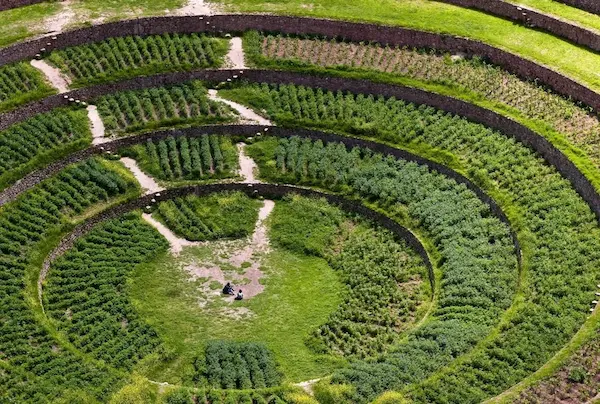
One of the key strengths of The agriculture was crop diversity. Instead of relying on a single staple crop, the Incas cultivated hundreds of varieties of potatoes, maize, quinoa, and other native plants.
This diversity was essential for survival. Different crops responded differently to climate changes, pests, and altitude conditions. By spreading production across many varieties, The agriculture reduced the risk of famine.
Potatoes were especially important. The Incas developed techniques such as freeze-drying potatoes into chuño, which could be stored for years. This innovation ensured long-term food security and supported large populations.
Maize, on the other hand, was often used for ceremonial purposes and elite consumption. Quinoa provided high nutritional value and grew well in high-altitude regions. Together, these crops formed the backbone of The Inca agriculture system.
Storage systems and redistribution networks
Another remarkable feature of The agriculture was its storage infrastructure. The Incas built thousands of storage facilities called qollqas, which were placed in strategic locations across the empire.
These storage centers were designed to preserve food for long periods. They used natural ventilation systems, dry conditions, and elevation to prevent spoilage. As a result, The agriculture could support both urban populations and military campaigns.
Food was not only stored but also redistributed by the state. The Inca government managed agricultural production and ensured that resources were shared between regions. This centralized system helped stabilize the empire during droughts or poor harvests.
Without this structure, The agriculture would not have been able to sustain such a large population in such a difficult environment.
Social organization behind The Inca agriculture
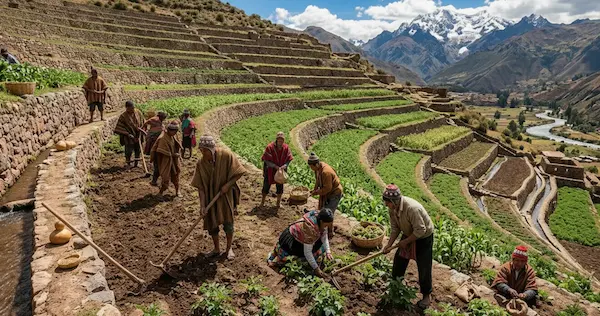
Agriculture in the Inca Empire was not an individual activity. It was a collective system organized through communities known as ayllus. Each ayllu worked together to cultivate land, manage terraces, and maintain irrigation systems.
Labor was distributed through a system of reciprocity and obligation. People contributed time and effort to agricultural projects, and in return, the state provided protection, food distribution, and infrastructure.
This collective approach is one of the reasons The agriculture was so successful. It ensured that large-scale projects could be completed efficiently without relying on individual ownership or competition.
The social structure and The agriculture system were deeply connected. Farming was not separate from governance; it was part of how the empire functioned.
You might be interested in: Salkantay trek tour operators for 2026
Climate adaptation in The Inca agriculture
One of the most impressive aspects of The Inca agriculture was its ability to adapt to extreme climate variation. The Andes have multiple ecological zones within short distances, and temperatures can change drastically depending on altitude.
The Incas used these variations to their advantage. By placing crops in specific zones, The Inca agriculture optimized growth conditions for each plant type.
Frost-resistant crops were grown at higher elevations, while maize and other temperature-sensitive crops were cultivated in lower valleys. This strategic placement reduced crop failure and improved overall productivity.
Even modern agricultural scientists study The agriculture to understand how ancient societies managed climate challenges without modern technology.
Spiritual and cultural meaning of The Inca agriculture
Agriculture was not only practical in Inca society; it was also spiritual. The land, known as Pachamama or Mother Earth, was considered sacred. Farming was seen as a form of respect and reciprocity with nature.
Rituals and ceremonies were often linked to agricultural cycles. Planting, harvesting, and irrigation activities were accompanied by offerings and celebrations. This spiritual dimension gave deeper meaning to The Inca agriculture system.
The connection between land and spirituality also encouraged sustainable practices. Overexploitation of soil was avoided because it was seen as disrespectful to nature. This cultural belief helped preserve productivity over long periods.
Legacy of The Inca agriculture today
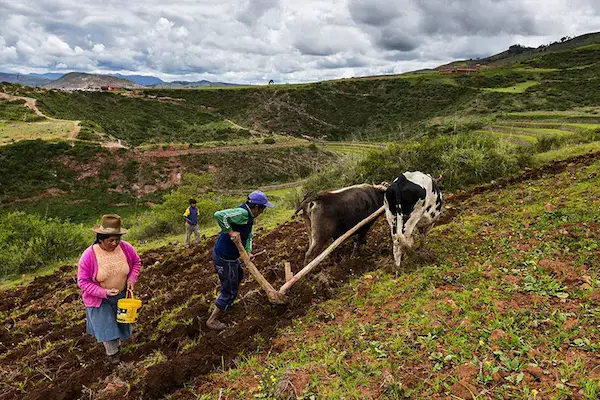
Even after centuries, the influence of The Inca agriculture can still be seen in modern Peru and other Andean regions. Many farmers continue to use terrace systems, traditional crops, and ancestral knowledge passed down through generations.
Researchers and agronomists also study The agriculture as a model for sustainable farming. Its combination of biodiversity, water management, and ecological adaptation offers valuable lessons for modern food systems facing climate change.
Tourism has also helped preserve these agricultural sites. Visitors exploring the Sacred Valley or Machu Picchu often see remnants of ancient terraces that once formed part of The agriculture network.
For travelers interested in deeper cultural experiences, companies like Lala Peru Travel offer guided tours that connect history, agriculture, and Andean traditions in a meaningful way.
You might be interested in: National Peruvian Day: Guide to July 28 in Peru
Exploring The Inca agriculture through travel
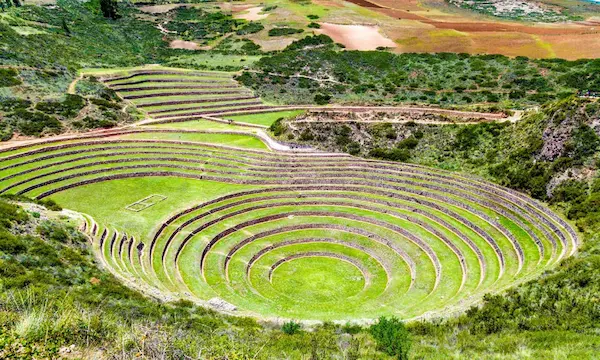
One of the best ways to understand The agriculture is by visiting the landscapes where it was developed. The Sacred Valley, Moray, and Maras salt mines all provide insight into how the Incas managed land and resources.
Travelers often combine cultural exploration with trekking routes that pass through ancient agricultural zones. Some itineraries also include cultural events such as Corpus Christi in Cusco, which helps visitors understand how tradition and land remain connected in modern Andean life.
Many visitors also choose guided experiences through cusco tours, which provide historical context and access to important archaeological sites.
For those interested in longer and more immersive adventures, trekking routes such as the Ausangate Trek 4 Days to Rainbow Mountain offer a direct connection with the high-altitude landscapes that shaped The Inca agriculture system.
Working with a knowledgeable Tour operator can make these experiences more meaningful by providing historical explanations and logistical support while traveling through remote regions.
Why The Inca agriculture still matters today
In a world facing climate change, soil degradation, and food insecurity, The agriculture offers valuable lessons. Its focus on diversity, sustainability, and environmental adaptation is highly relevant to modern challenges.
Unlike industrial agriculture systems that often rely on monocultures, The agriculture prioritized resilience. It accepted environmental limits and built systems that worked within them rather than against them.
This philosophy is one of the reasons The agriculture continues to inspire researchers, farmers, and travelers alike.
You might be interested in: Top 6 romantic travel ideas in Peru for couples’ getaways
Conclusion
Studying The agriculture is like looking into the mind of a civilization that deeply understood its environment. The Incas did not simply farm the land; they transformed it into a living system that supported one of the largest empires in the Americas.
From terraces carved into mountains to complex irrigation systems, from crop diversity to communal labor, The agriculture represents a balance between human needs and natural limits. It is a reminder that innovation does not always mean modern technology; sometimes it means understanding nature more deeply.
Today, as we face global agricultural challenges, the lessons of The agriculture feel more relevant than ever. They show us that sustainability, cooperation, and respect for the environment are not new ideas—they are ancient wisdom. Many of these agricultural achievements continued to influence local communities even after the Spanish conquest of the Inca Empire, demonstrating the resilience and lasting value of Inca knowledge.
Today, as we face global agricultural challenges, the lessons of The agriculture feel more relevant than ever. They show us that sustainability, cooperation, and respect for the environment are not new ideas—they are ancient wisdom.
In the end, The Inca agriculture is not only history. It is a guide for the future.

