
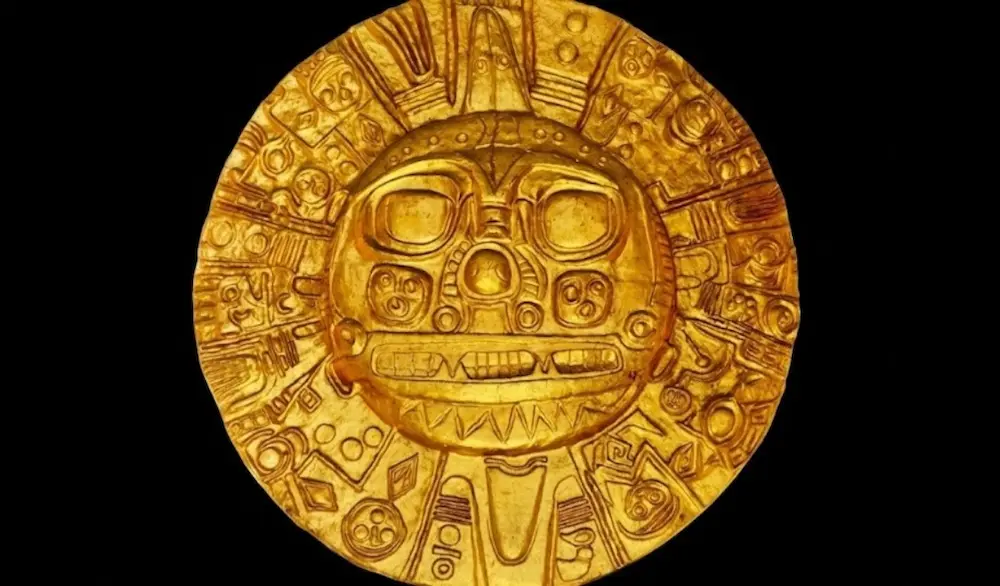
The Inca Calendar was closely connected to the movement of the sun, seasonal changes, agriculture, and important celebrations across the Andes. At Machu Picchu, this relationship can still be studied through structures and spaces associated with solar alignments, particularly around the solstices and equinoxes.
Understanding how the Incas organized time helps explain the connection between astronomy and daily life in the empire. From the position of the sun at Machu Picchu to the agricultural cycle and major festivals, their system reflected a careful observation of the natural environment and the changing seasons.
You might be interested in: 10 birds in Peru that you must see
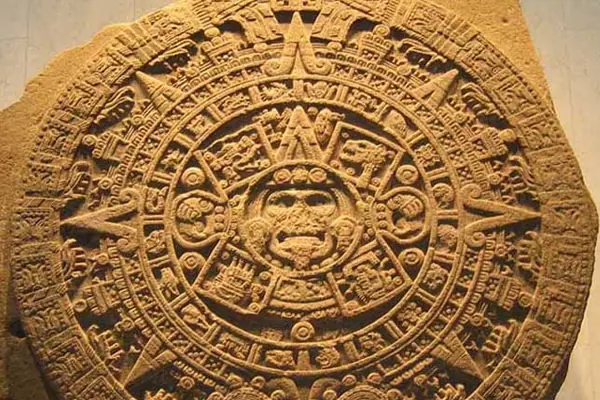
What was the Inca calendar?
The Inca Calendar was a system used to organize time according to natural cycles, particularly the movement of the sun and the changing seasons. Rather than following a modern calendar with twelve equal months and seven day weeks, the Incas observed astronomical patterns to understand the passage of time and organize important activities throughout the year.
Timekeeping was closely connected to everyday life in the Inca Empire. The position of the sun, changes in daylight, and seasonal patterns helped communities determine when to carry out agricultural activities and when important ceremonies should take place. The calendar was therefore not simply a way to count days, but part of a broader understanding of nature and the Andean environment.
Solar alignments at Machu Picchu
Machu Picchu provides some of the clearest examples of the relationship between Inca society and solar observation. Several structures and spaces at the site are positioned in ways that relate to the movement of the sun throughout the year, showing how astronomical observations could be incorporated into important places.
These solar alignments are particularly noticeable around the solstices and equinoxes. While the exact purpose of every structure at Machu Picchu is not fully understood, the site’s relationship with sunlight provides important evidence of the astronomical knowledge associated with the Inca world.
The Intihuatana and the movement of the sun
The Intihuatana is one of the best known stone structures at Machu Picchu and is traditionally associated with the observation of the sun. Its carefully carved form and position within the site have led researchers to study how sunlight interacted with it during different times of the year.
The name Intihuatana is commonly translated as “hitching post of the sun,” although its exact historical meaning and function remain a subject of discussion. Its connection with solar observation makes it an important element when studying the Inca Calendar and the ways the Incas understood the movement of the sun.
Solstices and equinoxes at Machu Picchu
The solstices mark the points in the year when the sun reaches its northernmost or southernmost position in relation to the equator. The equinoxes occur when day and night are approximately equal in length. These astronomical events provided useful reference points for people observing seasonal changes.
At Machu Picchu, the position of the sun during these periods creates particular patterns of light and shadow around some of the site’s structures. These observations help illustrate the connection between astronomy and the organization of time in the Inca world, giving greater context to how the Inca Calendar related to the natural cycles visible in the Andes.
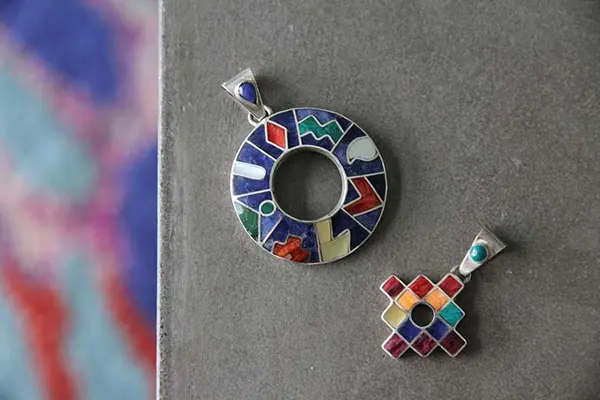
Inca calendar vs Maya calendar
Both are closely connected to astronomical observations, but they developed within very different civilizations and geographical environments. The Incas lived mainly across the Andes, while the Maya civilization developed in Mesoamerica, covering areas that today include southern Mexico, Guatemala, Belize, Honduras, and El Salvador.
Both civilizations observed the movement of celestial bodies to organize important activities and ceremonies. However, their systems were not the same. Maya timekeeping included several calendar systems, most notably the Tzolk’in and Haab’, while the Inca system was strongly connected to solar cycles, agricultural seasons, and the observation of the sun.
The two traditions also differed in the way their calendars were organized and used. Maya calendars involved complex cycles that could be combined to calculate longer periods of time, while the Inca system was more closely integrated with seasonal changes and activities across the Andean landscape.
Inca calendar vs Aztec calendar
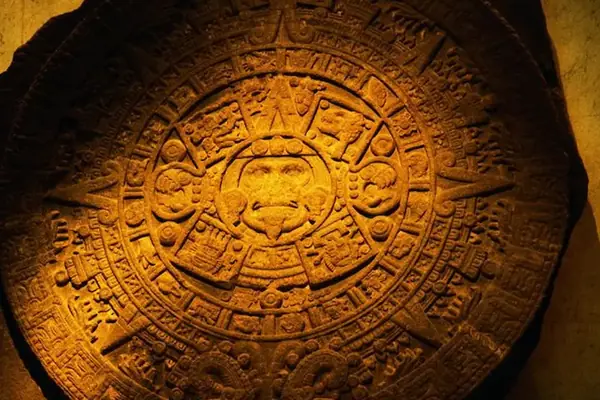
Both are reflected the importance of astronomy and seasonal cycles in their respective societies. However, they belonged to different cultural traditions that developed thousands of miles apart, with the Incas centered in the Andes and the Aztecs in central Mexico.
The Aztecs used more than one calendar system, including the 260 day ritual calendar known as the Tonalpohualli and the 365 day Xiuhpohualli. In the Inca world, timekeeping was strongly associated with the solar cycle and the agricultural year, with observations of the sun helping communities organize seasonal activities and important ceremonies.
Another important difference was the relationship between geography and timekeeping. The Inca Calendar developed within a mountainous environment where changes in elevation and seasonal conditions varied considerably across the empire. This made astronomical observations especially valuable for organizing agricultural and ceremonial activities.
Months in the Inca calendar
It was connected to the agricultural cycle, religious ceremonies, and seasonal changes. Sources describe twelve main months, although the exact names, meanings, and activities associated with some months can vary between historical sources and modern interpretations.
Rather than functioning exactly like the months of the modern Gregorian calendar, these periods were closely related to what was happening in the natural environment. Agricultural work, ceremonies, and changes in the landscape helped give each period its particular importance.
| Inca month | Approximate period | Main association |
|---|---|---|
| Raymi | December | Major celebrations and the beginning of the agricultural cycle |
| Camay | January | Ceremonies and agricultural activities |
| Hatunpucuy | February | Rainy season and agricultural growth |
| Pacha Pucuy | March | Maturing crops and seasonal changes |
| Ayrihua | April | Harvest activities |
| Aymoray | May | Harvest and agricultural ceremonies |
| Inti Raymi | June | Sun celebration and winter solstice |
| Chacra Conacuy | July | Agricultural activities and preparation |
| Chacra Yapuy | August | Land preparation and planting |
| Coya Raymi | September | Ceremonies connected to purification and fertility |
| Uma Raymi | October | Prayers and ceremonies related to rainfall |
| Ayamarca | November | Ceremonies honoring the deceased |
You might be interested in: 10 fun facts about Peru you didn’t know
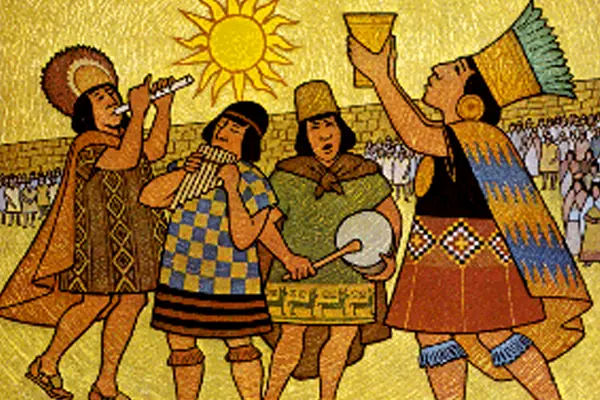
Festivals and celebrations in the Inca calendar
Festivals were an important part of the Inca Calendar, connecting astronomical events and seasonal changes with ceremonies and community activities. Many celebrations were related to agriculture, the sun, fertility, rainfall, or religious traditions, making the passage of time closely connected to the life of Andean communities.
Some celebrations were held at specific times of the year and could involve ceremonies, offerings, music, dancing, food, and gatherings.
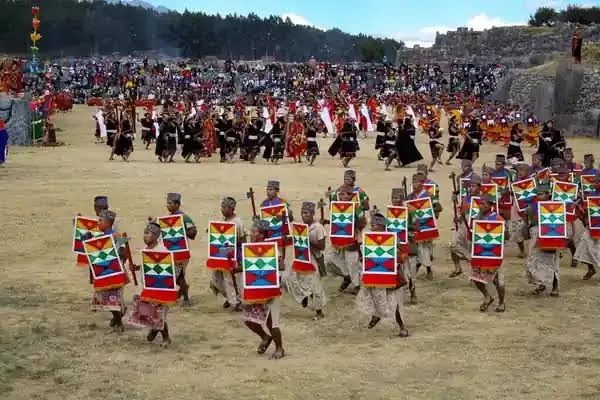
- Inti Raymi: Celebrated around the June solstice, this major festival honored Inti, the sun, and marked an important point in the annual cycle.
- Capac Raymi: Held around December, this celebration was associated with the beginning of a new annual cycle and important ceremonies for young men.
- Coya Raymi: Celebrated in September, this ceremony was connected with purification and the beginning of the agricultural season.
- Aymoray: Associated with May, this period was connected with the harvest and ceremonies related to agricultural abundance.
- Ayamarca: Traditionally associated with November, this period included ceremonies connected with honoring deceased ancestors.
These celebrations show that the Inca Calendar was much more than a way to keep track of dates. The passage of the year was connected to agriculture, the environment, community life, and ceremonial traditions, creating a system in which time had both practical and cultural importance.
The Inca calendar, astronomy, and agriculture
It was closely connected to the natural cycles that shaped life in the Andes. By observing the position of the sun and changes in daylight, Inca communities could identify important periods of the year and organize activities according to seasonal conditions.
Astronomy was particularly useful for agriculture, since planting and harvesting depended on recognizing changes in weather and the annual cycle. The movement of the sun provided reference points that helped communities understand when different stages of the agricultural year were approaching.
How astronomy helped organize the agricultural year
Astronomical observations helped the Incas establish important points within the agricultural cycle. The position of the sun, changes in daylight, and seasonal patterns provided useful references for planning activities such as preparing fields, planting crops, and harvesting.
This connection was especially important across the Andes, where agricultural conditions could vary significantly depending on altitude and location. The Inca Calendar therefore helped connect observations of the sky with practical decisions about working the land and managing agricultural resources.
The connection between the sun, seasons, and crops
The sun played an important role in understanding the changing seasons and the conditions needed for agriculture. Solstices and other solar events provided recognizable points in the annual cycle, while changes in temperature, rainfall, and daylight also influenced agricultural activities.
For Andean communities, the calendar was therefore connected to more than dates and ceremonies. The Inca Calendar brought together observations of the sun, seasonal changes, and agricultural practices, reflecting how closely everyday life was connected to the natural environment.
Navigation and the importance of the sun
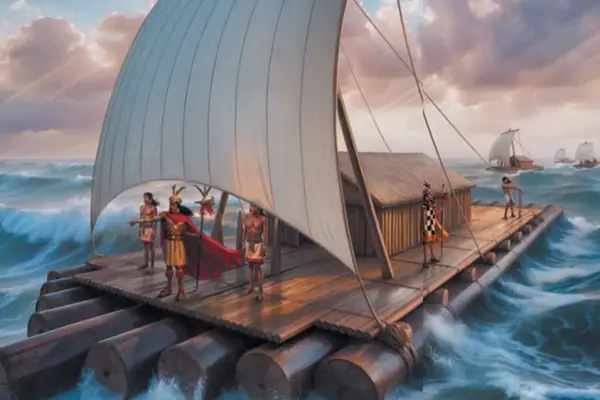
The observation of the sky also provided useful information for understanding direction and the passage of time. In the Andes, where communities were spread across extensive and sometimes difficult terrain, knowledge of the landscape and celestial movements could complement other ways of determining orientation.
The sun was particularly useful because its movement across the sky provided recognizable patterns throughout the day and year. This broader astronomical knowledge formed part of the same understanding of nature that supported the Inca Calendar and helped Andean communities organize their activities.
Using the sun and sky to understand direction and time
The position of the sun could serve as a natural reference for estimating the time of day and recognizing changes throughout the year. Combined with observations of stars, mountains, and other features of the landscape, celestial knowledge contributed to a broader understanding of the environment.
It is important not to view this knowledge as a single navigation system in the modern sense. Instead, the relationship between the sun, sky, landscape, and Inca Calendar reflects a sophisticated way of observing natural patterns and using them to understand time, direction, and seasonal changes.
You might be interested in: Top 8 peruvian desserts you should try
Interesting facts about the Inca calendar
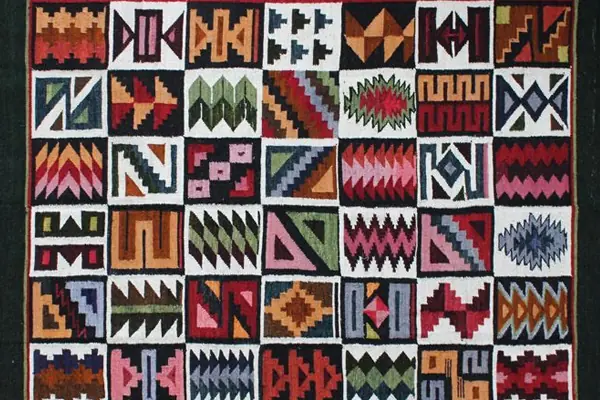
It has several details that show how closely timekeeping was connected to astronomy, agriculture, and everyday life in the Andes. Although historical records do not provide a single complete description of the system, researchers have been able to reconstruct many aspects from chronicles, archaeological evidence, and Andean traditions.
Some interesting facts about the Inca calendar include:
- The Incas closely observed the movement of the sun to identify important points in the annual cycle.
- The year was traditionally divided into twelve main periods, although the exact names and descriptions can vary between historical sources.
- Solstices had particular importance because they marked significant changes in the position of the sun throughout the year.
- Agriculture was strongly connected to the calendar, with seasonal observations helping communities organize planting and harvesting activities.
- Inti Raymi was one of the most important celebrations associated with the solar cycle and was held around the June solstice.
- Machu Picchu contains structures whose relationship with sunlight has contributed to research into Inca astronomical knowledge.
- The Incas did not use a calendar identical to the modern Gregorian system, so dates from historical sources cannot always be converted precisely.
- The Inca Calendar was not simply a method for counting days. It connected astronomical observations with agriculture, ceremonies, and the organization of community life.
The Inca calendar in modern times
It continues to attract interest because its relationship with astronomy and the natural environment provides insight into how Andean societies understood the passage of time. Although the original Inca system is no longer used as an official calendar, some seasonal celebrations and traditions connected with the Andean agricultural cycle continue today.
Modern interpretations should also be approached carefully because much of what is known about the calendar comes from historical chronicles and archaeological evidence rather than a single surviving Inca calendar. Even so, its influence can still be seen in cultural celebrations and the continued importance of seasonal cycles in Andean communities.
The legacy of the Inca calendar today
It can be seen in the continued interest in Andean astronomy, traditional agricultural practices, and celebrations connected with the annual cycle. Sites such as Machu Picchu also remain important for understanding how the Incas incorporated observations of the sun into their environment.
Modern research has helped distinguish between archaeological evidence and later interpretations of Inca timekeeping. This makes the calendar an important subject not only for understanding the past but also for studying how astronomical knowledge was developed and preserved in the Andes.
Andean traditions and the calendar today
Several Andean communities continue to recognize seasonal changes through agricultural activities, local celebrations, and traditional knowledge passed between generations. These practices do not necessarily reproduce the original Inca calendar exactly, but they preserve a broader connection between people, nature, and the annual cycle.
Celebrations such as Inti Raymi have also gained renewed cultural importance in modern Peru. The contemporary celebration in Cusco is not an unchanged continuation of the original ceremony, but it reflects the lasting cultural significance of the sun and the traditions associated with the Inca Calendar.
Frequently asked questions about the Inca calendar
The Inca calendar raises questions about how Andean communities organized time, seasons, agricultural activities, and important celebrations. These answers provide a quick overview of the main aspects of Inca timekeeping and its connection to the natural environment.
When did the Inca Empire begin?
The Inca Empire is generally considered to have begun in the early fifteenth century, with the expansion traditionally associated with Pachacuti. The empire, known as Tawantinsuyu, later grew across a large part of western South America.
When does the Andean year begin?
The beginning of the Andean year can vary depending on the tradition and community. In contemporary Andean culture, June is often associated with the beginning of a new agricultural and ceremonial cycle, particularly around the June solstice.
What calendar system did the Incas use?
The Incas followed a system based largely on solar and seasonal observations. Historical sources describe twelve main months connected to agricultural activities, ceremonies, and changes throughout the year.
How did the Incas measure time?
The Incas observed the movement of the sun, changes in daylight, and seasonal patterns to understand the passage of time. They also used natural and architectural reference points to identify important moments in the annual cycle.
You might be interested in: 5 traditional peruvian drinks
The lasting legacy of the Inca calendar
It remains an important part of the study of Andean history because it shows how closely astronomy, agriculture, ceremonies, and everyday life were connected. Observing the sun and seasonal changes allowed communities to organize activities according to the conditions of their environment.
Its legacy can still be seen in contemporary Andean celebrations and the continued interest in sites such as Machu Picchu. While modern traditions should not be considered an exact reproduction of the original system, they reflect the lasting importance of seasonal cycles and astronomical knowledge in the Andes.

