

Speaking about Peruvian culture is to enter a living fabric made of memory, geography, rituals, and human creativity. It cannot be reduced to a set of stereotypes or tourist postcards. Rather, it is a way of seeing the world, shaped by the Andes, the Pacific Ocean, and the Amazon rainforest, as well as by centuries of exchanges between Indigenous peoples, European traditions, African heritage, and more recent migrations from Asia. The result is a culture that breathes diversity, one that speaks of belonging but also of transformation.
In Peru, daily life often feels like a dialogue with time. A dish on the table may carry pre-Columbian ingredients, colonial techniques, and contemporary innovations. A festival in a rural town may blend ancient rituals dedicated to the earth with Christian symbols introduced during colonization. In the cities, murals, music, and food markets reveal how tradition adapts to modern rhythms without losing its essence.
The presence of Peruvian culture can be seen in every detail, from the language that mixes Spanish with Quechua or Aymara words, to the textiles woven in the highlands, where patterns are more than aesthetic they are carriers of memory. To understand this culture is not only to analyze its heritage but also to experience the everyday ways in which people embody resilience, creativity, and collective identity.

What are the characteristics of Peruvians?
Describing the characteristics of Peruvians is complex because the country itself is made of contrasts. The coastal population has different historical influences than the people of the highlands or the Amazon, yet there are certain traits that seem to unite them.
One of the most recognized is hospitality. Visitors often remark on how quickly they feel welcomed, whether in Lima, Cusco, or a small Andean village. Hospitality here is not superficial; it is tied to a worldview where sharing space, food, and stories reinforces community bonds.
Resilience is another characteristic. Peruvian history has been marked by political instability, economic challenges, and natural disasters, yet communities consistently find ways to adapt. This resilience can be seen in local economies, where families invent new forms of livelihood, or in cultural expressions that survive despite centuries of marginalization.
Finally, there is a strong connection to festivity. Celebrations are not occasional; they are structural. Each region has its patron saint festivals, agricultural rituals, and civic commemorations. Joy and solemnity coexist in music, dance, and processions that can last several days. These festivities reveal how Peruvian culture and traditions create continuity between generations, keeping memory alive through collective participation.
What are some stereotypes about Peruvians?
As with many societies, Peruvians are often described through oversimplified images. Some stereotypes are born from fragments of truth, while others are distortions shaped by limited perspectives.
One widespread stereotype is that Peru can be reduced to Machu Picchu and the Inca legacy. International visitors often imagine that all Peruvians are directly linked to the Andean world, forgetting that the coast and Amazon have equally rich cultural histories. Programs such as south tours Peru show that the country offers far more than a single emblematic site.
Another stereotype is that all Peruvians share the same physical appearance or cultural practices. In reality, diversity is enormous: Afro-Peruvian rhythms on the coast, Amazonian healing traditions, Andean weaving, and Asian influences in food. To speak of a single model of identity ignores the richness of regional variations.
There is also a tendency to romanticize poverty, portraying Peruvians only as people “close to nature” or “living simply.” While connection to the land is indeed vital, Peru is also a place of innovation, modern art, universities, and expanding urban life. These nuances remind us that stereotypes obscure more than they reveal.
Are Peruvians Hispanic?
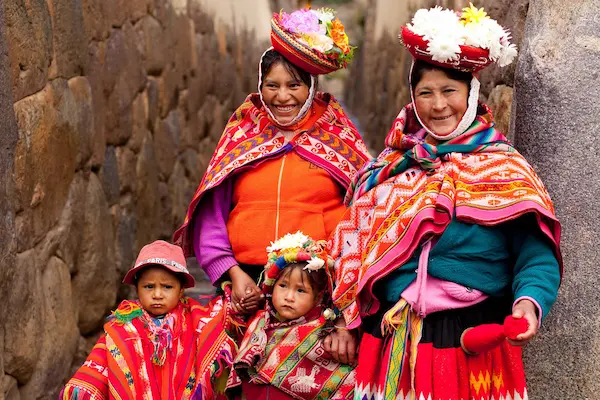
The question of whether Peruvians are Hispanic depends on how the term is defined. If “Hispanic” refers strictly to Spanish language and colonial heritage, then yes, Spanish remains the dominant language and an important cultural influence. But this label is incomplete, as it fails to capture the Indigenous and African roots that define the essence of Peruvian culture.
In many communities, Quechua and Aymara are still spoken, and in Amazonian regions dozens of Indigenous languages remain in use. These languages shape worldviews, values, and social relations in ways that cannot be translated into Spanish. At the same time, Afro-Peruvian communities contribute music, poetry, and traditions that deeply influence national identity.
Thus, to describe Peruvians only as Hispanic would erase the plural identities that coexist in the nation. A more accurate view is to recognize Peru as a society with Hispanic elements but also with strong Indigenous and African foundations. This complexity is precisely what makes it so culturally rich.
The role of nature in Peruvian culture
The geography of Peru explains much about the way people live and celebrate. The Andean highlands impose a rhythm marked by altitude, climate, and agriculture. Communities cultivate potatoes, quinoa, and corn not only as food but as elements woven into ritual life. In the coastal desert, fishing defines communities, while in the Amazon, rivers serve as both highways and sources of spiritual meaning.
The idea of living in harmony with Pachamama mother Earth remains central. Even in urban settings, rituals asking for permission before using land or water continue to be practiced. The cycles of planting and harvest are celebrated with music and offerings, showing how nature is not a backdrop but an active presence in life.
This bond with the environment also influences artistic production. Textiles, ceramics, and dances often depict animals, landscapes, or natural cycles. What appears decorative carries symbolic significance, reminding people of their interdependence with the natural world.
Food as cultural memory
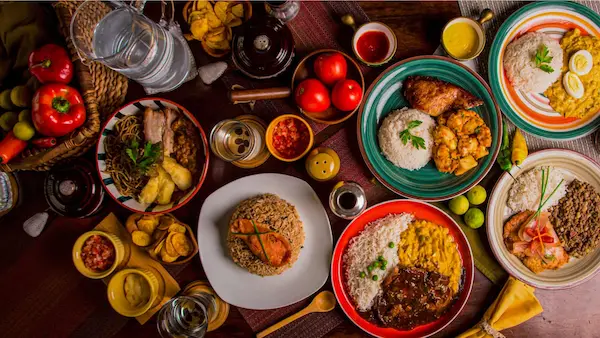
If one aspect of Peruvian culture food has gained international recognition, it is gastronomy. But beyond culinary fame, food in Peru functions as a language of memory. Dishes like ceviche, lomo saltado, or pachamanca are not just recipes they are narratives of migration, adaptation, and continuity.
The coast contributes seafood and citrus flavors, the highlands offer grains and tubers, while the Amazon brings fruits and spices unknown elsewhere. In each dish, one can trace historical encounters: the arrival of Spanish livestock, the African use of offal, the Chinese influence in rice-based dishes, or the Japanese touch in seafood preparations.
Markets are central spaces for this cultural exchange. In cities like Lima or Cusco, food markets are not only places to buy ingredients but also social arenas where people reaffirm identity. Food, in this sense, is both nourishment and collective memory, a ritual repeated daily that embodies Peruvian culture and traditions.
Festivals and rituals across the country
Festivals in Peru are more than entertainment; they are expressions of identity and collective belonging. The Inti Raymi in Cusco, the Virgin of Candelaria in Puno, or the Qoyllur Rit’i pilgrimage show how spiritual and cultural practices are intertwined.
These events attract travelers from across the world, and many encounter them through initiatives like Cusco Tours. Yet for local communities, the meaning is deeper. Rituals reaffirm bonds with ancestors, express gratitude to the land, and reinforce social cohesion.
Music and dance are inseparable from these celebrations. Instruments such as the charango or zampoña carry Andean resonance, while Afro-Peruvian percussion adds rhythms that connect celebrations to coastal histories. Dance groups prepare for months, and costumes display symbols tied to myths, animals, or historical episodes.
Everyday life and urban culture
Although rural traditions remain strong, cities like Lima, Arequipa, and Trujillo are spaces where Peruvian culture takes on new forms. Murals cover walls with images of heroes, myths, and contemporary struggles. Universities produce literature and art that dialogue with both global trends and local questions. Musicians blend rock with Andean instruments or Amazonian beats, creating hybrid sounds that represent modern identity.
Street life reveals other aspects of culture: food stalls selling anticuchos or tamales, artisans adapting ancestral crafts to urban markets, and young people navigating between traditional values and global media. Urban culture in Peru is not a rupture with the past but a continuation, where memory and modernity overlap.
Identity, migration, and memory
Migration has always been part of Peruvian history. Internal migration during the 20th century brought highland populations to coastal cities, reshaping Lima’s cultural landscape. International migration, both incoming and outgoing, has also left traces. Chinese and Japanese communities transformed the food scene, while Italian, German, and Arab influences shaped commerce and art.
At the same time, millions of Peruvians living abroad maintain ties with their homeland through festivals, food, and music. These transnational connections demonstrate how Peruvian culture expands beyond borders, carried by people who preserve and reinterpret traditions in new contexts.
Tourism and cultural encounters
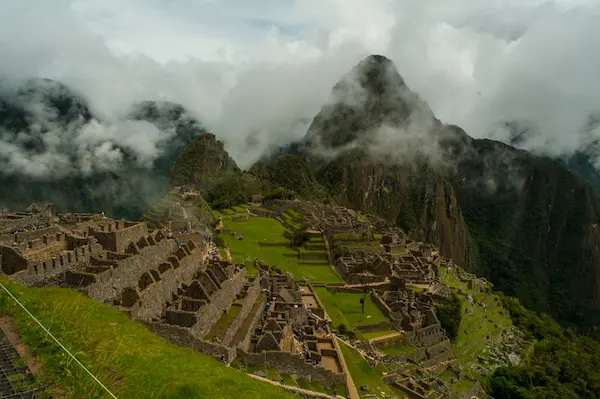
Tourism plays a significant role in how the world perceives Peru. Travelers often arrive with limited expectations, focusing only on famous landmarks. Yet through agencies such as Etnica Travel, many discover lesser-known routes, small communities, and practices that cannot be captured in guidebooks.
Tourism can also become a mirror, where Peruvians see their own culture reflected in the interest of outsiders. This encounter generates pride but also challenges: how to share traditions without reducing them to commodities. Responsible tourism emphasizes exchange rather than consumption, recognizing the humanity of those who sustain the practices being admired.
The global resonance of Peruvian culture
Why does Peruvian culture inspire beyond its borders? Part of the answer lies in its balance between rootedness and adaptability. The Inca legacy provides a historical depth that fascinates outsiders, while contemporary creativity demonstrates that culture here is alive and evolving.
Peruvian food is now recognized worldwide, not because it froze in time but because it absorbed new influences while maintaining authenticity. Music and dance travel across continents through festivals and digital platforms. Literature, cinema, and visual arts continue to narrate experiences that resonate universally while remaining anchored in local realities.
In this sense, Peruvian culture food, rituals, and arts form a symbolic bridge between past and present, local and global. They show that culture is not static heritage but a living process.
Final reflections
Peru is a land where contrasts coexist: desert and rainforest, tradition and innovation, memory and change. To understand Peruvian culture is to move beyond stereotypes and enter a complex landscape where nature, food, traditions, and daily life are woven together.
It is a culture that teaches about resilience, about the value of community, and about how memory can be kept alive through rituals, words, and flavors. Its influence goes beyond national borders, reminding the world that identity is never singular but made of layers, encounters, and continuous reinvention.

