
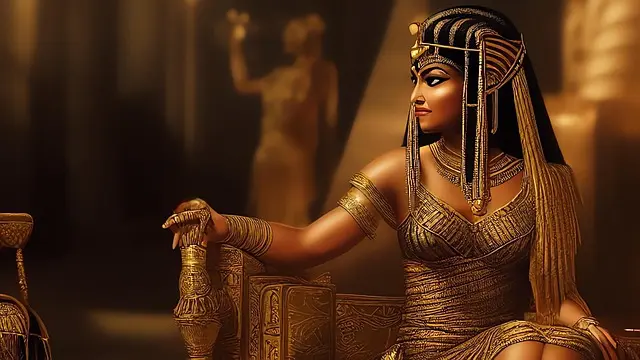
Few historical figures have inspired as much fascination as Cleopatra VII, the last pharaoh of Egypt. Intelligent, powerful, and wrapped in an aura of seduction and tragedy, her life has been the subject of countless studies, films, and legends. Yet, one mystery remains unsolved to this day: the true location of Cleopatra’s tomb.
For centuries, archaeologists and explorers have tried to answer a single question: Where lie the remains of the queen who conquered Rome and marked the end of an era?
You may also like: Cusco Day Trips for an Unforgettable One Day Journey
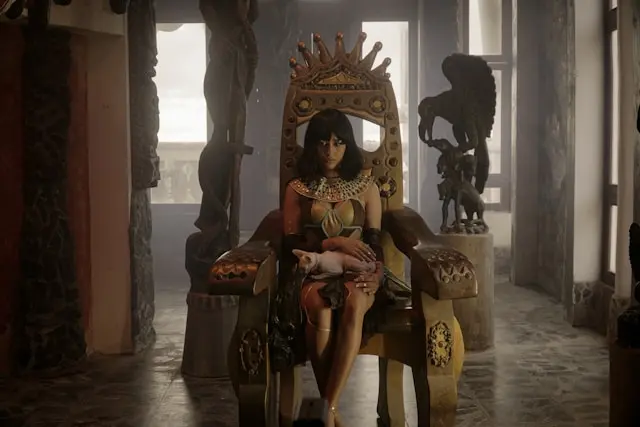
The eternal enigma of Egypt’s last pharaoh
To speak of Cleopatra is to speak of one of the most fascinating women in world history. For centuries, her image has been misunderstood or reduced to her relationships with powerful men, but Cleopatra VII Philopator was far more than that. She was a strategic ruler, a polyglot, and a passionate scholar who governed Egypt with a political vision far ahead of her time.
She mastered several languages including Greek, Egyptian, and possibly Latin which allowed her to negotiate directly with foreign leaders without the need for interpreters. A student of astronomy, medicine, and philosophy, Cleopatra understood that knowledge itself was a form of power.
Her reign was marked by diplomacy and an unyielding effort to maintain Egypt’s independence amid Rome’s growing dominance. Her alliance with Julius Caesar first, and later with Mark Antony, was no coincidence but the result of brilliant political calculation during a time when the balance of the Mediterranean world revolved around Rome.
Yet beyond politics, her life was woven with tragedy. After Mark Antony’s defeat by Octavian the future Emperor Augustus Cleopatra took her own life in 30 BCE, according to ancient chronicles, leaving behind an enduring image of pride, love, and strength. From that moment on, Cleopatra’s tomb became an obsession for historians, archaeologists, and dreamers alike: a symbol of the end of the Pharaonic era and the beginning of Roman domination.
The mystery surrounding Cleopatra’s tomb has endured for more than two millennia, fueling theories, expeditions, and dreams. No one has found it yet, but the search remains alive a metaphor for the timeless fascination the Queen of the Nile continues to inspire. Because finding Cleopatra’s tomb would not just be an archaeological discovery; it would mean unearthing the soul of a civilization that changed the course of history.
The cultural and eternal impact of Cleopatra’s legacy
Cleopatra’s influence did not end with her death. Her name has transcended borders, centuries, and disciplines, becoming an icon of female power, intelligence, and resilience. She has inspired poets, playwrights, painters, and filmmakers who have portrayed her as a perfect blend of seduction and wisdom.
From Shakespeare’s tragedy to Elizabeth Taylor’s majestic portrayal on screen, Cleopatra has been reinvented time and again, adapting to every era without losing her essence. Her legacy remains so alive that Cleopatra’s tomb itself has become a symbol of immortality a reminder that even in death, her story continues to captivate the world.
Today, her image still thrives in popular imagination. She appears in historical novels, documentaries, and even video games, where her presence continues to enchant new generations. And every time an archaeological discovery is made a statue, a coin, or a fragment of a temple the world inevitably asks the same question:
Could the discovery of Cleopatra’s tomb be near?
This global anticipation proves that Cleopatra was more than a queen; she was a living myth. And while archaeologists continue searching for Cleopatra’s tomb, the legacy of Egypt’s last pharaoh keeps inspiring art, science, and dreams. An immortal soul that, in some way, still reigns from the sands of the desert reminding us that some mysteries are destined to challenge history itself.
You may also like: Top 10 Puerto Maldonado Amazon Tours That You Can’t Miss
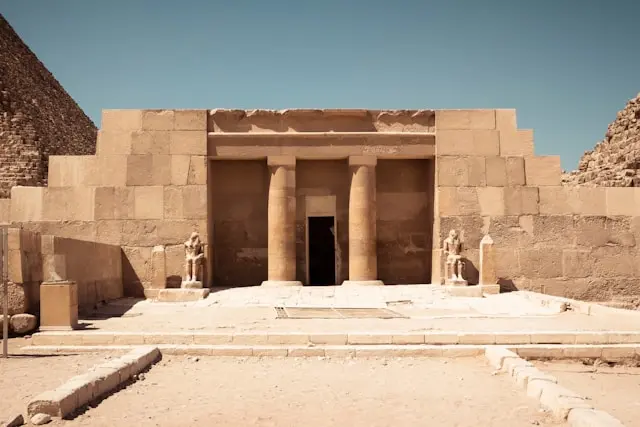
Where is Cleopatra’s tomb?
The question seems simple, yet it holds one of the greatest enigmas in the history of archaeology. Where is Cleopatra’s tomb? The most celebrated queen of the Nile vanished more than two thousand years ago, and yet her trace remains as vivid as her legend.
Ancient sources, especially the writings of the historian Plutarch, indicate that Cleopatra was buried beside Mark Antony, the Roman general with whom she shared love, politics, and destiny. According to Plutarch, they were both laid to rest “in a mausoleum of their own gods,” a phrase that has intrigued generations of researchers. However, he never mentioned the exact location, leaving behind a clue as poetic as it is ambiguous.
For centuries, historians believed that Cleopatra’s tomb must lie somewhere in Alexandria, the magnificent capital founded by Alexander the Great and later transformed by the Ptolemies into the brightest cultural center of the ancient world. But nature was merciless to the city. Earthquakes and tsunamis sank much of the Alexandrian coast, including the royal palace and nearby temples. Today, much of that glorious history rests beneath the waters of the Mediterranean, waiting to be rediscovered.
Underwater expeditions carried out since the 1990s have uncovered statues, columns, jewels, and the remains of monumental structures that may have once formed part of Cleopatra’s royal environment. Yet, no direct evidence of Cleopatra’s tomb has been found so far a fact that keeps the mystery alive and the world’s imagination endlessly captivated.
You may also like: Travel to Peru: Where Ancient Civilizations Meet Living Traditions
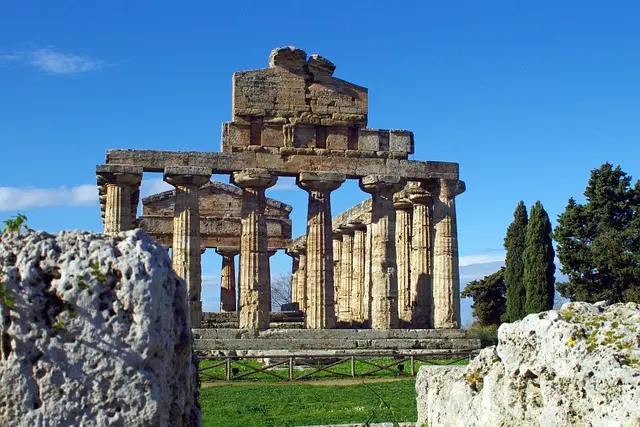
Taposiris Magna: The most promising clue
In recent years, the eyes of the world have turned toward a site located just outside of Alexandria: Taposiris Magna, an ancient temple dedicated to Osiris and Isis, situated about 45 kilometers west of the city.
The site holds immense religious symbolism Osiris represented resurrection and life after death and it connects directly with the queen’s spiritual vision. Cleopatra considered herself the reincarnation of Isis, while Mark Antony was seen as her Osiris. For this reason, some archaeologists believe she chose this place as her eternal resting ground, where she could be reunited with her beloved beyond time itself.
Excavations at Taposiris Magna have revealed underground tunnels, funerary chambers, mummies, coins, and figurines dating back to the Ptolemaic period. Among the most fascinating finds are inscriptions dedicated to Isis, fragments of royal statues, and human remains covered in gold a clear indication that the temple once hosted burials of high status. These discoveries have led many experts to believe that Cleopatra’s tomb could lie within this very complex, hidden among passageways that remain only partially explored.
The archaeological site is vast and intricate: it stretches across a hillside and combines temples, tombs, and tunnels that may connect to yet undiscovered chambers. Some researchers even believe that Cleopatra’s tomb could still be sealed within an inaccessible chamber, buried under tons of stone and sand waiting for the day when humanity is finally ready to uncover the last great secret of Egypt’s most enigmatic queen.
Modern excavations and discoveries in Alexandria
The work to uncover Cleopatra’s tomb has never stopped. Teams of Egyptian and international archaeologists, under the direction of Egypt’s Ministry of Antiquities, have meticulously explored both Alexandria and Taposiris Magna over the past few decades. The search combines science, technology, and passion with a goal that transcends archaeology itself: to unravel one of humanity’s greatest mysteries.
In 2022, a discovery reignited hope a 1,300 meter long tunnel carved into solid rock more than 13 meters underground. Researchers called it “the geometric miracle” for its architectural precision, and some believe it could lead directly to an unexplored burial chamber. The possibility that this tunnel may be connected to Cleopatra’s tomb has sparked a new wave of excitement in the international archaeological community.
Artifacts found in the surrounding area coins bearing Cleopatra’s likeness, busts of goddesses, and ritual ceramics strengthen the theory that this place served as an active center of worship during her reign. Each fragment unearthed seems to tell a part of her story, as if Cleopatra’s tomb were leaving behind subtle clues for those bold enough to follow her trail. Although the burial chamber itself has yet to be discovered, each new finding brings us one step closer to that dream.
Today, the site of Taposiris Magna has become a must-see destination for travelers passionate about ancient Egypt. There, among silent ruins and desert winds, one can feel the magic of a story that refuses to die. Perhaps, beneath that very sand, Cleopatra’s tomb waits patiently for the moment to return to the light just like the queen who never wanted to be forgotten.
Those who feel drawn to Cleopatra’s tomb are often the same travelers who love exploring ancient cultures and lost temples. After visiting Egypt, many adventurers continue their journey through the ancient world with Machu Picchu tours, discovering another sanctuary that blends history, spirituality, and mystery much like the sacred traditions of the Egyptian dynasties.
You may also like: Travel inspiration: How to plan a trip to Machu Picchu
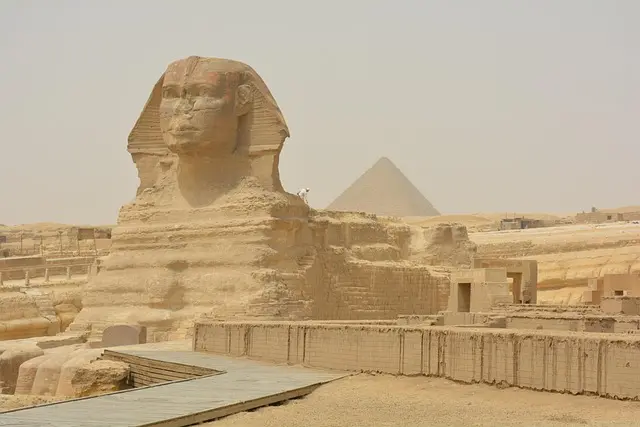
Who discovered Cleopatra’s tomb?
The mystery surrounding Cleopatra’s tomb has not only fascinated historians and archaeologists for centuries, but it has also inspired a woman who has turned this quest into her life’s purpose: Dominican archaeologist Kathleen Martínez. Her name is now inseparable from the enigma of the Queen of the Nile, and her perseverance has brought humanity closer than ever to solving one of Egypt’s oldest secrets.
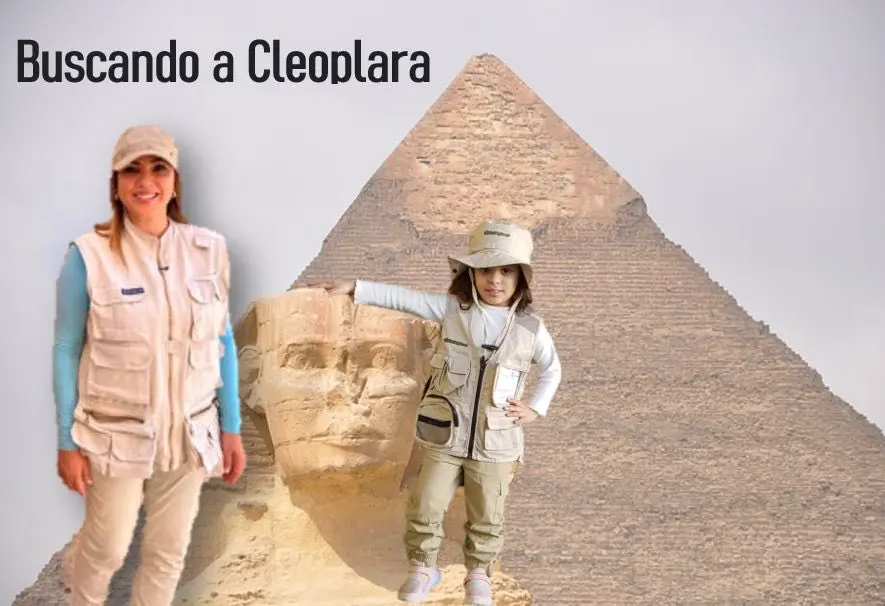
The role of archaeologist Kathleen Martínez
Kathleen Martínez is not a typical archaeologist. Trained as a lawyer and passionate about history from a young age, she left her legal career in the Dominican Republic to follow a powerful intuition to prove that Cleopatra’s tomb lies in Taposiris Magna, an archaeological site on Egypt’s northern coast.
Her fascination began after reading the writings of Plutarch, who recounted that Cleopatra was buried alongside Mark Antony “in a sanctuary of their own gods.” For Martínez, this phrase carried deep symbolic meaning: if Cleopatra saw herself as the reincarnation of Isis, then her tomb had to be located in a place dedicated to that goddess. Thus, Taposiris Magna became the perfect setting where Cleopatra’s tomb might be found a site filled with spirituality and profound religious significance.
In 2005, she persuaded Egypt’s Supreme Council of Antiquities to allow her to excavate the temple. Since then, she has worked alongside Egyptian archaeologists, engineers, and ground penetrating radar specialists, dedicating more than two decades to a project marked by faith, science, and infinite patience. Every advance, every discovery, and every tunnel explored brings her one step closer to fulfilling her dream of revealing Cleopatra’s tomb to the world an achievement that would rewrite ancient history and honor one of the most powerful women of the past.
Martínez does not seek fame or glory; in her own words, “I seek to give Cleopatra the eternal rest she deserves.” Her work blends academic precision with a profound spiritual connection to the queen’s legacy, reminding us that some dreams like the search for Cleopatra’s tomb are born from love for history and the passion to preserve the memory of those who shaped humanity.
The discoveries that rekindled hope
The excavations led by Martínez at Taposiris Magna have produced remarkable results. Among the most significant findings are coins bearing the faces of Cleopatra and Mark Antony, amulets inscribed with dedications to Isis and Osiris, and mummies wrapped in sheets of gold indicating that they belonged to members of Egypt’s elite.
More than a dozen underground tunnels have also been uncovered, some carved deep into the rock several meters below the surface. In 2022, one of these tunnels described by engineers as a “geometric miracle” sparked a wave of global excitement. Its nearly perfect structure and orientation toward the sea resembled the ritual passageways of royal funerary temples, leading many to believe it could bring researchers closer to Cleopatra’s tomb.
Each new discovery seems to further support Martínez’s hypothesis: that Cleopatra was buried at Taposiris Magna, within a sacred setting symbolizing the union of love and immortality. Around her, the offerings, reliefs, and ceremonial artifacts speak of a devoted cult to the goddess Isis the divine figure with whom the queen so deeply identified.
Why it has not yet been officially confirmed
Despite the progress made and the international anticipation, Cleopatra’s tomb has yet to be conclusively found. Egypt is a land that guards its secrets with great care, and every excavation requires time, advanced technology, and surgical precision. Any mistake could destroy invaluable evidence or alter ancient structures that have remained hidden for thousands of years.
Moreover, the temple of Taposiris Magna presents significant geological challenges: parts of the terrain are unstable, the water table is high, and several tunnels remain flooded, complicating access to the deepest areas. The pandemic also delayed fieldwork, but the team has since resumed its investigations with renewed determination.
The Dominican archaeologist remains convinced that the discovery is near. In her statements, she often repeats a phrase that reflects her faith in history:
“I’m not searching for a tomb; I’m searching for a legacy. If Cleopatra wanted her story to be eternal, then we are simply fulfilling her wish.”
Perhaps the still sealed burial chamber holds the remains of the most famous queen of the ancient world, patiently waiting for humanity to be ready to uncover it. And when that day comes, Cleopatra’s tomb will not just be an archaeological discovery it will mark the closing chapter of a story of love, power, and mystery that has survived the passage of centuries.
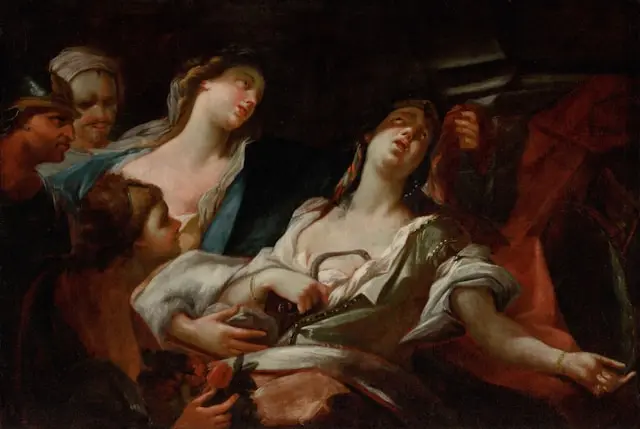
Theories about Cleopatra’s death and burial
The historical account of Plutarch and roman sources
According to ancient chronicles, Cleopatra died after allowing herself to be bitten by a venomous serpent most likely an Egyptian cobra although some historians believe she was poisoned by other means. Rome permitted her body to be buried beside that of Mark Antony, honoring her final wish to remain united with him even after death.
Hypotheses about her tomb beside Mark Antony
It is believed that both were mummified and buried according to traditional royal rituals, adorned with jewelry, offerings, and symbols of kingship. The sepulcher, if it still exists, could contain priceless treasures and provide answers to questions that have fascinated humanity for over two millennia. Many archaeologists hope that the eventual discovery of Cleopatra’s tomb will confirm these long-standing theories and shed new light on the final chapter of Egypt’s last pharaoh.
What finding Cleopatra’s tomb would mean for history
Discovering Cleopatra’s tomb would be one of the greatest archaeological milestones of the 21st century comparable to the discovery of Tutankhamun’s tomb. Beyond its immense historical value, it would confirm previously unknown aspects of Egypt’s funerary rituals and the political dynamics of that era.
What it would reveal about the end of an Era in Egypt
Such a discovery would also offer a clearer understanding of how the Pharaonic era came to an end before Egypt’s complete incorporation into the Roman Empire. It would serve as a direct window into the final days of a civilization that profoundly shaped the course of the ancient world.
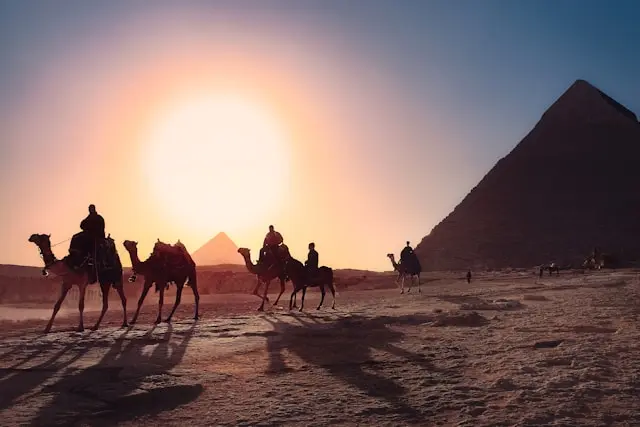
How to visit the sites related to Cleopatra today
Archaeological sites open to the public
If you’re traveling to Egypt and wish to follow in the footsteps of the legendary pharaoh, you can visit Alexandria, where the royal palace once stood beneath the sea, or Taposiris Magna, where excavations are still ongoing. Other sites, such as the Egyptian Museum in Cairo, display statues, coins, and artifacts connected to her reign and the final years of the Ptolemaic dynasty.
Recommendations for travelers passionate about ancient Egypt
If you dream of walking through the same landscapes once traversed by pharaohs, scholars, and conquerors, Egypt is a destination that will leave a lasting mark on you. Traveling in search of Cleopatra’s tomb or the remnants of her reign is not just a sightseeing experience it’s a journey into the living history of the ancient world.
The best time to visit the country is between October and April, when the weather is milder and more comfortable for exploring temples and open air ruins. During these months, temperatures are ideal for sightseeing without the intense summer heat, which can easily exceed 40°C (104°F). If you’re planning an archaeological route, it’s best to avoid July and August, especially if you want to visit desert areas or lesser known sites like Taposiris Magna.
For a more enriching experience, it’s highly recommended to hire guides specialized in Ptolemaic history, the period to which Cleopatra belonged. They will not only share historical facts but also myths, legends, and stories that don’t appear in textbooks. Some personalized tours include visits to Alexandria, where remnants of the Hellenistic period can still be seen, and Abu Sir, home to Taposiris Magna the temple that might conceal the queen’s final resting place.
If you prefer something more structured, there are archaeological tours organized by universities and international museums, allowing visitors to participate as observers in real excavations. Imagine standing beside archaeologists as they carefully unearth artifacts that have been hidden for thousands of years it’s a unique, thrilling, and deeply educational experience.
Beyond logistics, there are small details that make all the difference. Bring comfortable, breathable shoes, ideal for walking across uneven or sandy terrain. A hat or cap, sunscreen, and reusable water bottles are essential, especially if you plan to spend long hours under the sun. And above all, travel with curiosity and respect two attitudes that open more doors than any guidebook ever could.
Egypt isn’t just a country to see; it’s a country to feel. Every hieroglyph, every stone, and every desert breeze seems to whisper fragments of a past that still beats beneath the sand. Perhaps, as you walk through the temples of Isis or the tunnels of Taposiris Magna, you’ll feel what so many archaeologists have felt before the sensation of being on the verge of discovering something that could change history.
So, pack your sense of adventure, open your mind, and prepare for a journey where mystery, beauty, and Cleopatra’s legacy will accompany you every step of the way. Because in Egypt, even silence tells a story.
If you’re fascinated by ancient history and love exploring places filled with energy and mystery, Egypt isn’t the only destination that will take you back in time. In South America, Peru also preserves traces of civilizations that shaped human history. An Inca Trail trek will let you connect with the spirit of the Inca Empire, while the Andean landscapes reveal their own timeless grandeur.
The eternal fascination with Cleopatra and her tomb
Despite the centuries that have passed, Cleopatra’s tomb remains one of humanity’s greatest enigmas. Its search is not only an archaeological adventure but also a reflection of our deep need to connect with the past and understand those who changed the course of history.
Perhaps someday, beneath the desert sands or the ruins of an ancient temple, someone will finally uncover the definitive answer. Until that day comes, Cleopatra will live on—in mystery, in imagination, and in the hearts of all who dream of discovering her final resting place.In the end, our love for history and the remnants of ancient worlds unites us across continents. Just as Cleopatra continues to captivate from her lost tomb, travelers who explore the Sacred Valley feel that same connection between earth, sky, and divinity once experienced by the ancient Egyptians. Both places, separated by thousands of kilometers, share something in common: the power to make us feel part of an eternal story.

