
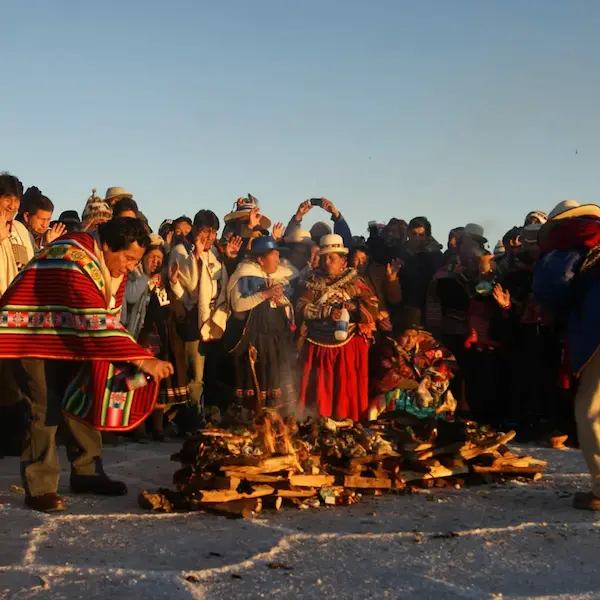
There is something almost magnetic about the Andean New Year—a celebration where light meets darkness, and humanity reconnects with the origins of time. As dawn begins to illuminate the majestic Andes, an ancient rhythm awakens in Peru. The sound of conch shells, the scent of burning herbs, and the echo of flutes fill the crisp air, signaling a sacred moment that has persisted for centuries.
Every year, on June 21st, Peruvians across the highlands gather to honor the rebirth of the sun. Known as Inti Raymi in Quechua, the Andean New Year is more than just a festival—it’s a profound spiritual renewal. From the imperial city of Cusco to the peaceful villages of the Sacred Valley, this ancient tradition reflects gratitude, balance, and the promise of a new cycle.
In modern times, the celebration has also become one of the most meaningful cultural experiences for travelers. Through tours such as New Year in Cusco, New Year in the Valley, and South Tours Peru, visitors can witness the beauty of ancestral rituals while connecting with the essence of Peru’s living heritage.
You may also like: Trekking Essentials for Beginners: Tips for the Inca Trail and Salkantay Trek
The Meaning and Spirit of the Andean New Year
At its heart, the Andean New Year is a celebration of life itself. For the ancient Andeans, the solstice represented a moment when the sun, their source of energy and light, seemed to stand still before beginning its slow return to power. It symbolized hope, renewal, and the eternal rhythm of nature.
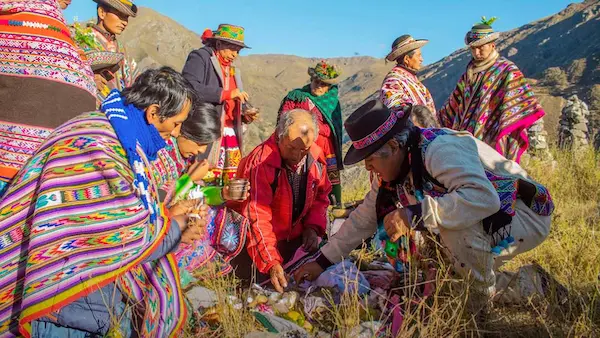
The people of the Andes believe that everything in the universe is interconnected—humans, animals, plants, water, and even the mountains share a single breath of life. During the Andean New Year, rituals are performed to restore harmony among all these elements. Offerings of coca leaves, corn, flowers, and chicha are made to Pachamama (Mother Earth) as a way of giving thanks for her generosity and seeking blessings for the coming year.
Many communities also perform a symbolic “cleansing of the soul.” People wash their faces with sacred water at sunrise, believing it purifies the spirit and welcomes positive energy. This act, though simple, carries deep meaning—it represents the renewal of one’s inner light alongside the sun’s rebirth.
New Year in Cusco: The Empire’s Eternal Heart
When it comes to the Andean New Year, there is no place more iconic than Cusco. Once the capital of the Inca Empire, Cusco was considered the center of the world—Qosqo, as the Incas called it. To this day, the city remains the beating heart of Andean spirituality.
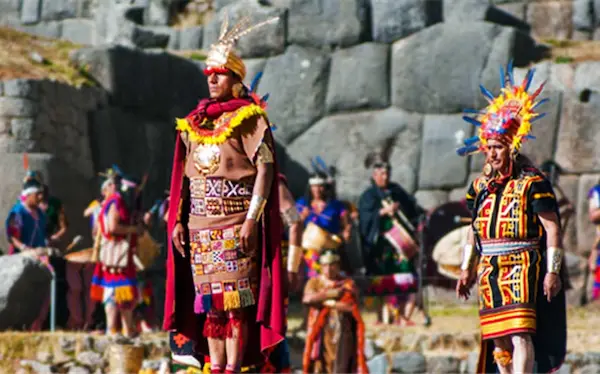
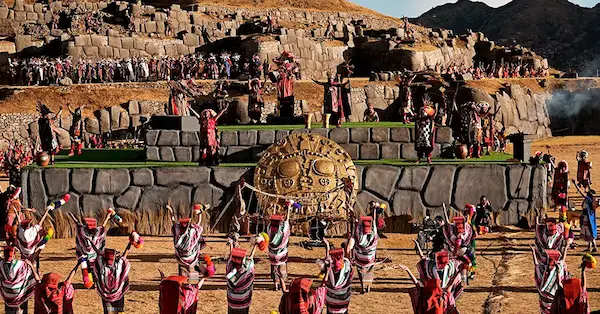
Experiencing New Year in Cusco allows travelers to witness a breathtaking reenactment of the Inti Raymi ceremony at Sacsayhuamán, a majestic stone fortress overlooking the city. The atmosphere is electric. Locals dress in colorful attire, musicians play ancestral melodies, and the Inca himself, adorned in golden robes, leads an offering to the sun.
As the first rays of light touch the ancient stones, the crowd falls silent. For a few moments, time seems to stop. The connection between the present and the past becomes tangible—proof that the Andean New Year continues to live in the hearts of the people.
After the ceremony, Cusco transforms into a city-wide celebration. The plazas fill with dancers, artisans display traditional crafts, and restaurants offer special menus inspired by native ingredients. It’s a perfect fusion of history, culture, and joy—an unforgettable way to welcome the new solar cycle.
New Year in the Valley: A Celebration of Harmony
If Cusco represents grandeur, the Andean New Year in the Sacred Valley embodies intimacy and authenticity. Nestled between emerald mountains and ancient terraces, this region is one of the most spiritually charged areas in Peru.
Through New Year in the Valley, visitors experience the celebration in its purest form—close to nature, guided by local families, and immersed in Andean wisdom. The rituals here are often held in open fields at dawn, where shamans perform despachos, intricate offerings made from flowers, seeds, and sweets, representing the gratitude of the people.
Participants are invited to take part in meditations, traditional dances, and ancestral blessings. There’s no grand stage or rehearsed performance—just the sincerity of a people celebrating life in harmony with their surroundings.
The Andean New Year in the Valley reminds us that renewal is not only cosmic but also deeply personal. It’s about reconnecting with one’s essence, releasing the old, and stepping into the new with gratitude and purpose.
The Role of the Sun and Ancient Astronomy
The Inca civilization had an extraordinary understanding of astronomy. For them, observing the stars and the movement of the sun was both science and spirituality. The Andean New Year was carefully aligned with the winter solstice—the point where the sun reaches its lowest position in the sky before beginning its return.
In Cusco, the Temple of the Sun (Qorikancha) was designed with astonishing precision to capture the first ray of the solstice sunrise. The Incas saw this as a divine signal that a new agricultural and spiritual year had begun.
Even today, archaeologists and astronomers marvel at the alignment of Inca temples and structures. These designs reveal a profound awareness of how human life depends on natural cycles. The Andean New Year thus stands as both a cultural and scientific legacy—one that unites observation, faith, and balance in a single celebration.
The Andean New Year and the Peruvian Child: Passing on the Fire
One of the most heartwarming aspects of the Andean New Year is how its traditions are shared with the younger generations. In many villages, schools dedicate the week around the solstice to teaching children about Inca history, ancestral rituals, and respect for nature.
The Peruvian child learns not through textbooks, but by participating in real experiences—dancing, singing, making offerings, and listening to the stories of elders. This living education ensures that the wisdom of the Andes continues to thrive.
For many families, the Andean New Year becomes an opportunity to teach values of unity, reciprocity, and gratitude. It’s not only a cultural event—it’s a moral compass for the next generation, reminding each Peruvian child that they are part of something vast and sacred.
A Celebration of Food, Music, and Color
No celebration in Peru is complete without music and food, and the Andean New Year is no exception. Traditional instruments such as the quena (flute) and charango fill the air with vibrant melodies that seem to echo across the mountains. Dancers dressed in red, yellow, and blue twirl in circles, imitating the cycles of the sun.
Feasts often include dishes made with quinoa, corn, potatoes, and roasted meats—foods that have sustained Andean people for millennia. Everything served carries symbolic meaning: corn for fertility, coca for gratitude, and water for purity.
Sharing food is one of the most sacred parts of the Andean New Year. It represents unity and abundance—an acknowledgment that prosperity must always be shared.
South Tours Peru: Expanding the Journey
For those who wish to continue their exploration beyond the solstice, South Tours Peru offers experiences that extend the spirit of the Andean New Year into the broader landscape of southern Peru.
Travelers can visit Lake Titicaca, where local communities also hold their own solstice ceremonies, or journey to Arequipa, where colonial history meets volcanic beauty. Each stop reveals how the same reverence for the sun and nature is expressed in different ways.
Through South Tours Peru, visitors can trace the path of the Incas, discovering how this timeless culture continues to influence modern Peruvian life. It’s a reminder that the Andean New Year is not confined to a single day or location—it’s a philosophy that travels with you.
Modern Reflections on an Ancient Celebration
While the Andean New Year has its roots in ancient cosmology, its message feels incredibly relevant today. In a world that moves faster than ever, this celebration invites us to pause, breathe, and reconnect with what truly matters—our relationship with the Earth, with one another, and with ourselves.
More Peruvians and travelers alike are turning to these ancestral traditions not as a form of nostalgia, but as a source of wisdom. The balance between technology and spirituality, between progress and preservation, is something that the Andean New Year expresses beautifully. It teaches that renewal is not about erasing the past but learning from it—and that every sunrise offers a chance to begin again.
In many ways, the Andean New Year has become a bridge between worlds — the ancient and the modern, the spiritual and the practical. Younger generations are rediscovering its meaning, blending traditional rituals with contemporary values such as sustainability, mindfulness, and community well-being. Across Peru, eco-conscious initiatives are now intertwined with the celebration: tree planting, local clean-up drives, and cultural workshops designed to honor both Pachamama and future generations. In this sense, the Andean New Year continues to evolve — not as a relic of the past, but as a living reminder that progress and tradition can walk hand in hand under the same rising sun.

