
Fun facts about Peru can reveal a side of the country that goes far beyond its most famous landmarks. From ancient civilizations and remarkable landscapes to traditional food, wildlife, and customs that have survived for generations, Peru is full of stories that continue to shape its identity.
Behind many of these facts are centuries of history and cultural exchange. The coast, the Andes, and the Amazon each add something different to the country, creating a place where ancient heritage and everyday life remain closely connected.
You might be interested in: Top 8 peruvian desserts you should try

Peru is full of surprising facts
Peru is a country where ancient history, diverse landscapes, and living traditions come together in ways that can surprise even experienced travelers. From the Pacific coast and the Andes to the Amazon rainforest, each region has its own character, customs, and stories. These contrasts are part of what makes fun facts about Peru so interesting, especially when they reveal details that go beyond the country’s most famous landmarks.
Many of these details are connected to the people and civilizations that have shaped Peru over thousands of years. Behind an ancient archaeological site, a traditional dish, or a local celebration, there is often a story that reflects the country’s rich cultural heritage and remarkable diversity.
A country shaped by ancient civilisations
Long before the rise of the Inca Empire, different civilizations had already developed complex societies across what is now Peru. One of the best known examples is Caral, considered one of the oldest civilizations in the Americas. Other cultures, including the Moche, Nazca, and Chavín, also left behind impressive architecture, artwork, engineering, and traditions that continue to shape our understanding of Peru’s past.
Their influence can still be seen throughout the country. Archaeological sites, ancient agricultural techniques, textiles, pottery, and local traditions offer glimpses into societies that flourished centuries ago. For anyone looking into fun facts about Peru, this is an important part of the story because the country’s history extends far beyond the Inca Empire.
Three natural regions in one country
Peru is divided into three major natural regions: the coast, the Andes, and the Amazon. The coastal region stretches along the Pacific Ocean and includes arid desert landscapes and fertile valleys. Further east, the Andes rise dramatically, creating high altitude landscapes, deep valleys, and mountain communities where traditional ways of life remain an important part of local culture.
Beyond the Andes lies the Peruvian Amazon, a vast area of tropical rainforest filled with extraordinary biodiversity. The contrast between these three regions is one of the most remarkable things about Peru. Within a single country, travelers can encounter Pacific beaches and desert landscapes, snow capped mountains, and dense rainforest, each offering a very different perspective on Peruvian nature and culture.
10 fun facts about Peru you should know
Peru has no shortage of stories, traditions, and unexpected details that reveal just how diverse the country is. From ancient civilizations and remarkable landscapes to food and everyday customs, these fun facts about Peru offer a closer look at the country beyond the places most travelers already know.
Some of these facts are connected to Peru’s natural environment, while others reflect thousands of years of history and cultural exchange. Together, they show why Peru has such a distinctive identity and why there is always something new to learn about the country.
1. Peru is home to thousands of potato varieties
One of the most surprising fun facts about Peru is its connection to the potato. Peru is recognized as an important center of potato diversity, with thousands of native varieties grown across the Andes. Different potatoes can vary greatly in color, shape, size, and flavor, with many varieties adapted to specific altitudes and local conditions.
For Andean communities, potatoes are much more than an everyday ingredient. They have been cultivated in the region for thousands of years and remain an important part of local agriculture and cuisine. This long relationship with the crop has helped preserve varieties that are rarely found outside the Andes.
2. The Amazon covers a large part of the country
When people think of Peru, the Andes and Machu Picchu often come to mind first, but a significant part of the country lies within the Amazon rainforest. The Peruvian Amazon covers a vast area east of the Andes and includes rivers, wetlands, forests, and remote communities.
It is also one of the most biologically rich parts of Peru. Jaguars, pink river dolphins, macaws, monkeys, and countless plant species can be found across the rainforest. For travelers interested in fun facts about Peru, the Amazon reveals a very different side of the country from its famous highland destinations.
3. Lake Titicaca has floating islands made of reeds
High in the Andes, Lake Titicaca is home to the famous Uros floating islands. These islands are traditionally built from totora reeds, a plant that grows abundantly in the shallow waters of the lake. Layers of reeds are placed over one another to create a surface strong enough for homes and communal spaces.
The Uros people have maintained their relationship with the lake and its resources for generations. Visiting the islands offers an opportunity to learn about a distinctive way of life shaped by the environment and the traditions passed down within local communities.
4. Peru is home to the ancient city of Caral
Caral is one of the oldest known urban centers in the Americas, dating back more than 5,000 years. Located in the Supe Valley north of Lima, the archaeological site includes large pyramidal structures, plazas, and other remains that reveal the complexity of one of the earliest civilizations in the region.
What makes Caral particularly fascinating is its age. The site predates the Inca Empire by thousands of years, reminding us that Peru’s history began long before the civilization most commonly associated with the country. It is one of the fun facts about Peru that can completely change the way visitors understand its ancient past.
5. The Nazca Lines remain one of Peru’s greatest mysteries
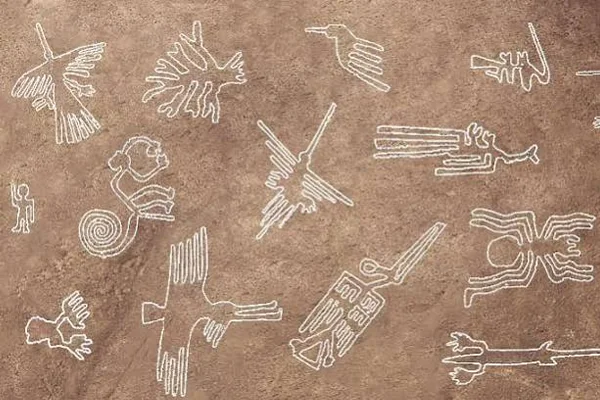
The Nazca Lines are enormous geoglyphs drawn across the desert plains of southern Peru. They depict animals, plants, geometric shapes, and other figures that can be difficult to recognize when viewed from ground level. Some of the most famous designs include a hummingbird, a monkey, and a condor.
Created by the Nazca culture more than a thousand years ago, the purpose of the lines continues to be debated. Archaeologists have proposed several explanations connected to rituals, astronomy, and water, but there is still much to learn about them. Their scale and precision make them one of the most intriguing fun facts about Peru.
6. Alpacas have deep roots in Andean culture
Alpacas have been part of life in the Andes for thousands of years and remain closely connected to many highland communities. Their soft fiber is highly valued for textiles, while the animals themselves are well adapted to the cold and high altitude of the region.
Alpaca fiber comes in a wide range of natural shades and is used to make clothing, blankets, and other traditional products. Their importance goes beyond their appearance, as alpacas represent an enduring connection between Andean communities, their environment, and ancestral practices.
7. Peru has some of the world’s deepest canyons
Peru is home to spectacular mountain landscapes, including some remarkably deep canyons. Colca Canyon, located in the Arequipa region, is one of the most famous and is known for its dramatic cliffs, highland villages, and views of the Andes. The canyon is also associated with the Andean condor, which can often be seen soaring above the valley.
The scale of these landscapes reflects the powerful geological forces that have shaped the Andes over millions of years. Beyond being impressive natural attractions, Peru’s canyons are also places where agriculture, local communities, and traditional ways of life continue to coexist with the mountainous environment.
8. Its cuisine brings together cultures from around the world
Peruvian cuisine has developed through centuries of cultural exchange. Indigenous ingredients and cooking traditions have combined with influences brought by Spanish settlers, African communities, Chinese immigrants, Japanese immigrants, and other groups. The result is a culinary tradition with remarkable variety and regional differences.
From ceviche and causa to lomo saltado and arroz chaufa, Peruvian dishes reflect this blend of cultures. Food is therefore an important part of understanding the country, and it is one of the most enjoyable fun facts about Peru to experience firsthand.
9. Peru is one of the most biodiverse countries on Earth
Peru’s extraordinary biodiversity is closely linked to its varied geography. The Pacific coast, Andes, cloud forests, and Amazon rainforest create habitats for an enormous range of plants and animals. The country is home to species such as spectacled bears, vicuñas, giant river otters, condors, and hundreds of bird species.
This natural diversity also changes dramatically from one region to another. A journey through Peru can therefore involve very different ecosystems within a relatively short distance, making its wildlife and landscapes another remarkable part of the country’s identity.
10. Ancient traditions are still part of Peruvian life
One of the most meaningful fun facts about Peru is that many traditions with ancient roots continue to be practiced today. Across the Andes and other parts of the country, communities preserve traditional music, dances, textiles, agricultural practices, festivals, and forms of craftsmanship that have been passed from one generation to another.
These traditions are not simply remnants of the past. They remain part of contemporary community life and continue to evolve with each generation. This connection between ancient heritage and modern Peru is one of the clearest ways to understand the cultural richness that makes the country so distinctive.
You might be interested in: 5 traditional peruvian drinks
More fascinating things to know about Peru
There are plenty more fun facts about Peru that reveal the country’s remarkable diversity. Its wildlife, celebrations, and cultural heritage offer another perspective on Peru, showing how its natural environment and centuries of history continue to influence everyday life.
These details also help put the country’s best known attractions into context. From the species found in its different ecosystems to traditions that have survived for generations, there is much more to Peru than what can be seen in a single destination.
Peru is home to an incredible variety of wildlife
Peru’s varied landscapes provide habitats for an extraordinary range of wildlife. The Amazon rainforest is home to jaguars, giant river otters, pink river dolphins, monkeys, and hundreds of bird species, while the Andes provide a home for animals such as vicuñas, llamas, alpacas, and the Andean condor.
This incredible biodiversity is one of the most interesting fun facts about Peru, especially because wildlife changes significantly between the coast, mountains, and rainforest. The country’s geography allows many different ecosystems to exist within its borders, creating an impressive natural variety.
Many Peruvian celebrations have ancient roots
Festivals are an important part of Peruvian culture, and many celebrations bring together traditions that have been passed down for generations. Music, dance, traditional clothing, food, and religious ceremonies often reflect a combination of Indigenous customs and influences that arrived later in Peru’s history.
Some celebrations are closely connected to the agricultural calendar and ancient Andean beliefs, while others have developed through centuries of cultural exchange. These traditions are another example of the fun facts about Peru that show how the country’s past remains present in modern community life.
Its cultural heritage goes beyond the Inca Empire
The Inca Empire is one of the most recognizable parts of Peru’s history, but it represents only one chapter of a much longer story. Civilizations such as the Moche, Nazca, Chavín, Paracas, and Wari developed sophisticated societies long before the Incas expanded across the Andes.
Their legacy can still be found in archaeological sites, textiles, pottery, agricultural practices, and artistic traditions throughout the country. For anyone interested in fun facts about Peru, this broader perspective makes its cultural heritage even more fascinating.
A country full of stories, traditions and surprises
The most interesting fun facts about Peru are not simply isolated pieces of information. Together, they reveal a country shaped by ancient civilizations, extraordinary landscapes, diverse wildlife, and traditions that continue to have a place in modern life.
From the Pacific coast to the Andes and the Amazon, every region adds another part to Peru’s story. Looking beyond its most famous landmarks makes it easier to appreciate the depth and diversity of a country whose history and culture are still very much alive.

