
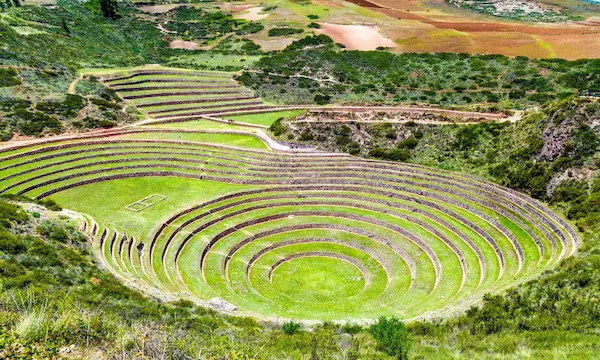
When I first started reading about ancient civilizations, I was surprised by how advanced the agricultural knowledge of the Andes was, especially considering they didn’t have modern tools or machinery. Among all these systems, the Inca farming methods stand out as one of the most sophisticated and environmentally adapted agricultural approaches in history.
What makes the Inca farming methods so interesting is not just their productivity, but how perfectly they were designed to work with extreme geography. The Andes Mountains are not an easy place to farm: steep slopes, unpredictable weather, and limited flat land make agriculture very challenging. Yet, the Incas managed to turn these difficulties into an advantage.
In this article, I will explore how the Inca farming methods worked, why they were so effective, and what we can still learn from them today in terms of sustainability, soil management, and environmental balance.
The foundation of Inca agriculture
The Inca farming methods were developed through a detailed understanding of the Andean environment. Instead of forcing the landscape to fit a single agricultural model, the Incas adapted their techniques to altitude, climate, soil conditions, and water availability.
This approach was especially important in the Andes, where steep slopes, irregular rainfall, and sudden temperature changes made cultivation difficult. By observing the natural behavior of the land, they created productive spaces that worked with the environment rather than against it.
Their agricultural system was based on three main principles:
- Respect for the natural geography of each region
- Efficient management of water resources
- Integration of crop diversity within the same agricultural network
The Incas selected crops according to elevation and local climate. Lower valleys were suitable for maize and fruit, while higher areas supported potatoes, quinoa, and other resistant species. This distribution reduced the risk of losing entire harvests because of drought, frost, or pests.
Water was also managed carefully through canals, terraces, and drainage structures. These systems helped distribute moisture, prevent erosion, and protect fertile soil. At the same time, crop diversity improved food security and allowed communities to produce different foods throughout the year.
Thanks to this balance between environmental knowledge and practical organization, the Inca farming methods supported large populations without synthetic fertilizers, industrial machinery, or modern irrigation technology. Their success came from careful planning, collective work, and a deep respect for natural cycles.
You might be interested in: Top 10 things to do in Peru in 2026
Terracing: the heart of Inca farming methods
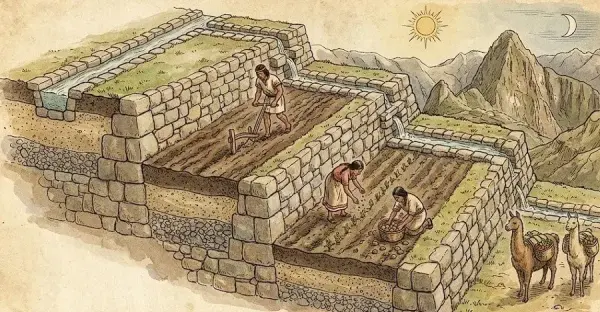
One of the most distinctive and widely recognized features of the Inca farming methods is terracing, known as “andenes.” These are carefully constructed stepped platforms built along the steep slopes of the Andes Mountains, designed to transform rugged terrain into productive agricultural land.
Rather than viewing mountains as a limitation, the Incas turned them into an opportunity. Through terracing, they were able to expand cultivation into areas that would otherwise be impossible to farm, significantly increasing the available agricultural land.
Why terraces were so important
The Incas used terraces to solve several environmental problems at once:
- Prevent soil erosion on steep slopes
- Improve water retention in dry conditions
- Create flat, arable land in mountainous areas
- Regulate temperature differences between altitudes
Each terrace acted like a small ecosystem. Stones were used to reinforce the structure, while soil layers were carefully managed to maintain fertility.
Engineering precision
The design of terraces in the Inca farming methods shows impressive engineering knowledge. Drainage systems were built within the terraces to prevent waterlogging and landslides, ensuring long-term stability.
This level of planning allowed agriculture to expand into areas that would normally be considered unusable.
You might be interested in: 7 Best Places to Experience Cusco Nightlife
Water management in Inca farming methods
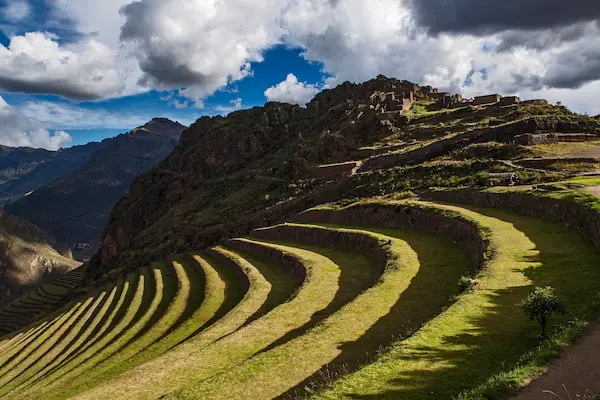
Water was one of the most essential and carefully managed resources within the Inca farming methods. Living in the Andes meant dealing with highly variable rainfall, steep terrain, and limited flat land, so controlling water effectively was crucial for survival and agricultural success. To address these challenges, the Incas developed highly sophisticated irrigation systems that integrated natural landscapes with engineered solutions.
Their approach was not based on forcing water into rigid structures, but rather on working with the natural flow of rivers, springs, and mountain runoff. This allowed them to distribute water efficiently across vast agricultural areas while minimizing waste and soil damage.
Key features of their water systems
- Gravity-based irrigation systems
- Distribution channels connecting different terraces
- Water storage areas for dry seasons
- Use of natural springs and mountain runoff
The Incas understood how to control water flow without wasting it, which made their system highly efficient.
Interestingly, modern sustainability studies often compare these ancient techniques with current environmental models such as the water footprint, highlighting how efficient resource use was central to Inca agriculture.
Crop diversity and food security
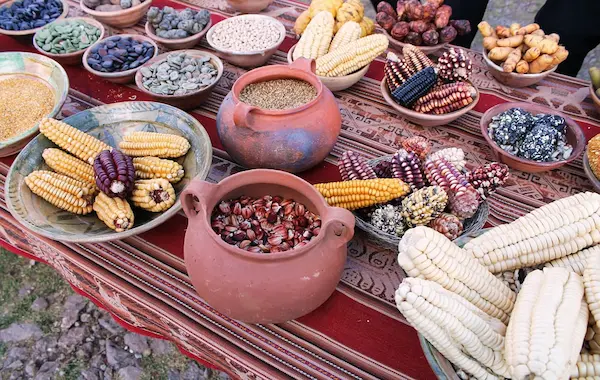
Another strength of the Inca farming methods was crop diversity. Instead of relying on a single crop, the Incas cultivated a wide variety of plants adapted to different altitudes and climates.
Main crops included:
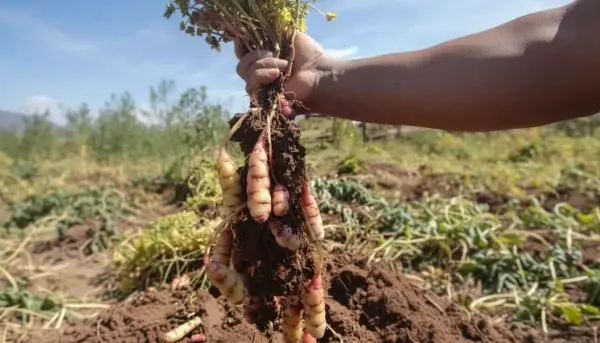
- Potatoes (with hundreds of varieties)
- Maize (corn)
- Quinoa
- Beans
- Amaranth
This diversity reduced the risk of famine and ensured food security even in harsh conditions.
The Incas also practiced crop rotation, which helped maintain soil fertility and reduce pest problems naturally.
Microclimates and altitude farming
The Andes are characterized by extreme altitude changes, and the Inca farming methods took full advantage of this natural complexity. Instead of treating the mountain environment as a limitation, they understood it as a series of vertical ecological zones, each with its own climate conditions. By strategically using different elevation levels, they were able to create distinct microclimates suitable for a wide variety of crops.
This approach allowed agriculture to become highly adaptable, ensuring that different plant species could thrive in environments specifically suited to their biological needs. The result was a diversified and resilient farming system that reduced risk and improved long-term food security.
Agricultural zoning system
One of the most important innovations within the Inca farming methods was the agricultural zoning system, which organized crop production according to altitude. This vertical distribution of agriculture made it possible to optimize land use across the Andes.
- Low valleys: maize and fruits
- Mid-altitudes: potatoes and legumes
- High altitudes: quinoa and hardy grains
This vertical farming system allowed the Incas to maximize production across diverse environments without exhausting the land.
Soil management techniques
Soil fertility was carefully maintained within the Inca farming methods through a deep understanding of natural cycles and long-term land stewardship. Instead of depending on chemical fertilizers or artificial soil enhancers, the Incas relied entirely on ecological processes that allowed the land to regenerate and remain productive over time.
This approach was based on the idea that soil is a living system that must be preserved rather than exploited. Every agricultural activity was designed to maintain balance, prevent degradation, and encourage natural renewal of nutrients.
Techniques included:
- Use of organic compost
- Crop rotation systems
- Layered soil construction in terraces
- Recycling of plant residues
These methods helped preserve long-term productivity and prevented land degradation.
You might be interested in: 15 reasons to visit Peru in 2026
Storage and food preservation
One of the most remarkable aspects of the Inca farming methods was not only their ability to produce food efficiently, but also their advanced systems for preserving and storing it over long periods. In a region where climate conditions could change rapidly and agricultural cycles were often unpredictable, food security depended heavily on effective storage strategies.
Rather than relying on short-term consumption, the Incas developed a structured system that ensured surplus production could be preserved and accessed during times of scarcity, such as droughts, frosts, or failed harvests. This long-term vision was essential for sustaining large populations across the Andes.
Storage systems
The Incas built special storage facilities called “qollqas,” located in high-altitude, cool areas. These conditions helped preserve crops naturally.
They also used drying techniques such as:
- Freeze-drying potatoes (chuño)
- Sun-drying grains and vegetables
- Dehydration for long-term storage
This ensured food availability during droughts or poor harvest seasons.
You might be interested in: Cusco Weather in July 2026: Temperatures, Climate & What to Pack
Social organization of agriculture
Agriculture in the Inca Empire was not an individual activity but a collective system. The Inca farming methods were deeply integrated into social organization.
Key aspects:
- Land was divided between the state, temples, and communities
- Work was shared through communal labor systems (mita)
- Agricultural production supported the entire empire
This structure allowed efficient management of large agricultural areas.
Influence on modern industries
Interestingly, some principles inspired by ancient systems can even be seen in modern industrial design and materials. For example, sustainable engineering approaches in construction or manufacturing often prioritize efficiency and durability.
In some cases, materials like Raw material for plastic are being re-evaluated in terms of environmental impact, especially when compared to traditional sustainable systems.
Similarly, innovation in sectors like footwear manufacturing, including processes such as Injection of soles for footwear, reflects the ongoing search for efficiency and resource optimization, although these industries still face sustainability challenges compared to natural systems like those developed by the Incas.
Conclusion
After exploring the structure, techniques, and philosophy behind these ancient agricultural systems, it becomes clear that the Inca farming methods were far more than simple farming techniques. They represented a complete understanding of nature, resource management, and environmental balance.
What I find most impressive is how these methods achieved productivity without destroying the ecosystem. In a time where modern agriculture faces increasing environmental challenges, looking back at the Inca farming methods offers valuable insights into how we might create more sustainable systems today.
In the end, this ancient knowledge reminds us that innovation does not always mean new technology—it can also mean learning from systems that have already proven their efficiency over centuries.

