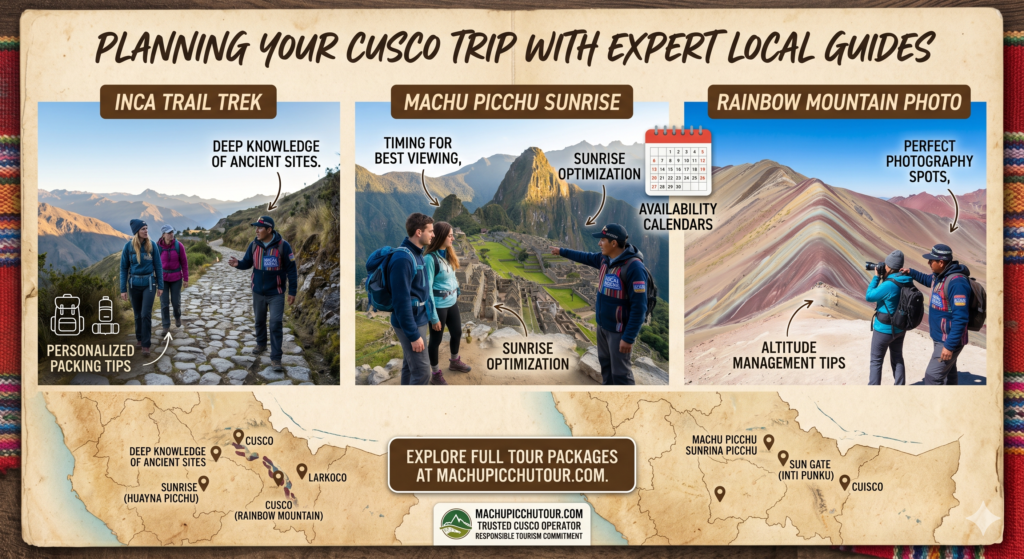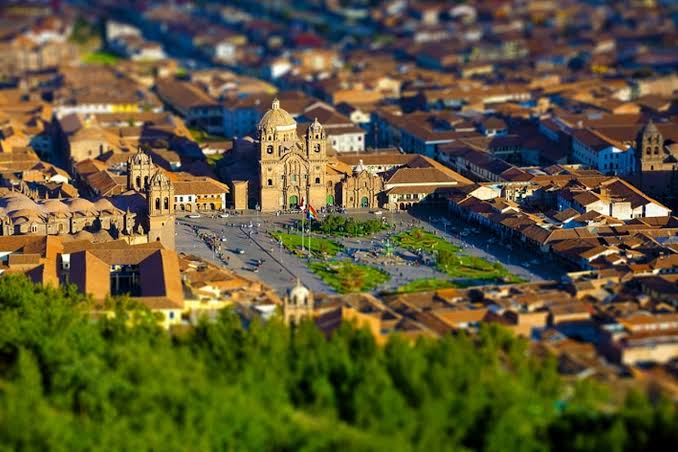
July is one of the most popular months to visit Cusco, and for very good reasons. The dry season is in full swing, the skies are clear blue, and the city comes alive with cultural festivals, trekking expeditions, and international visitors from every corner of the world. But before you pack your bags, understanding Cusco weather in July is essential to making the most of your trip.
Cusco sits at approximately 3,400 meters (11,150 feet) above sea level, which means the climate behaves very differently from what most travelers expect. Days can feel warm and sunny, but temperatures drop dramatically after sunset, and the altitude adds an extra layer of complexity for those arriving from lower elevations. This guide covers everything you need to know temperatures, rainfall, what to wear, altitude tips, and the best Cusco tours to book in July 2026
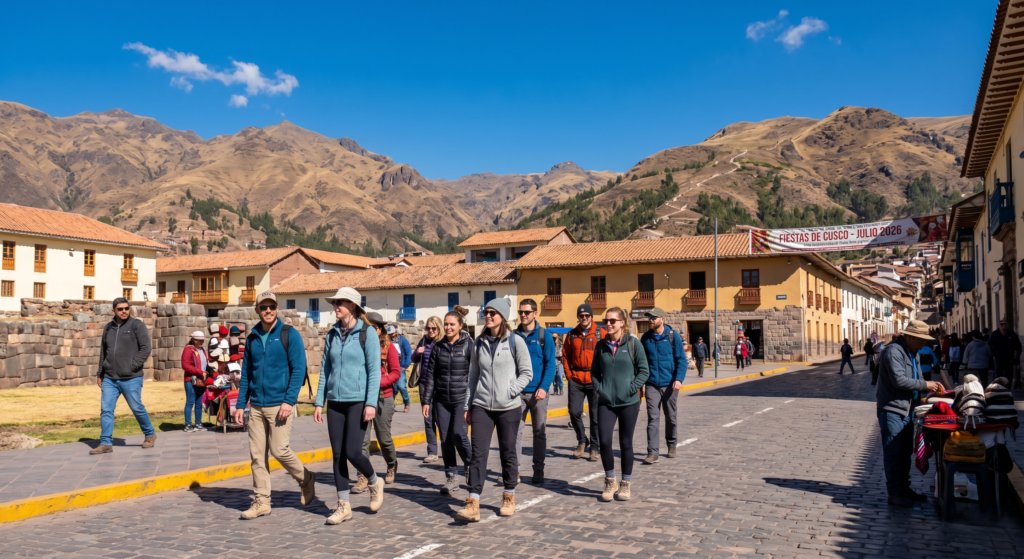
What is the weather like in cusco in july?
July falls in the heart of Cusco’s dry season, which typically runs from May through September. During this period, rainfall is minimal, the air is crisp, and the landscapes around the Sacred Valley and surrounding Andes look spectacular under clear skies.
Average temperatures in cusco in july:
- Nighttime low: 0°C to 4°C (32°F to 39°F)
- Morning temperature: 7°C to 10°C (45°F to 50°F)
- Precipitation: Very low less than 10 mm on average
- Sunshine hours: 7 to 9 hours per day
- Daytime high: 16°C to 19°C (61°F to 66°F)
The combination of intense daytime sunshine and freezing nights is one of the defining characteristics of Cusco weather in July. UV radiation is also significantly higher at altitude, so sunscreen is not optional it is essential.

Inti Raymi: the festival of the sun in july
One of the biggest reasons travelers choose July for a Cusco trip is Inti Raymi, the ancient Inca festival honoring Inti, the sun god. Although the main celebration takes place on June 24th each year, the festive atmosphere lingers throughout July, with local dances, artisan markets, and cultural performances filling the streets of Cusco.
During July, the Plaza de Armas is often host to traditional ceremonies and performances. Neighborhoods like San Blas fill with color and music. This cultural richness adds a unique dimension to any visit and makes July one of the most rewarding months to experience Cusco beyond its archaeological sites.
If you are planning your trip around cultural experiences, combining the weather advantage of July with these local festivities makes for an unforgettable itinerary.
What to pack for cusco in july
Packing for Cusco in July requires thinking in layers. The temperature gap between day and night can exceed 15 degrees Celsius, which means a single type of clothing will not be enough. Here is a practical packing list based on the specific conditions of Cusco weather in July:
Clothing essentials:
- Thermal base layers (top and bottom) for cold nights and early mornings
- Mid layer fleece or wool sweater for layering during the day
- Waterproof or windproof outer jacket (even in dry season, winds can be strong)
- Comfortable trekking pants or convertible trousers
- Warm hat and gloves for evenings and high-altitude excursions
- Breathable t shirts or long sleeve shirts for daytime activities
- Comfortable walking shoes with ankle support for cobblestone streets
- Trekking boots if you plan to hike the Inca Trail or any mountain route
Health and Essentials:
- High SPF sunscreen (50+) UV radiation at altitude is intense
- Lip balm with UV protection
- Sunglasses with UV protection
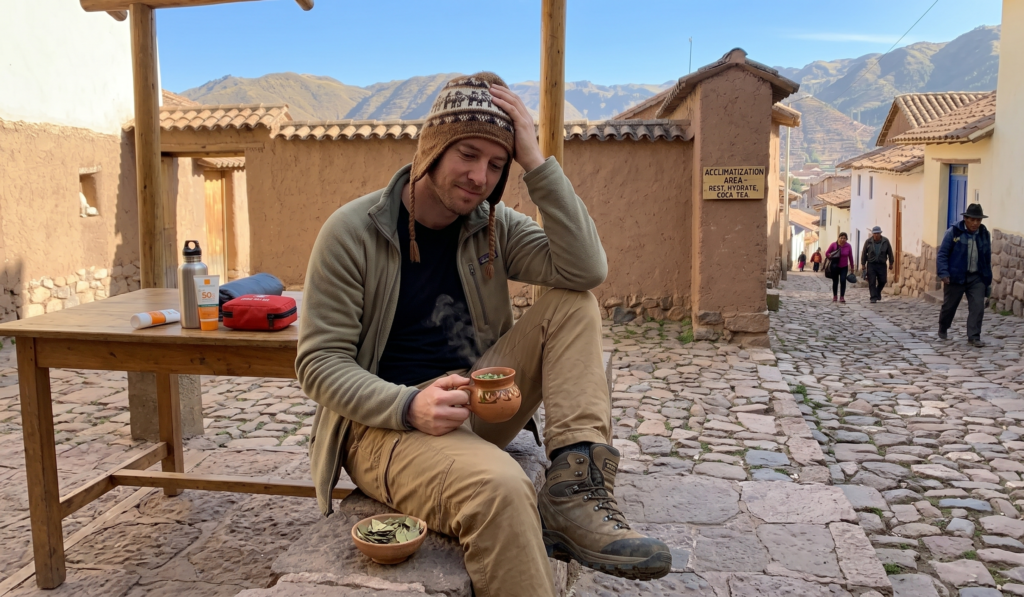
- Altitude sickness medication or coca leaves (consult your doctor before travel)
- Reusable water bottle staying hydrated is key at high altitude
- Small first aid kit with blister care if you plan to trek
Packing light but smart is the key philosophy for Cusco in July. You do not need heavy winter gear, but you absolutely need reliable layers that can be added or removed as the temperature shifts.

Altitude and acclimatization in cusco
Understanding Cusco weather in July goes beyond temperature and rainfall altitude is a critical factor that affects how your body responds to the environment. At 3,400 meters above sea level, many travelers experience some degree of altitude sickness (locally known as soroche) during their first 24 to 48 hours.
Common symptoms of altitude sickness include:
- Headaches often the first sign of altitude adjustment
- Fatigue and shortness of breath, especially when climbing stairs
- Nausea or loss of appetite
- Dizziness or lightheadedness
- Difficulty sleeping during the first night
Tips to acclimatize successfully:
- Arrive in Cusco one or two days before your main activities
- Rest on your first afternoon and avoid strenuous activity
- Drink at least 2 to 3 liters of water daily
- Try coca leaf tea, which is traditional and widely available in Cusco
- Avoid alcohol during your first 24 hours in the city
- Eat light meals, particularly on your first day
- Consider spending a night in the Sacred Valley (lower altitude) before arriving in Cusco
Most travelers adapt within 48 hours and feel completely normal by the time their main excursions begin. Proper acclimatization makes a significant difference in your overall experience.
Best tours to book during cusco weather in july
The dry season makes July one of the best months for outdoor activities and trekking in the Cusco region. Clear skies, stable trail conditions, and minimal rainfall create ideal circumstances for exploring some of the most iconic destinations in Peru.
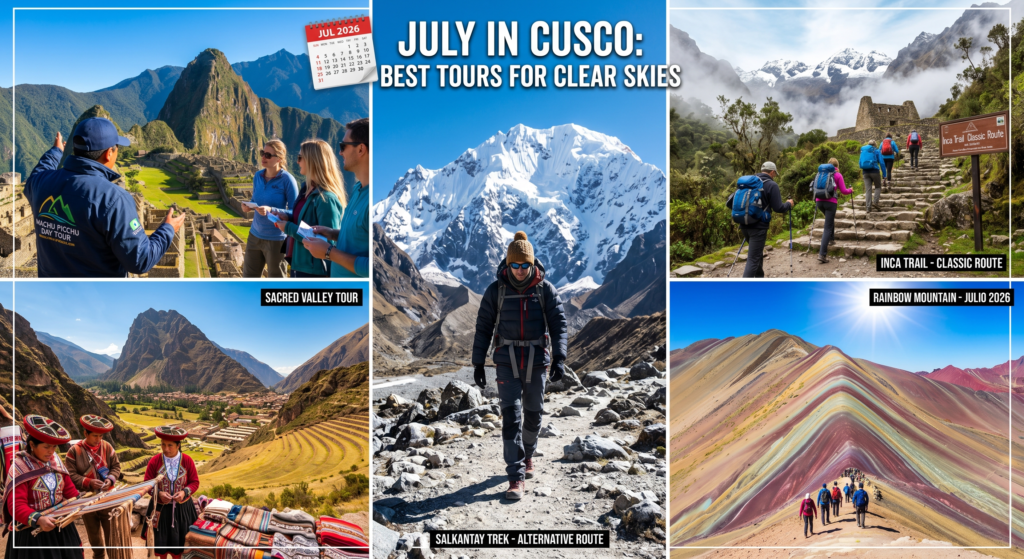
Machu picchu day tour from cusco
Visiting Machu Picchu is the primary goal for most travelers who come to Cusco, and July offers some of the best conditions to explore the ancient citadel. With clear morning skies and minimal fog, the views of the terraces and mountain peaks are at their most spectacular.
For a professional guided experience with expert knowledge of Inca history and logistics support, visit Machu Picchu Day Tour a well organized option that includes train transfers, entrance tickets, and bilingual guides.
Inca trail trek the classic route
July is one of the busiest months for the Inca Trail, and permits sell out months in advance. The four-day classic route passes through cloud forest, alpine tundra, and multiple Inca sites before arriving at the Sun Gate above Machu Picchu at sunrise.
Booking through a reputable operator is essential for a safe and well-supported experience. Check availability and detailed itineraries at Inca Trail Trek to secure your spot well ahead of your travel dates.
Salkantay trek the alternative route
For travelers who could not secure Inca Trail permits, or who simply prefer a more physically challenging route with dramatic mountain scenery, the Salkantay Trek is an outstanding alternative. The route passes beneath the snow-capped Salkantay mountain at over 4,600 meters before descending through tropical cloud forest toward Machu Picchu.
In July, the high-altitude sections can experience frost and very cold nights, making proper gear essential. Find detailed packing guides and tour options at Huchuy Qosqo Trek.
Sacred valley full day tour
The Sacred Valley of the Incas is one of the most rewarding day trips from Cusco, particularly in July when the landscape is green from the preceding rainy season and the weather is clear. Sites like Pisac, Ollantaytambo, and Chinchero offer incredible views and deep cultural connections to the Inca world.
The Sacred Valley also sits at a lower altitude than Cusco (approximately 2,800 meters), making it a gentler introduction for travelers still acclimatizing. Explore options at Sacred Valley Tour.
Rainbow mountain (Vinicunca) day trip
Rainbow Mountain has become one of the most photographed destinations in Peru, and July is considered the best month to visit. Clear skies reveal the full spectrum of mineral colors across the mountain’s slopes red, yellow, green, and purple layers that look almost surreal under direct sunlight.
The hike reaches 5,200 meters above sea level, so proper acclimatization in Cusco before this excursion is strongly recommended. Book with experienced local guides through Machu Picchu Tour for a safe and well-organized day trip.
Exploring cusco city in july
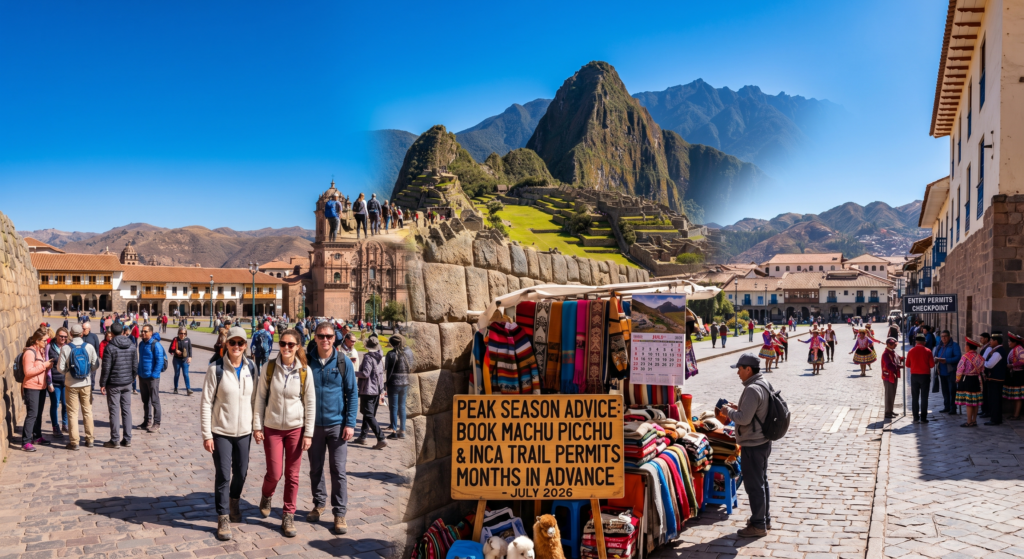
Beyond trekking and historical sites, Cusco city itself is a fascinating destination in July. The historic center,
a UNESCO World Heritage Site, combines Inca stonework foundations with Spanish colonial architecture in
a way that feels unlike anywhere else in the world. July evenings in Cusco can be very cold, so exploring the
city is best done during daylight hours
Key areas to explore in Cusco:
- Plaza de Armas the main square surrounded by the cathedral and La Compañía de Jesús church
- San Blas neighborhood cobblestone streets, artisan workshops, and panoramic views
- Sacsayhuamán massive Inca fortress overlooking the city, best visited in morning light
- San Pedro Market local food, textiles, and everyday Cusqueño life
- Qorikancha the most important Inca temple, now partially beneath a Dominican convent
- Barrio de Santa Ana one of the oldest and most authentic neighborhoods in the city
- Museo Larco Cusco outstanding collection of pre-Columbian gold and ceramics
- Palacio del Inca a boutique hotel site built directly over original Inca stonework
After sunset, the restaurants and cafés around the Plaza de Armas provide warm, welcoming environments
to try traditional Peruvian cuisine including caldo de cabeza, chicharrón, regional stews, and the
world famous pisco sour.
Day trips and nearby destinations from cusco in july
Cusco serves as the ideal base camp for exploring the broader region. In July, road conditions are excellent,
the skies are clear, and access to remote sites is at its most reliable. Here are the top day trips to consider
when planning your itinerary around Cusco weather in July.
Pisac archaeological park
Located just 33 kilometers from Cusco, Pisac is home to one of the most impressive Inca ruins in the Sacred
Valley. The site includes agricultural terraces, ceremonial baths, temples, and a cemetery that once held
hundreds of mummy bundles. The Pisac market, held every day but most vibrant on Sundays, is a great
place to buy authentic Andean textiles and crafts
Moray and maras salt mines
These two sites are often combined into a single half-day trip from Cusco. Moray features remarkable
circular agricultural terraces that the Inca used as a crop laboratory. Just a short drive away, the Maras salt
pans have been in operation for centuries and create a stunning geometric landscape of white and pink
crystalline pools against the Andean backdrop.
Ollantaytambo fortress
This is both a living Inca town and a massive ceremonial fortress. The steep terraces rising from the valley
floor are among the most dramatic structures the Inca ever built. Ollantaytambo is also the departure point
for the train to Aguas Calientes and Machu Picchu, making it a natural stop on any Cusco itinerary.
Huchuy qosqo trek
A lesser-known but incredibly rewarding alternative to the Inca Trail, the Huchuy Qosqo trek passes through
Andean highlands and traditional communities before arriving at a remote Inca citadel overlooking the
Sacred Valley. In July, the trail is dry and well-defined, with clear views across the valley below.
Things to do in peru in july
While Cusco is the centerpiece of most July itineraries, Peru is a vast and extraordinarily diverse country.
July coincides with the dry season across the highlands and much of the south, making it an ideal month to
venture beyond Cusco and explore other regions. Here are the best destinations and experiences across
Peru to complement your time in Cusco.
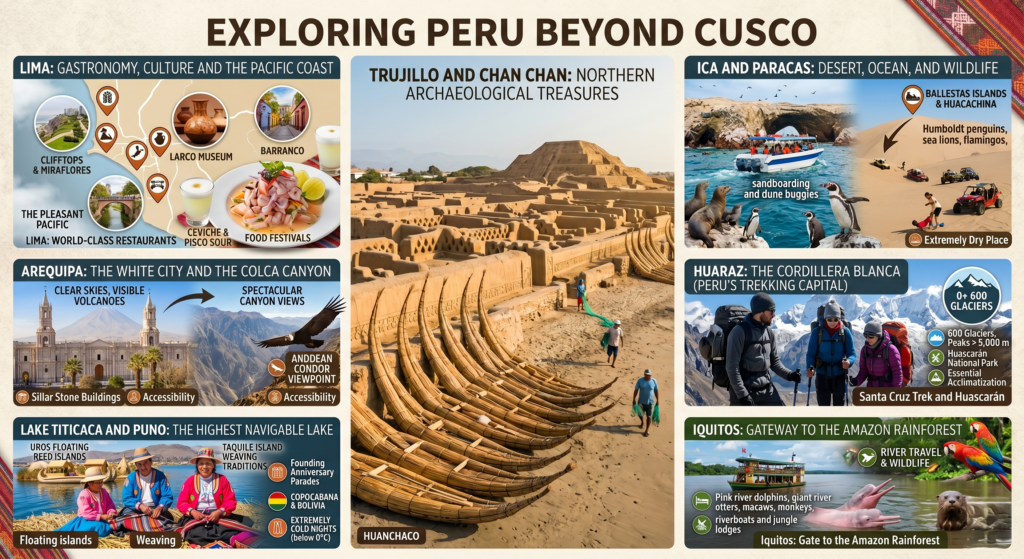
Lima gastronomy, culture, and the pacific coast
Peru’s capital is a world-class destination in its own right, and July is one of the best months to visit. While
Lima experiences its famous garúa a low hanging coastal fog the cooler temperatures make walking
the historic center, visiting museums, and dining at world-renowned restaurants particularly pleasant. The
Larco Museum, Miraflores clifftop parks, Barranco’s bohemian streets, and the cevicherías of La Mar are
among the highlights. Lima is home to some of the world’s best restaurants, and July brings food festivals
celebrating Peru’s unique culinary heritage of Nikkei, Chifa, and traditional criollo cuisine.
Arequipa the white city and colca canyon
Known as La Ciudad Blanca for its white volcanic sillar stone buildings, Arequipa is Peru’s second city and
one of its most beautiful. In July, the skies above the city are clear and the surrounding volcanoes El
Misti, Chachani, and Pichu Pichu are perfectly visible. The nearby Colca Canyon, one of the deepest
canyons in the world, is spectacular in July when the Andean condor can be observed soaring on thermal
currents from the Cruz del Cóndor viewpoint. The dry season makes the canyon trails highly accessible and
the views unobstructed.
Lake titicaca and puno the highest navigable lake
July is actually Puno Month the city celebrates its founding anniversary with parades, traditional dances,
and the famous Festival de la Virgen de la Candelaria, though the main festival is in February. Even in July,
Puno and Lake Titicaca offer extraordinary cultural and natural experiences. Visits to the Uros floating reed
islands, the island of Taquile with its UNESCO recognized weaving traditions, and day trips to the Bolivian
side via Copacabana and the Island of the Sun are all easily organized from Puno. Nights are extremely cold
(below 0°C), so warm layers are essential.
Ica and paracas desert, ocean, and wildlife
The Ica region sits on Peru’s south coast and is one of the driest places on Earth, making it spectacular in
July. The Paracas National Reserve is home to extraordinary marine wildlife Humboldt penguins, sea
lions, flamingos, and hundreds of bird species. A boat tour to the Ballestas Islands, sometimes called the
‘Poor Man’s Galápagos’, is one of Peru’s most memorable wildlife experiences. Nearby, the Huacachina
oasis and the surrounding sand dunes offer sandboarding and dune buggy rides against dramatic desert
scenery.
Huaraz and the cordillera blanca peru’s trekking capital
For serious trekkers and mountaineers, Huaraz in the Ancash region is one of South America’s premier
adventure destinations. July is peak trekking season in the Cordillera Blanca, the world’s highest tropical
mountain range. The Santa Cruz Trek is widely considered one of the best multi day hikes on the continent,
passing through glacial lakes, high passes, and dramatic mountain scenery. The nearby Huascarán National
Park, a UNESCO World Heritage Site, contains over 600 glaciers and dozens of peaks above 5,000 meters.
Acclimatization is essential before attempting high-altitude routes.
Iquitos and the amazon rainforest
For a complete contrast to the highland dry season, the Peruvian Amazon offers a completely different
experience in July. Iquitos, accessible only by plane or river boat, is the gateway to one of the most
biodiverse ecosystems on Earth. July falls in the transitional period between high and low water seasons,
which means river travel is possible and wildlife including pink river dolphins, giant river otters, macaws,
and monkeys is highly visible from riverboats and jungle lodges. A multi day Amazon lodge stay from
Iquitos is one of Peru’s most unforgettable experiences
Trujillo and chan chan northern peru’s archaeological treasures
Peru’s north coast is home to some of the oldest civilizations in the Americas, and July is an excellent time
to explore them. The city of Trujillo sits near Chan Chan, the largest pre Columbian city in South America
and a UNESCO World Heritage Site. The Moche culture’s pyramids Huaca del Sol and Huaca de la Luna
are among the most impressive ancient structures in the continent. The nearby beach town of Huanchaco
is famous for traditional caballitos de totora reed boats that local fishermen still use today. The north coast in
July benefits from warm weather and good surfing conditions.
Is July a Good Month to Visit Cusco and Peru?
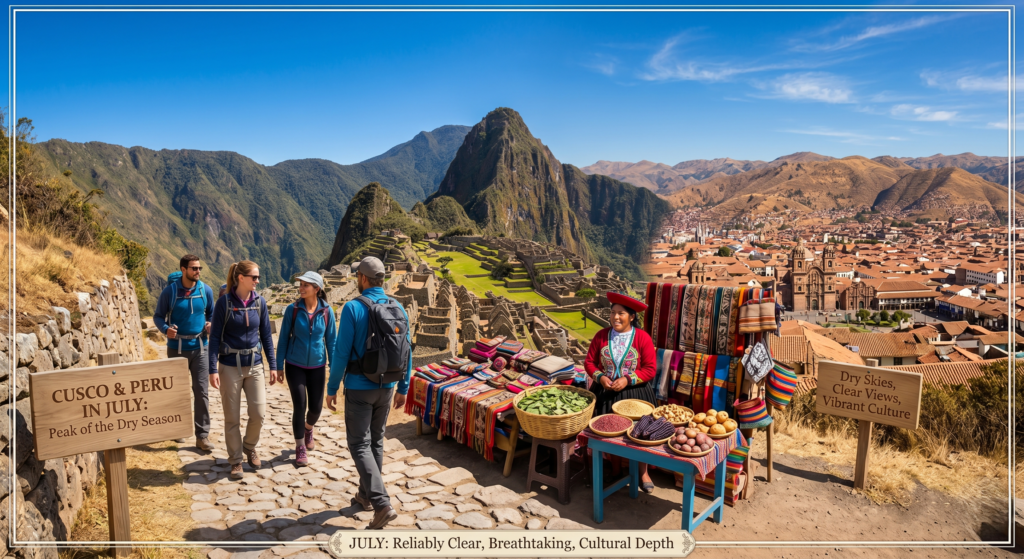
The short answer is yes July is one of the best months to visit both Cusco and Peru as a whole. The dry
season conditions offer the most reliable weather for outdoor activities across the highlands, the landscapes
are breathtaking under clear skies, and the cultural calendar adds extraordinary depth to every visit.
The trade-offs are worth knowing: July is peak tourist season, which means Machu Picchu and the Inca Trail
require advance booking, accommodations fill up quickly, and prices are slightly higher than during the
shoulder season. Booking tours and entry tickets several months ahead is strongly recommended.
For travelers who plan carefully, pack appropriately, and take altitude acclimatization seriously, July in
Cusco and Peru delivers one of the most extraordinary travel experiences available anywhere in South
America a journey through ancient civilizations, dramatic landscapes, world-class cuisine, and vibrant
living culture.
Plan your cusco trip with expert local guides
Whether you are dreaming of walking the Inca Trail, watching the sunrise over Machu Picchu, or photographing Rainbow Mountain in July, working with experienced local guides makes all the difference. Explore full tour packages, availability calendars, and personalized itineraries at machupicchutour.com a trusted Cusco-based operator with deep knowledge of the region and commitment to responsible tourism