
Christmas is approaching, and with it comes a world filled with joy, color, and excitement, not only for the special meaning of this time of year but also for the unity, traditions, and cultures experienced within families across the globe. This time, we want to focus on Peru, a well-known tourist destination and a favorite among its people, not only for the diverse cultures within the country but also for the unique and curious Christmas traditions celebrated there. So today, let’s take a few minutes to learn about these christmas traditions in Peru.
What makes Christmas in Peru unique
Christmas in Peru is more than just a religious holiday — it’s a time when entire communities come together to celebrate with warmth and gratitude. The country’s unique blend of cultures, from Inca heritage to Spanish influence, has created one of the most colorful and heartfelt Christmases in Latin America.
A blend of Andean and Spanish influences
Peru’s Christmas celebration reflects the country’s rich cultural fusion. When Spanish colonizers introduced Christianity in the 16th century, the Andean people blended their ancestral customs with new Catholic beliefs. The result is a deeply spiritual yet festive season, filled with symbolism and local flair.
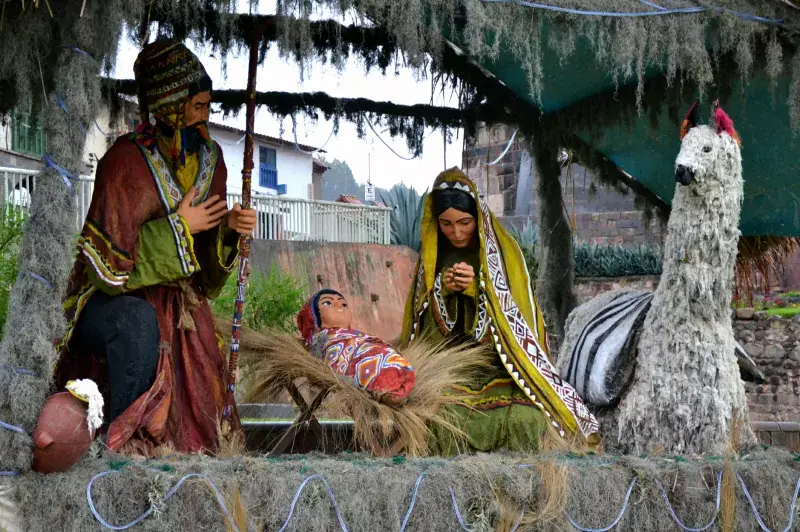
In many highland regions, nativity scenes include llamas, alpacas, and local villagers dressed in traditional clothing. These details show how Peruvians reinterpreted European traditions through their own lens, creating a celebration that feels both universal and uniquely Peruvian.
Today, this cultural blend continues to thrive — from traditional carols sung in Quechua to handcrafted decorations that reflect local art. Christmas traditions in Peru honors both the birth of Jesus and the enduring spirit of Andean culture.
The importance of family and community celebrations
Family lies at the heart of Peruvian Christmas traditions. December 24th, known as Noche Buena (Good Night), is when most Peruvians gather for dinner, music, and prayer. The sense of unity is powerful relatives travel long distances just to be together for the evening.
Communities also come together to host shared meals, especially in smaller towns. Churches, schools, and neighbors organize charity events for children and the elderly, reminding everyone of the season’s true meaning: generosity and kindness.
This focus on family and community makes Peruvian Christmas especially heartwarming. It’s less about presents and more about presence celebrating love, connection, and gratitude.
When and how Christmas is celebrated in Peru
While many countries celebrate Christmas on December 25th, Peru’s biggest celebrations happen the night before. On Noche Buena, families attend Misa de Gallo (Midnight Mass), enjoy a special meal, and open gifts just after midnight.
December 25th is more relaxed, often spent visiting relatives or enjoying the summer weather since Christmas in Peru falls during the Southern Hemisphere’s warm season. Children play outside, fireworks light up the sky, and towns remain full of music and laughter.
From bustling cities to quiet villages, every region celebrates in its own way, yet all share the same spirit of joy and faith that defines Christmas traditions in Peru.
You may also like: Fishing in the amazon river of Perú
Typical Christmas foods in Peru
One of the most delicious aspects of Christmas traditions in Peru is the food. The country’s culinary diversity shines brightly during the holidays, bringing together local ingredients and festive flavors from different regions.
Traditional Peruvian Christmas dinner
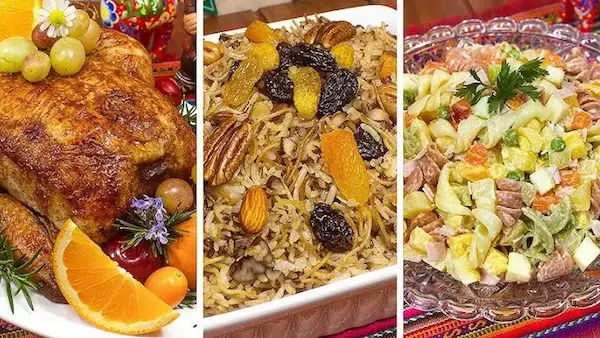
A typical Peruvian Christmas dinner usually features roast turkey (pavo al horno) as the main dish, often marinated with Peruvian spices, garlic, and orange juice. Some families choose roast pork (lechón) or chicken as alternatives. The meal is served late at night, right after midnight mass.
Side dishes often include sweet tamales, apple purée, salads, and rice — a symbol of abundance. In the Andes, you might also find roasted cuy (guinea pig) or Andean corn cakes, depending on local customs.
Dinner is not just a meal — it’s an event. Families gather around the table to share food, laughter, and heartfelt toasts, making it one of the most anticipated moments of the year.
Panetón and hot chocolate
No Peruvian Christmas is complete without panetón (a sweet bread with dried fruit) and a cup of rich hot chocolate. This beloved tradition began in the early 20th century when Italian immigrants introduced panettone to Peru. It quickly became a national favorite.
What makes it unique in Peru is the pairing: panetón is almost always served with hot chocolate made from pure Peruvian cacao, sugar, milk, and cinnamon. Even in warm coastal cities, families enjoy this comforting combination during the holidays.
Sharing panetón y chocolate has become a symbol of togetherness. Schools, offices, and communities organize gatherings where everyone enjoys this sweet treat — a tradition that unites people across the country.
Regional variations in Christmas dishes
Peru’s geography — from mountains to jungle to coast — creates a wide range of regional dishes during Christmas. In the Amazon, people might prepare juanes (rice wrapped in banana leaves) or grilled fish, while in the highlands, festive meals often include potatoes, quinoa, and roasted meats.
Coastal areas feature seafood dishes and lighter plates to match the summer heat. Some families even celebrate outdoors, with barbecues or beach picnics replacing formal dinners.
These variations show how flexible and diverse Christmas traditions in Peru are, adapting beautifully to each region’s climate and culture while maintaining the same spirit of celebration.
You may also be interested in: Exploring Peru: 6 hidden gems worth discovering
Popular Christmas customs and activities
Christmas in Peru goes beyond food and faith — it’s also about vibrant customs and joyful activities that bring people together.
The nativity scene (El Nacimiento)
The Nacimiento, or nativity scene, is the centerpiece of every Peruvian home during Christmas. Families often start assembling it weeks before December 24th, adding new figurines each year.
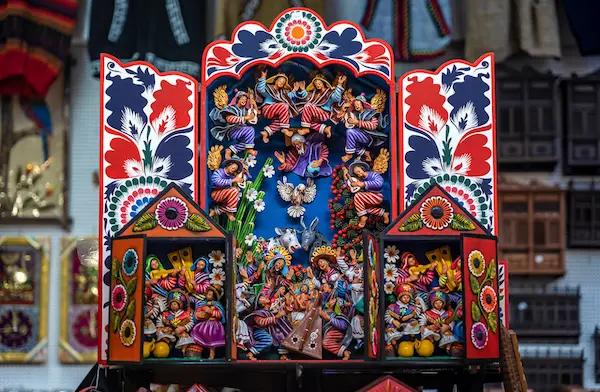
In Cusco and the Andes, Nacimiento scenes are works of art. Local artisans craft clay figures of the Holy Family, shepherds, and animals — often with Andean features and traditional clothing. Instead of sheep, you’ll see llamas and alpacas!
These scenes aren’t just decorations; they reflect deep faith and creativity. Visiting Christmas markets like Santurantikuy in Cusco is a tradition in itself, where families buy handmade pieces to complete their nativity each year.
Midnight mass or “Misa de Gallo”
Misa de Gallo — meaning “Rooster’s Mass” — is one of the most important religious events of Christmas Eve. Families gather in churches just before midnight to celebrate the birth of Jesus.
In large cities like Lima or Arequipa, churches are filled to capacity, while in small Andean towns, the mass often includes music and dance. People bring candles, sing hymns in both Spanish and Quechua, and pray for peace and blessings for the coming year.
After mass, the atmosphere changes from solemn to joyful — fireworks light up the sky, hugs are exchanged, and families return home to share their midnight feast.
Fireworks and street celebrations on Christmas Eve
Peruvians love to celebrate with fireworks, and Christmas Eve is one of the most colorful nights of the year. As soon as the clock strikes midnight, the skies across Peru burst with lights and sounds.
In Lima, entire neighborhoods gather outside to watch the spectacle, while in rural areas, families set off smaller displays. The fireworks mark both the birth of Jesus and the start of family festivities.
The streets fill with laughter, music, and the smell of freshly baked food. It’s a joyful, sensory experience that perfectly captures the warmth and excitement of Christmas traditions in Peru.

Christmas decorations and local markets
Peruvian Christmas decorations are full of color, craftsmanship, and local symbolism. From handmade ornaments to traditional markets, the festive atmosphere is felt everywhere — in homes, plazas, and even small rural villages.
Handmade ornaments and Andean crafts
In Peru, Christmas decorations are often handcrafted by local artisans who combine traditional Andean techniques with Christian symbols. Instead of plastic ornaments, families prefer clay figurines, woven textiles, and wooden carvings to decorate their homes.
Artisans create colorful angels, miniature llamas, and nativity figures that reflect regional culture. In the highlands, wool and alpaca fiber are commonly used to make small dolls and decorations that keep ancient weaving traditions alive.
These handmade ornaments are more than simple décor — they represent the blending of faith, art, and identity. Buying them supports local communities and keeps alive centuries of craftsmanship passed down through generations.
Christmas markets in Cusco, Lima, and Arequipa
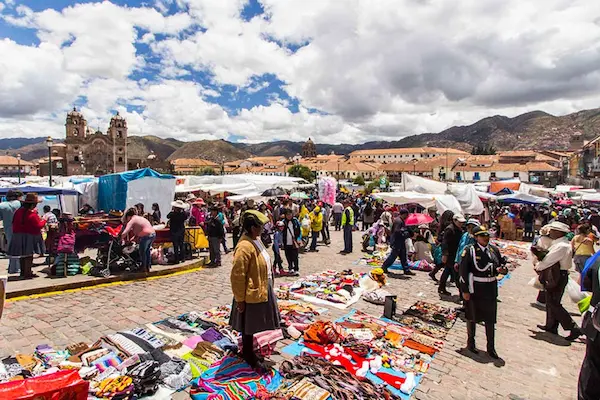
Throughout December, Christmas markets pop up across Peru, turning plazas into lively hubs of music, color, and festive cheer. The most famous of all is Santurantikuy in Cusco, held every December 24th in the Plaza de Armas.
This market brings together hundreds of artisans from all over the Andes who sell nativity figures, traditional toys, textiles, and hand-carved decorations. Visitors can feel the unique energy of the Andean Christmas spirit while enjoying local snacks and hot drinks.
In Lima and Arequipa, Christmas fairs also fill parks and streets with holiday music and food stalls. These markets offer a wonderful opportunity to experience how Peruvians combine spirituality with a joyful celebration of creativity and community.
The role of artisans in preserving Peruvian Christmas culture
Peruvian artisans play a vital role in keeping Christmas traditions in Peru authentic and alive. Many of them come from generations of craftsmen who dedicate months to preparing for the holiday season.
By creating Nacimiento figures, ornaments, and textiles, artisans preserve cultural stories and techniques that date back centuries. Their work is deeply symbolic — it expresses both devotion and a strong connection to the land and ancestors.
Buying artisan-made Christmas pieces is also a form of cultural preservation. It allows visitors and locals alike to take home a part of Peru’s living heritage and support families whose creativity sustains these beautiful traditions year after year.
How different regions celebrate Christmas traditions in Peru
Because of Peru’s diverse geography and culture, Christmas is celebrated in unique ways across the country. From the snowy peaks of the Andes to the sunny beaches of the coast, each region adds its own flavor and customs to the season.

Christmas in the Andes
In the Andean highlands, Christmas is deeply spiritual and community-oriented. Families decorate their homes with handmade Nacimientos and gather in local churches for midnight mass.
Traditional music and dances often accompany the celebrations, with people wearing colorful outfits that represent local saints or villages. In some towns, processions and pastorales reenact the nativity story in Quechua, the ancient Inca language.
For travelers visiting the region during the holidays — especially those combining their trip with Machu Picchu tours — the Andean Christmas experience offers a unique blend of culture, spirituality, and breathtaking landscapes. Roasted meats, corn-based dishes, and warm drinks help families stay cozy during chilly mountain nights, making this one of the most memorable ways to experience Peruvian traditions up close.
Coastal celebrations and urban traditions
On the coast, especially in Lima, Christmas is more modern and influenced by urban lifestyles — yet still full of warmth and family unity. Because December is summer, many people celebrate outdoors with barbecues or beach trips after midnight mass.
Homes are decorated with Christmas trees, lights, and Nacimientos. City streets sparkle with decorations, and fireworks are visible from nearly every neighborhood. Shopping malls host Christmas events, but families still focus on dinner and gathering with loved ones.
In coastal Peru, you’ll find a balance between tradition and contemporary life — a reflection of how Peruvians embrace modern influences without losing their cultural roots.
Jungle region festivities
In the Peruvian Amazon, Christmas is a tropical celebration full of rhythm and color. Towns like Iquitos and Puerto Maldonado decorate streets with palm leaves and flowers instead of pine trees.
Communities gather for open-air masses followed by music and dance. Meals often include river fish, plantains, and juanes, while children enjoy parades and games organized by local churches.
The warmth of the Amazonian people makes Christmas here especially joyful. It’s a celebration of nature, faith, and togetherness — a perfect example of how diverse Christmas traditions in Peru can be.
Visiting Peru during Christmas
Traveling to Peru in December is an unforgettable experience. The mix of festive atmosphere, cultural authenticity, and stunning landscapes makes it one of the best times to visit the country.
Best destinations to experience authentic Christmas traditions
If you want to experience Christmas the Peruvian way, Cusco is a top destination. The city’s Santurantikuy market, the midnight mass at the Cathedral, and the local Andean music create a magical atmosphere.
Arequipa and Ayacucho are also known for their beautiful nativity scenes and vibrant celebrations. In the jungle, places like Tarapoto or Iquitos offer tropical festivities full of life and local flavor.
If you’re planning to explore the country during the holidays, working with a Peru tour operator can help you organize a smooth and culturally rich itinerary. These professionals know the best destinations, local events, and hidden traditions that make Christmas in Peru truly unforgettable.
You may also like: Travel inspiration: How to plan a trip to Machu Picchu
Tips for travelers during the holiday season
December is a busy month in Peru, so it’s wise to plan ahead. Book accommodations and tours early, especially in popular destinations like Cusco or Lima.
Remember that December is summer in Peru, so pack light clothes, sunscreen, and comfortable shoes — though you’ll need warmer layers if you visit the Andes. Be prepared for lively fireworks and late-night celebrations on Christmas Eve!
Traveling during this season also offers a chance to join local events, visit markets, and connect with communities in a meaningful way.
What to expect from the Peruvian Christmas spirit
Peruvians are known for their hospitality and kindness, and this shines brightest during Christmas. Whether you’re a visitor or a local, you’ll be welcomed with warmth, food, and laughter.
Expect to see a mix of solemnity and joy — families praying together, children playing with sparklers, and neighbors sharing panetón and chocolate. Christmas here feels less commercial and more heartfelt.
By the end of your trip, you’ll understand why so many travelers describe Christmas traditions in Peru as one of the most authentic and emotional holiday experiences in the world.
Final thoughts on Christmas traditions in Peru
I hope you enjoyed this blog and learned a lot more about Christmas traditions in Peru. If you’re interested in experiencing them firsthand, we invite you to travel to Peru during this time. Likewise, if you’d like to try one of these traditions with your family this year, you’re more than welcome to do so. We look forward to your comments and wish you a Merry Christmas.

